
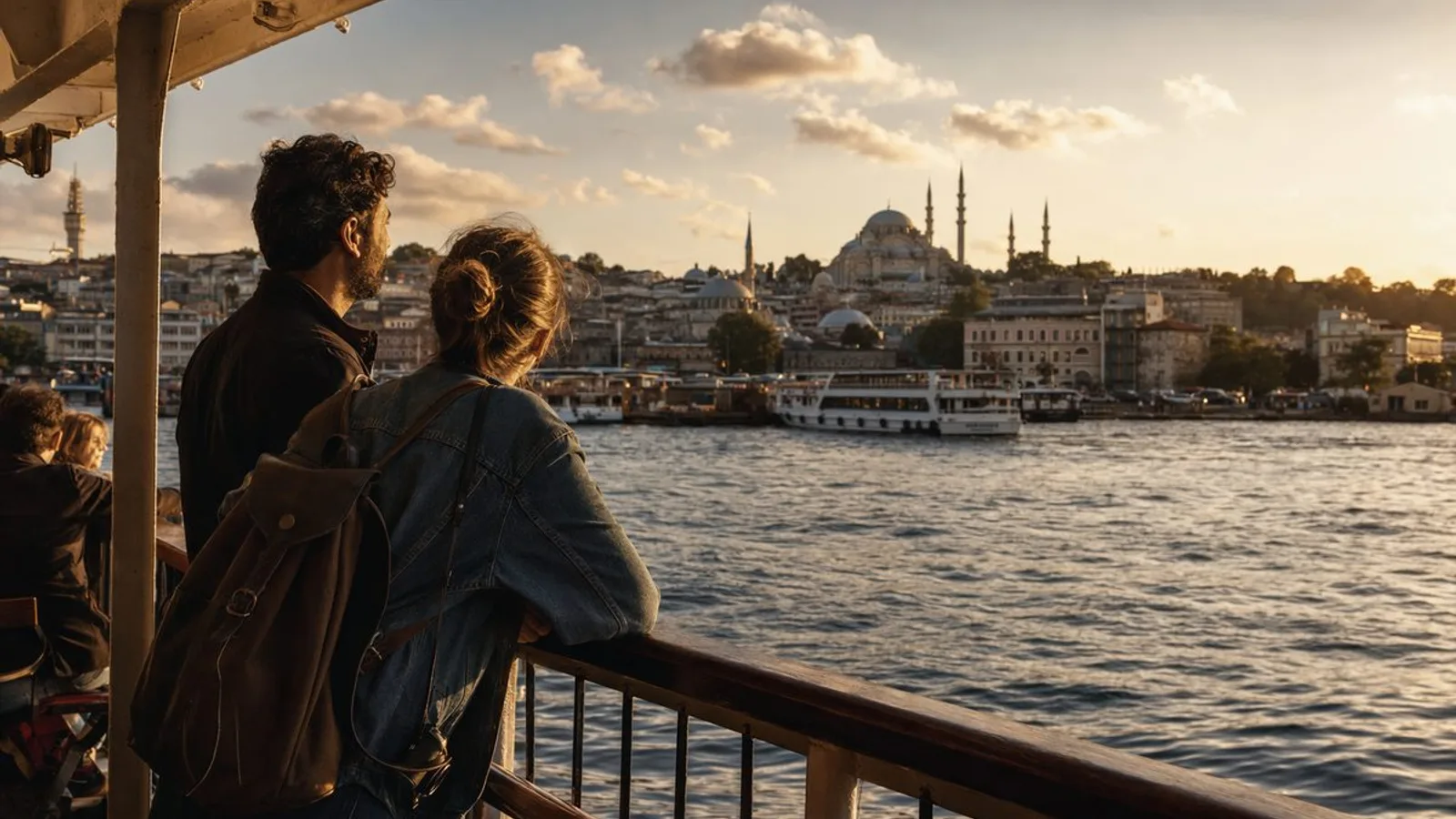
You can comfortably see Istanbul’s major first-time highlights in five days if you group nearby areas, start headline sights early, and leave breathing room for ferries, meals, and neighborhood walks. This slower version suits first-time visitors, couples, solo travelers, and anyone who wants a full trip without turning each day into a race. The plan groups the city by area: two old-city days, one Bosphorus and Asian-side day, one Beyoğlu day, and one flexible finale.
Istanbul in 5 days
Sultanahmet is Istanbul’s historic core, where many first-time visitors begin because several major Byzantine and Ottoman landmarks sit close together. The Bosphorus is the strait dividing Europe and Asia, and ferry time on it is both transport and one of the best city experiences. Beyoğlu is the district north of the Golden Horn known for Galata, Istiklal Avenue, older apartment blocks, museums, and city views. Kadıköy is a busy Asian-side district with markets, food streets, and a more local daily rhythm.
A good 5-day route should feel balanced rather than ambitious for its own sake. Day 1 and Day 2 cover the old city. Day 3 gives you the Bosphorus and the Asian side. Day 4 shifts to Beyoğlu and Galata. Day 5 stays flexible so you can lean into neighborhoods, a palace visit, or a day trip.
Build extra time into every transfer. A route that looks short on a map can slow down because of hills, tram waits, ferry timing, security lines, or simple pauses you will be glad you took.
5-day itinerary at a glance
- Day 1: Sultanahmet — Hagia Sophia, Blue Mosque, Basilica Cistern, Gülhane, easy first evening
- Day 2: Old-city markets and hilltop views — Grand Bazaar, Süleymaniye Mosque, Spice Bazaar, Golden Horn at dusk
- Day 3: Water and neighborhood rhythm — Bosphorus ferry time, Kadıköy, Moda, sunset return
- Day 4: Beyoğlu and Galata — Galata area, Istiklal side streets, one museum, dinner and music
- Day 5: Choose your ending — Balat and Fener, Dolmabahçe Palace and Beşiktaş, or Princes' Islands
Check hours, prayer-time access, ferry schedules, and ticketing close to your trip. The two closures that reshape a five-day plan are Topkapı (closed Tuesday) and Dolmabahçe (closed Monday).
Day 1: Sultanahmet at a calm pace
Start with the classic sights, but keep the route compact. This is the best way to settle into Istanbul without spending half the day in transit.
Morning: Hagia Sophia and the Blue Mosque
Hagia Sophia is a historic monument that has served as a cathedral, mosque, museum, and mosque again across different eras. Go early. Crowds build quickly, and access rules can change. It runs daily, 09:00 - 19:30, and the prayer hall closes to visitors around each of the five daily prayers. For planning help, see Hagia Sophia.
From there, walk across to Blue Mosque. The Blue Mosque is the popular name for Sultan Ahmed Mosque, known for its domes, six minarets, and large prayer hall. It is an active mosque, so dress modestly and work around prayer times. Entry is free outside them; shoulders and knees covered, scarf for women, shoes off at the door.
Keep the morning focused on these two anchors. They are steps from each other, and the square between them is part of the visit.
Afternoon: Basilica Cistern and Gülhane
Walk to Basilica Cistern. Basilica Cistern is an underground Byzantine water reservoir with rows of columns, dim lighting, and a cool, quiet atmosphere. It fits well after the bright open spaces of Sultanahmet. Verify ticketing and hours before your visit. It runs daily, 09:00 - 18:30, and comes to about €50 bought separately.
Then move toward Gülhane Park. Gülhane Park is a green space beside Topkapı Palace where you can reset without leaving the historic center. If you still have energy, walk toward Topkapi Palace for exterior views and orientation, but save the full palace visit for another trip unless it is a top priority. Palace visits can take longer than they look on paper. It opens daily except Tuesday, 09:00 - 21:00, is closed Tuesday, and the Harem is ticketed separately from the main palace.
Transit is minimal today. You can do nearly everything on foot if you are staying in Sultanahmet or Sirkeci.
Evening: A quiet first dinner
Stay local tonight. Sultanahmet, Sirkeci, or Eminönü all work well for a low-effort first dinner, and staying nearby helps if you are arriving with jet lag or an early start behind you.
After dinner, take a short waterfront walk if you want one last view. Then stop. A five-day trip works better if Day 1 ends early rather than trying to squeeze in a night program.
Day 2: Grand Bazaar, Süleymaniye, and old-city views
This is an old-city day built around atmosphere, hilltop views, and market streets. Start early for the bazaar, then move uphill while your energy is still good.
Morning: Grand Bazaar before the rush
Grand Bazaar is one of Istanbul’s historic covered markets, made up of lanes, hans, workshops, and shops rather than one single hall. Go in the morning, when it feels easier to navigate and less packed. Check opening days and hours close to your trip. It runs daily except Sunday, 08:30 - 19:00 and is closed Sunday.
Do not try to cover every corridor. Pick a rough loop, watch for older arches and side passages, and leave before market fatigue sets in. If you want a more compact market experience later in the day, Spice Bazaar is easier to handle.
From Sultanahmet or Sirkeci, the tram is useful for part of this day, though some walking is unavoidable.
Afternoon: Süleymaniye Mosque and Spice Bazaar
Make your way to Suleymaniye Mosque. Süleymaniye Mosque is an imperial Ottoman mosque complex on one of the old city’s hills, known for its broad courtyard, calmer mood, and wide views over the Golden Horn. It often feels less hectic than the Blue Mosque, though visitor access still depends on prayer times. Visiting hours are daily, 08:30 - 16:45, with short pauses around each prayer.
Afterward, head downhill toward Eminönü and the Spice Bazaar. Spice Bazaar is a historic market near the waterfront, smaller and more manageable than the Grand Bazaar. The surrounding streets are worth as much attention as the market itself, especially if you like food shops, street movement, and short snack stops.
This route makes sense because it follows the city’s terrain: market first, mosque second, waterfront last. You avoid backtracking and finish near ferries, trams, and dinner options.
Evening: Golden Horn sunset
End near Eminönü or the Galata Bridge. This is a good hour to sit still for once and watch ferries, commuters, and the evening light move across the water.
If you want dinner nearby, keep it simple and avoid adding another major destination across town. Tomorrow is your ferry day, so a shorter evening helps.
Day 3: Bosphorus day and Asian side time
After two old-city days, shift to the water. This day works best with fewer fixed bookings and more room for weather, ferry timing, and spontaneous stops.
Morning: Ferry ride and waterside pauses
Take a public ferry rather than seeing the Bosphorus only from land. Public ferries are scenic, practical, and often a better fit for a slow itinerary than a tightly timed cruise. The cross-continent lines — Eminönü and Karaköy to Kadıköy and Üsküdar — run frequently all day on the same card you tap on the tram, so they need no planning; the long Bosphorus line up the strait does.. If you need basics before you go, link your transport planning with an Istanbulkart and ferry guide such as Istanbulkart and ferries.
You can choose a short crossing or a longer ride up the strait. If you prefer a structured outing, compare options before booking. A short sightseeing cruise with an audio guide starts around €12 on its own, and the sunset departures fill first. A dedicated planning page like Bosphorus cruises helps you compare route styles.
Sit outside if weather allows. From the water, the city’s scale makes more sense.
Afternoon: Kadıköy markets and Moda
Cross to Kadikoy. The market area is lively, but the best slow-travel version of Kadıköy includes leaving the busiest streets behind and continuing toward Moda.
A longer lunch works well here. After that, walk toward the waterfront, browse a bookshop, or simply sit in a park or along the sea wall. This is less about landmarks than about rhythm, and that is exactly why it belongs in a 5 day Istanbul itinerary.
If you are staying on the European side, this afternoon also gives you a useful feel for ferry commuting and neighborhood pace beyond the core tourist zones.
Evening: Return by ferry
Return to Europe by ferry around sunset if you can. The approach back toward the historic skyline is one of the easiest great views in the city.
For dinner, Karaköy or Galata are smart choices because they keep travel short and set up Day 4 well. If you are tired, go straight back to your hotel instead. You do not need to maximize every night.
Day 4: Beyoğlu, Galata, and local streets
This day shifts from imperial landmarks to urban texture. Expect hills, side streets, passages, shops, apartment facades, and a more contemporary city mood.
Morning: Galata area without rushing
Start around Galata Tower, but do not make the whole morning about the tower. Galata Tower is a medieval stone tower and landmark viewpoint in the Galata quarter. If you want to go up, check reservation rules, wait times and hours first. It runs daily, 09:00 - 18:00, costs about €30 separately, and the lift takes small groups so the door queue builds through the morning.
Spend the rest of the morning on foot in the surrounding streets. Galata is best explored loosely: short staircases, side lanes, bakeries, old apartment buildings, and corners with Bosphorus glimpses matter as much as the formal sights.
If you stayed in Karaköy or Galata, this is an easy walking start. From Sultanahmet or Sirkeci, use tram plus a short uphill walk or the tunnel/funicular combination depending on where you begin.
Afternoon: Istiklal side streets and museums
Walk part of Istiklal Avenue, then step off it often. Istiklal Avenue is a long pedestrian street in Beyoğlu known for shops, consulates, churches, arcades, and heavy foot traffic. The side streets are where the day slows down.
Pick one museum, not several. Istanbul Modern is a good fit if you want contemporary art near the waterfront. Pera Museum works well if you want to stay deeper in Beyoğlu. Check current exhibitions, ticketing, and closed days before choosing. Most of the Beyoğlu museums run temporary exhibitions alongside the permanent collection, and several close one weekday.
This part of the route works because it keeps you in one broad district. You can shape the afternoon around your energy level: more museum time, more coffee stops, or a downhill drift toward Karaköy.
Evening: Meze and music
Beyoğlu is a natural evening area, but choose atmosphere over hype. A meze dinner is a good match here because the neighborhood suits a longer, slower meal.
If you want live music, verify current openings and schedules rather than relying on old lists. Venues here turn over faster than any guide can track, which is why we name streets rather than bars. If the avenue feels too intense, move a street or two away, or have dinner in Karaköy and finish with a short walk by the water.
The practical rule for tonight is simple: keep the evening in Beyoğlu or Karaköy, not across town. That saves time and energy for your final day.
Day 5: Choose your finale
Your last day should match what you have liked most so far. By Day 5, you will know whether you want neighborhood walking, one more grand interior, or a full sea-day break from the center.
Option A: Balat and Fener
Choose this if you like streets, architecture, and slower neighborhood wandering more than major-ticket attractions. Balat is a historic district known for steep lanes, mixed architecture, cafes, and strong local character. Fener is the neighboring historic area with churches, schools, residential streets, and Golden Horn views.
Go in the morning, when the area is quieter and easier to enjoy. Walk uphill and downhill without over-planning, but expect slopes. The well-known colorful facades draw plenty of cameras; the more rewarding parts are often the ordinary residential streets around them.
Transit guidance: from Sultanahmet or Sirkeci, expect a tram-plus-bus or taxi combination depending on your exact start point. Check what feels simplest that morning rather than forcing a complicated route.
This option fits travelers who want a final day that feels local, photogenic, and unhurried.
Option B: Dolmabahçe Palace and Beşiktaş
Choose this if you still want one more major landmark. Dolmabahçe Palace is a 19th-century Ottoman palace on the Bosphorus known for ceremonial rooms, waterfront setting, and a more European-influenced court style than Topkapı. It opens daily except Monday, 09:00 - 18:00 and is closed Monday; entry runs to about €42 separately, with the Harem section ticketed apart from the main palace.. For more planning detail, see Dolmabahçe Palace.
After the palace, continue into Beşiktaş for lunch. Beşiktaş is a central Bosphorus district with markets, cafes, ferries, and a strong everyday city feel. It is a useful contrast to the palace itself: formal interiors first, then busy local streets and waterside life.
You can end this day with a waterfront tea, a short ferry ride, or an easy early dinner. This is the best Day 5 choice if your trip still feels light on palaces or Bosphorus-side neighborhoods.
Option C: Princes' Islands day trip
Choose this only if the weather is good and you genuinely want a slower, more spacious finale. Princes' Islands is a group of islands in the Sea of Marmara known for sea views, lower traffic, and day-trip appeal from Istanbul. Ferry frequency, travel times, and seasonal crowd levels vary, so check them close to departure. Sailings thin out sharply outside summer, and the crossing is long enough that a late return can eat the evening.
This option uses most of the day, so it is best for travelers who already feel satisfied with central Istanbul. If you still have major city sights left undone, Balat/Fener or Dolmabahçe/Beşiktaş will usually be a better final-day use of time.
Bring water, sun protection in warm months, and realistic expectations about return timing. Ferries shape the whole day.
Practical tips for a 5-day stay
These practical choices matter almost as much as the sightseeing plan. Good transport, realistic timing, and the right hotel base can make Istanbul feel smooth rather than tiring.
Transport and ferry strategy
Use a transit card if it still applies during your travel dates. An Istanbulkart from any station machine covers tram, metro, bus, funicular and ferry on one tap, and works out cheaper per ride than single tickets. Trams are most useful in the old city corridor. Ferries are both transportation and sightseeing. Taxis can help with awkward hills or late returns, but traffic often removes any time advantage.
If you are planning a ferry-heavy trip, keep a support page handy for Istanbulkart and ferries. If a scenic sail is a priority, compare options in advance through Bosphorus cruises.
The simplest strategy is to cluster each day by area and avoid crossing the city more than necessary. That is why this itinerary uses one main zone per day.
Museum planning and prayer times
Do not assume attraction rules match older guidebooks. Museums close on different days, some major sites require timed entry, and active mosques can restrict visitor access during prayer. Prayer times shift through the year, so mosque access pauses at different hours in different seasons. On the museum side the fixed points are Topkapı (closed Tuesday) and Dolmabahçe (closed Monday)..
If you travel in peak season, prebook where possible. If you travel in winter or on windy days, ferry plans may need adjusting. Leave one or two backup indoor options in mind for Day 3 or Day 5.
Where to stay for this itinerary
For first-time visitors, one base is easier than changing hotels. Sultanahmet is best if you want early access to the historic core. Sirkeci often works better for transport because it sits between old-city sights and ferry links. Karaköy/Galata suits travelers who want evening life, restaurants, and easier access to Beyoğlu. Kadıköy works for return visitors or travelers who prefer a more local base and do not mind ferry commuting.
Use these area guides before booking: where to stay in Sultanahmet, where to stay in Sirkeci, where to stay in Karaköy/Galata, and where to stay in Kadıköy.
Before booking, verify current noise patterns, renovation work, and late-night street activity. As a rule Sultanahmet is quiet and early, Beyoğlu is loud and late, and Kadıköy sits between the two with the best ferry access.
Final thoughts
Five days is enough for a satisfying first trip to Istanbul if you plan by area and resist the urge to do everything. You can cover the headline sights, ride the ferries, spend time on both continents, and still leave room for the parts many trips miss: tea breaks, waterfront pauses, neighborhood texture, and evenings that do not feel rushed.
If you want to tighten the sightseeing details before you go, start with attraction pages such as Hagia Sophia, Blue Mosque, Topkapi Palace, Basilica Cistern, Suleymaniye Mosque, and Galata Tower. The key is pace. A well-grouped, slower plan will usually give you a better Istanbul trip than a longer checklist.