
When is the best time to visit Istanbul?
The best time to visit Istanbul is the shoulder seasons: April to May and September to October. These months combine mild, walkable weather, thinner queues at the headline sights, and better hotel value than peak summer. If you can only pick one window, early October is hard to beat, with warm sea air, golden light and a city that has exhaled after August.
That said, Istanbul is a twelve-month city. Covered bazaars, palace interiors, hammams and year-round ferries mean no season shuts it down. The real question isn't "when is it open?" but "what do you want more of: sunshine, space or savings?"
In short
- Best overall: late April to May, and September to October
- Best value: November to March, outside the New Year week
- Best for swimming-warm cruises and island days: June to September
- Every season works if you plan with it, not against it
Below you'll find each season described honestly, a month-by-month table, and the best month for specific trip styles. Still sketching the trip itself? Pair this guide with our 3-day Istanbul itinerary.
Spring (March to May): tulips and the first sweet spot
Spring is the season Istanbul plants for, literally. Every April, millions of tulips bloom across Emirgan Park, Gülhane Park and the squares of Sultanahmet for the city's tulip festival, a nod to the flower's Ottoman roots. Days are mild, evenings still want a light jacket, and the sightseeing weather is close to ideal.
March is the wildcard: it can feel like winter's last word or spring's first, sometimes in the same afternoon. April and May are the prize. Terrace cafés reopen, the courtyards of Topkapi Palace are at their greenest, and a Bosphorus cruise is comfortable without the summer crush.
Crowds build steadily from Easter onward, and May hotel rates sit closer to summer than winter. Book the big-name sights and your room early; you'll still enjoy far more breathing space than July.
Crowds: medium, rising. Prices: mid to high. Pack: layers, plus one warm piece for evenings.
Summer (June to August): hot, buzzing and built for the water
Summer in Istanbul is hot, long and sociable. July and August days often push into the low 30s °C, and August adds humidity. This is peak season, so expect the year's fullest queues at Sultanahmet's icons and its highest room rates.
The city's answer has always been the water, and it should be yours too. The Bosphorus breeze takes the edge off almost every evening. Do your monuments early, then spend the hot hours the local way: a sunset cruise on the Bosphorus, a ferry day out to the Princes' Islands, or a long evening on the strait aboard a Bosphorus dinner cruise.
Families get the most from summer's long days; more on that below. Everyone else should build afternoons around shade, sea and air-conditioned museums.
Crowds: peak. Prices: peak. Pack: sun protection and your lightest clothes.
Autumn (September to November): the local favourite
Ask people who live here and most will name autumn as Istanbul's finest season. September still behaves like summer, with a sea warm enough for island swims and evenings made for rooftops. October is the connoisseur's month: soft golden light, mild days, and crowds that thin noticeably after the first week.
For views, autumn's clear air is the whole argument. Bright days reward a climb up Galata Tower or a trip to the panoramic deck of Camlica Tower, where the city stretches across two continents beneath you.
November is the quiet gear-change. Grey days arrive, terraces close, and prices slide toward winter levels. As a result, it's one of the most underrated value windows of the year, especially for museum lovers.
Crowds: high in September, easing through October, low by November. Prices: high, then falling. Pack: light layers, and a proper jacket for November.
Winter (December to February): quiet, moody and the best value
Winter is Istanbul with the volume turned down. It's cool and damp, with a handful of snow days most years, and it's the cheapest, quietest stretch of the calendar outside the New Year week. For museum-first travellers, it might secretly be the best time of all.
Queues that swallow an hour in July often vanish in January. That transforms heavyweight interiors like Hagia Sophia, the candle-lit Basilica Cistern and the Istanbul Archaeological Museums. The Grand Bazaar is covered and warm, evenings fill nicely with a whirling dervishes ceremony, and a steamy traditional hammam was practically invented for this weather.
Crowds: the year's lowest. Prices: the year's lowest. Pack: a warm coat, and shoes that don't mind rain.
Istanbul month by month
Here's the whole year in one honest table.
| Month | Weather feel | Crowds | Verdict |
|---|---|---|---|
| January | Cold and damp, occasional snow | Low | Best-value month; museum weather |
| February | Cold, slowly brightening | Low | Quiet, cheap, atmospheric |
| March | Changeable, winter meets spring | Low to medium | Early-spring bargain |
| April | Mild and fresh, tulips everywhere | Medium | Superb; the first sweet spot |
| May | Warm and sunny, terrace season | Medium to high | Superb; book ahead |
| June | Warm to hot, very long days | High | Great for families and the water |
| July | Hot, lively, big queues | Peak | Works if you plan around the heat |
| August | Hottest and most humid | Peak | Water-first days win |
| September | Warm, sea still swimmable | High, easing late | Excellent all-rounder |
| October | Mild, golden light | Medium | The connoisseur's pick |
| November | Cool, grey creeping in | Low | Underrated value window |
| December | Cold, festive lights | Low, spiking at New Year | Moody and quiet |
Which month is best for what you love?
Different trips peak in different months. Here's the honest shortlist.
Best for photography: October
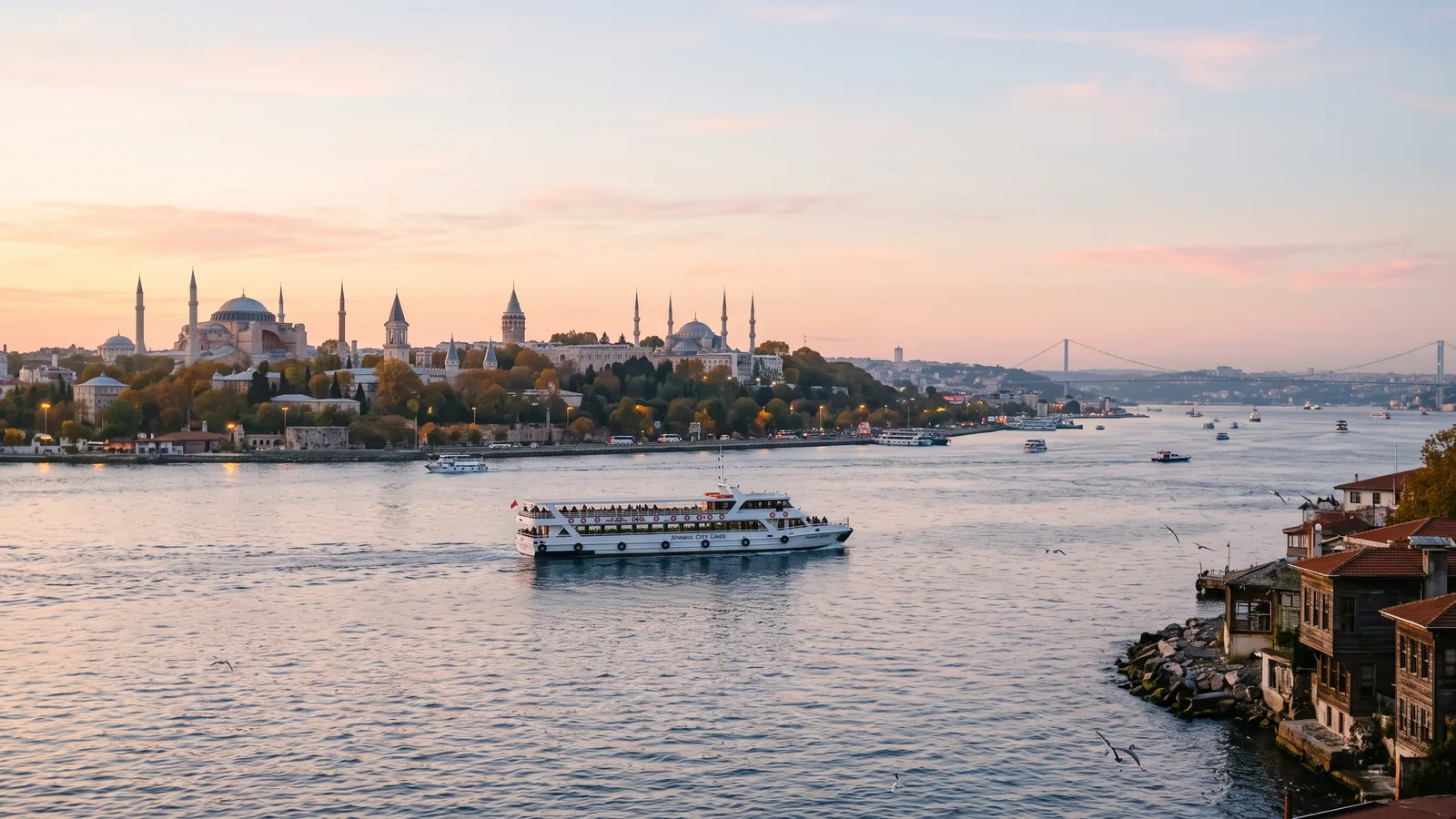
The summer haze lifts and the light turns low and golden. Shoot the skyline from the water on a Golden Horn sunset cruise, or frame Maiden's Tower against the strait at dusk. Sunrise over Sultanahmet is also quieter now than in any warm month.
Best for value: January and February
Outside the New Year week, deep winter delivers the year's lowest flight and hotel prices and the emptiest halls. Your money buys a calmer, roomier version of the same city, and the great interiors lose nothing to the season.
Best for families: June or September
Both give you long, warm days without August's heaviest heat. Mix the icons with pure fun: ViaSea Theme Park, the Emaar Aquarium and Underwater Zoo, and a breezy island day on Büyükada.
Best for food: November to March
Istanbul's comfort food is winter food: lentil soup, roast chestnuts, fish sandwiches by the water. Cooler months make grazing a pleasure, from a Spice Bazaar tasting to an authentic Turkish cuisine tasting under Galata Bridge.
Best for cruises and the islands: May to September
Warm decks, blue water and late sunsets. This is the window to linger on the strait, whether that's a morning Turkish breakfast cruise or a slow ferry day around quiet Burgazada. September water is the warmest of the year.
For the full menu across every season, browse our pillar guide to things to do in Istanbul.
What about Ramadan and the bayram holidays?
Ramadan is the Islamic holy month of fasting, and its dates shift about eleven days earlier each year, so check where it falls before you book. Visiting during Ramadan is absolutely fine, and often special. Istanbul keeps functioning: attractions and restaurants open as usual, and the city's huge non-fasting population means you'll never struggle to eat by day. Mosques pause tourist visits briefly at prayer times, and modest dress matters a little more. The reward comes at sunset, when families spread iftar picnics between the Blue Mosque and Hagia Sophia and the old city takes on a festival glow.
The two bayrams (the Eid holidays that follow Ramadan and arrive again about ten weeks later) are different: they're Turkey's biggest domestic travel spikes. Hotels, flights and ferries fill with local holidaymakers, so book earlier and expect popular sights to be lively with Turkish families.
The shoulder-season trade-off, honestly
Here's the part many guides skip: the shoulder seasons aren't Istanbul's cheapest months, winter is. What April, May, September and October actually sell is efficiency. Mild weather and moderate queues mean you lose fewer hours to heat, rain and lines, so every day simply produces more. For a premium trip, that's usually the better bargain: you're not paying for a cheaper Istanbul, you're paying for more Istanbul per day.
Whichever window you choose, the sights themselves don't change. As of 2026, the Istanbul PRIME Pass covers 78 included attractions and experiences from €249, with hosted, skip-the-line entry at many of the big names, so shoulder-season queues get shorter still. Not sure it matches your travel style? Read our honest take on whether the pass is worth it before you decide.
So, when should you go?
Pick late April to May for tulips and spring energy, or September to October for warm seas, golden light and the year's best all-round conditions. Choose summer if your trip runs on long days and the water. Choose winter if you'd happily trade some sunshine for empty museums and the year's lowest prices.
In short, there's no wrong month, only a wrong plan for the month you pick. Decide what your trip needs most, lock in your dates, and build your days with the season rather than against it. And when you're ready, current pass prices and durations are here: same pass, same 78 attractions, whichever month you land.