
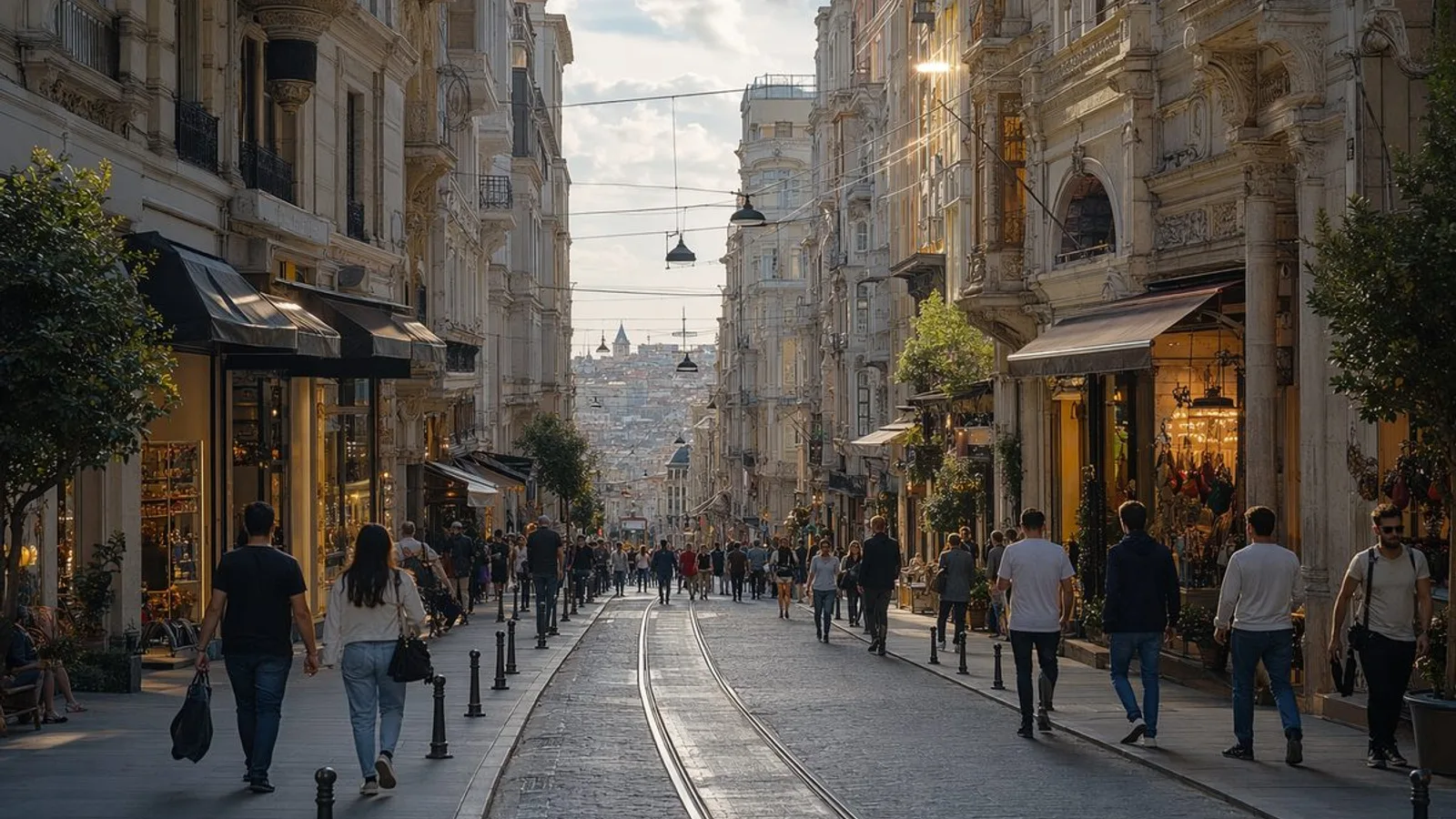
If you want the clearest first walk through modern Istanbul, start in Taksim Square and go downhill through Istiklal Avenue, then choose a short Cihangir detour or continue to Galata and Karaköy. This route gives first-time visitors the easiest read on Beyoğlu: transport at the top, the district’s main pedestrian spine in the middle, and historic slopes and waterfront connections at the end.
Route summary
- Start: Taksim Square
- End: Galata or Karaköy waterfront
- Terrain: Mostly downhill overall, with real side-street hills and uneven pavement
- Difficulty: Easy to moderate for most walkers
- Walking time: about 40 minutes end to end without stopping; two to three hours is more realistic
- Best for: First-time visitors who want one practical, high-contrast neighborhood walk
What is Beyoğlu? Beyoğlu is Istanbul’s historic European-side district centered on Taksim, Istiklal Avenue, Cihangir, Galata, and Karaköy. It works well on foot because each part shifts the mood quickly: public square, busy avenue, residential hills, landmark streets, and waterfront transport.
Last checked note: route structure and neighborhood descriptions reviewed at draft stage; transport, prices, hours, and access points still require on-the-ground verification via the placeholders below.
How to Walk Beyoğlu from Taksim to Galata
The simplest plan is Taksim Square, Istiklal Avenue, a possible loop into Cihangir, then down to Galata and Karaköy. That direction suits most visitors because it saves energy and keeps backup transport options nearby.
The core walk is about two and a half kilometres and mostly downhill, so roughly 40 minutes if you do not stop. Almost nobody does not stop. Add two to three hours for coffee, a church, a passage and a look at the shops, or give it a full day if Galata Tower is on the list.
As you walk, look for three things:
- older facades above modern storefronts
- passages and side lanes that break up the main avenue
- sudden views toward the Bosphorus or Golden Horn
A useful rule: do not judge Beyoğlu only by Istiklal at ground level. The district makes more sense once you notice what sits above, behind, and downhill from the main street.
Start in Taksim Square
Taksim Square is the main transport and meeting point at the top of this walk. It is the easiest place to begin because the route mostly descends from here, and because almost everything arrives at it: the M2 metro, the funicular up from Kabataş — which is how you connect to the tram and the ferries — the nostalgic tram along İstiklal, and most of the city's bus routes.
What to notice first
Taksim is more functional than picturesque, but that is part of its value. It shows the district as people actually use it: commuters crossing the square, visitors orienting themselves, and traffic and transit feeding the pedestrian zone.
Pause for a minute before entering Istiklal. The contrast matters. Taksim feels broad and exposed; Istiklal feels enclosed and social. That shift gives the walk its momentum.
If you have extra time, look at the cultural venues and rooftop terraces around the square. Hotel rooftops here are generally open to non-guests as bar or restaurant customers rather than as viewpoints, so treat the view as something you buy a drink for. If not, head straight onto the avenue.
Should you ride the nostalgic tram?
The red nostalgic tram is iconic, but it is optional. If the line is crowded, skip it and keep walking.
It runs the length of İstiklal between Taksim and Tünel and takes about as long as walking does, which is rather the point: it is a photograph, not transport. If it is running and you want the photo or the experience, take a short ride without building your schedule around it.
Walk down Istiklal Avenue
Istiklal Avenue is the district’s main pedestrian street linking Taksim with older quarters downhill. It is busy, commercial, and often noisy, but it also carries much of Beyoğlu’s visible history.
Watch the upper floors as much as the storefronts. Decorative stonework, balconies, and formal entrances often tell you more than the ground-floor businesses.
Churches, passages, and side streets
One of the best ways to walk Istiklal is to stay alert for openings in the street wall. A passage may lead to a courtyard, a small arcade, or a quieter lane with a different rhythm.
Churches and other religious buildings are part of that pattern too. Their presence beside shops and food stops is one of the clearest signs of the area’s layered past.
If a church or historic passage interests you, step in briefly, then continue. The churches along here — St. Anthony of Padua is the best known — are free to enter and open through the day; dress as you would for a mosque, and keep quiet if a service is running. The old passages are commercial arcades and are open whenever their shops are.
Useful next reads:
- Galata Tower, if you plan to go up rather than just walk past it
- Best neighborhoods in Istanbul, for how Beyoğlu compares with the other places you could base yourself
You can also pair this route with Galata Tower or a broader planning guide at Istanbul neighborhoods.
Where to pause for food or coffee
There is no single best stop on İstiklal because the street changes quickly and businesses turn over faster than any guide can track. Anywhere named here would have changed hands within a season, so the useful advice is about where to look rather than what to book.
A practical approach:
- take a quick coffee on a side street if you only need a reset
- save a longer sit-down break for Cihangir or Karaköy if you want quieter surroundings
- expect prices to change by block, terrace access, and view
The gap between a side-street coffee and the same coffee on a terrace with a Bosphorus view is large enough to notice, and it is the view you are paying for rather than the coffee.
Turn into Cihangir for a calmer pace
Cihangir is a hillside residential quarter with cafés, small shops, and a slower feel than Istiklal. It is the best detour if the main avenue starts to feel too dense.
This part of the walk is less about monuments and more about street atmosphere: apartment blocks, local businesses, quieter corners, and occasional Bosphorus-facing openings.
If you like neighborhood texture more than landmarks, this may be the most memorable section of the day. It also works well as a breather before the steeper descent toward Galata or Karaköy.
Views matter here. Some streets and small parks open toward the water. They are free, unmarked and easy to miss, and that is the character of the detour: the reward comes from walking down a street because it looks like it might end in a view, not from finding a named viewpoint. If you are building a wider waterfront itinerary, see Bosphorus cruise for a different city perspective.
Drop toward Galata and Karakoy
From upper Beyoğlu, the route naturally pulls downhill. Streets get steeper, blocks get tighter, and the mood starts to shift from avenue walking to older hillside streets.
You can head to Galata Tower first, then continue to Karaköy, or go more directly toward the waterfront if you want to finish sooner.
Galata Tower area
Galata is the historic quarter around Galata Tower, known for steep lanes, older commercial buildings, cafés, workshops, and boutique hotels. The tower is the obvious landmark, but the surrounding streets are what make the area worth walking.
If you plan to go up the tower, expect queues at popular times. Entry runs daily, 09:00 - 18:00 and the line is shortest in the first hour after opening; by mid-afternoon the wait can be longer than the visit.
A good tactic is to walk the area first, then decide if the line is worth your time. For the landmark itself, see Galata Tower.
Karakoy waterfront and transport links
Karaköy is the waterfront area below Galata, known for ferries, food, galleries, and district connections. This is where the walk opens back up after the tighter hillside streets.
It is a strong place to finish because you can:
- stop for food near the water
- continue on foot toward the bridge
- use ferries, tram links, or other transit to switch districts
Karaköy is one of the better-connected points in the city: the tram runs across the bridge into the old town, ferries leave for Kadıköy, Üsküdar and Eminönü, and the Tünel funicular climbs back up to Beyoğlu in about ninety seconds — it opened in 1875 and is one of the oldest underground railways anywhere.
If you want to continue, head toward Eminonu or plan a separate visit to Spice Bazaar.
Karaköy can be especially good at day’s end, but light and view conditions vary by season. In mid-September the sun goes down around 19:10 and the best light is the half hour before it, so aim to be at the water by about half past six. Türkiye does not change its clocks in autumn, so that time drifts earlier week by week rather than jumping.
The finish from Galata into Karaköy is also where the route makes the most physical sense. You feel the slope, the streets tighten, then the waterfront opens the city back up. A residential lane can lead into a tourist landmark, which then feeds into a working transport node by the water. These layers overlap, sometimes awkwardly, but that overlap is exactly what makes the route feel real rather than staged.
Practical tips for your walk
This is an easy walk to enjoy if you plan for hills, crowds, and frequent distractions. Think of it as an urban neighborhood route, not a monument-to-monument checklist.
Safety, hills, and timing
The area is busy and widely visited, but normal city awareness still matters. Keep phones secure in dense stretches and around transport nodes. Taksim Square and İstiklal are occasionally closed off for demonstrations or public events, usually with little notice. If you find the square cordoned, the metro and funicular keep running, and you can simply start the walk from Tünel at the other end instead.
Timing affects the experience:
- Morning: calmer start, easier photos, lighter crowds
- Afternoon: strongest street life, busier shops and cafés
- Evening: more nightlife energy, denser crowds in some sections
On national holidays and big match days, expect a heavier police presence and the chance of closed streets around the square. That affects the start of the walk rather than the rest of it.
If you are traveling with children, a stroller, or anyone with limited mobility, allow extra time. Side streets can be steep and pavement can be uneven. İstiklal itself is flat, wide and paved, and is the easy part; almost everything leading off it is not, and the final descent to Karaköy involves steps. If steps are a problem, use the Tünel funicular between Karaköy and Beyoğlu instead of walking the hill.
What to wear and carry
Bring the basics for a long city walk:
- comfortable shoes with grip
- water
- a light layer for wind or changing weather
- a bank card plus some cash
- a compact umbrella if rain is possible
Cards work in most cafés and shops, but keep some cash for the smallest places and for public toilets, which charge a small fee. Transit runs on an İstanbulkart, bought and topped up at the machines in any metro or funicular station.
Suggested half-day and full-day routes
Half-day route
Choose this if you want the core experience without turning it into an all-day project.
- Start in Taksim Square
- Walk down Istiklal Avenue at a steady pace
- Take one short detour into a passage, church, or side street
- Choose either a quick Cihangir loop or continue directly to Galata
- Finish in Karaköy for food or onward transport
Best for:
- first-time visitors
- short city breaks
- travelers combining this walk with another district later in the day
Full-day route
Choose this if you want time for breaks, views, and one or two deeper stops.
- Start earlier in Taksim
- Walk Istiklal slowly, including side passages
- Stop for coffee or breakfast off the main flow
- Spend more time in Cihangir
- Continue through Galata with optional tower visit
- End in Karaköy around late afternoon or sunset
This version gives room for a museum, a longer lunch, or extra wandering. You can also use it as the modern-city half of a broader Istanbul plan and save the historic peninsula for another day, including Blue Mosque, Hagia Sophia, or Topkapi Palace.
FAQ
Is Beyoğlu a good area for first-time visitors to Istanbul?
Yes. It gives first-time visitors an easy way to understand modern Istanbul on foot, with strong transport access, major streets, food options, historic layers, and a natural downhill route toward Galata and Karaköy.
How long does it take to walk from Taksim to Karaköy?
Plan at least 40 minutes of actual walking, then add two to three hours for cafés, churches, shopping and photographs if you want a slower pace.
Is Istiklal Avenue worth visiting if it feels crowded?
Yes, if you treat it as a route rather than a single attraction. The best parts are often the facades, passages, and side streets just off the main flow.
Should I choose Cihangir or Galata if I only have time for one detour?
Choose Cihangir for a quieter neighborhood feel with cafés and local streets. Choose Galata for steeper historic lanes, landmark views, and an easier continuation down to Karaköy.
Is the walk difficult?
It is manageable for most visitors, but there are real hills and uneven surfaces. Good shoes help. If mobility is a concern, check current accessibility conditions before you go.
Can I do this walk in the evening?
Yes, but the mood changes. Evening brings more nightlife and denser crowds in some streets. Check for current restrictions, closures, and transport changes first.