
If you are deciding where to stay in Istanbul, the short answer is this: Sultanahmet is best for first-time sightseeing, Taksim-Beyoglu is best for nightlife, and Karakoy-Galata is the best all-round base for many travelers. Besiktas and Kadikoy suit travelers who want a more local feel, while Sisli-Nisantasi is the practical pick for shopping, newer hotels, and metro access.
| Area | Best for | Main downside | Best transport |
|---|---|---|---|
| Sultanahmet | First trips, landmarks, short stays | Quieter nights, tourist-heavy, mixed hotel quality | Tram + walking |
| Taksim-Beyoglu | Nightlife, late dinners, city energy | Noise, hills, uneven luggage access | Metro, buses, walking |
| Karakoy-Galata | Best overall balance, food, couples | Steep streets, traffic and nightlife noise | Tram, ferries, walking |
| Besiktas | Local life, ferries, repeat visitors | Less direct for old-city sightseeing | Ferries + buses |
| Kadikoy | Longer stays, food, local atmosphere | Commute to classic sights | Ferries, metro |
| Sisli-Nisantasi | Shopping, business trips, modern comfort | Less historic atmosphere | Metro |
Istanbul is a large city, and crossing it often takes longer than visitors expect. The best neighborhood is usually the one that reduces your daily backtracking and fits how you actually spend your evenings.
Best areas in Istanbul at a glance
Istanbul is a two-continent city split by the Bosphorus. For visitors, the main hotel choices usually come down to a few practical zones. Sultanahmet is the historic core near the big headline sights. Taksim is the modern central square and transport hub. Beyoglu is the wider district around Istiklal Street, Galata, and nearby hills. Karakoy is the waterfront below Galata. Besiktas is a busy residential and ferry district on the European Bosphorus. Kadikoy is a major local district on the Asian side. Sisli is a modern business and shopping area. Nisantasi is an upscale part of Sisli with wider streets and polished hotels.
If this is your first visit and you care most about the major sights, stay in Sultanahmet. If evenings matter as much as sightseeing, choose Karakoy-Galata or Beyoglu. If you want a calmer, more local base and do not mind using ferries, Kadikoy can be the most enjoyable stay of all.
How to choose the right area
Choose your area based on your first and last activity of the day. If you want sunrise photos, early museum entries, and easy midday hotel breaks, stay near Sultanahmet. If dinner may turn into drinks, live music, or a long evening walk, sleep in Beyoglu, Taksim, or Karakoy instead.
Your second filter is transport style:
- Tram users usually do best in Sultanahmet and Karakoy.
- Ferry users often prefer Besiktas and Kadikoy.
- Metro-focused travelers usually find Sisli easier.
- Mostly walking travelers often like Karakoy-Galata best if they can handle hills.
Also check terrain before you book. Parts of Galata, Cihangir, and Beyoglu have steep hills, stairs, uneven paving, and awkward luggage routes. In Istanbul, the final five minutes from the stop to your hotel can matter as much as the district itself.
A simple rule works well: book near the activity you care about most, then make sure the exact street is manageable for noise, slope, and transport.
Sultanahmet for first-time visitors and landmarks
Who it suits
Sultanahmet suits first-time visitors, short stays, families with landmark-heavy plans, and travelers who want to walk to the biggest historic sights.
Why stay
You can easily reach Hagia Sophia, Blue Mosque, Topkapi Palace, and the Basilica Cistern area with minimal planning. That saves time on a short trip and makes midday breaks much easier.
Main drawbacks
Nights can feel quiet once day visitors leave. Some streets are crowded during peak hours, and hotel quality varies more than the area name suggests. Room size, lift access, and soundproofing need extra attention here.
Transport and terrain
Sultanahmet works best if you are happy using the tram and walking between major sights. The terrain is generally easier than Galata or Cihangir, but exact street access still matters near tram lines and busy visitor zones.
When not to book there
Skip Sultanahmet if your trip centers on nightlife, independent dining, or shopping in modern districts. It is also less appealing if you want your evenings to stay lively after the monuments close.
The one thing worth checking close to your dates is whether any of the headline monuments is part-closed for restoration — it moves around the old city from year to year and it is the only thing that meaningfully changes what staying here buys you..
Taksim and Beyoglu for nightlife and city energy
Who it suits
Taksim and Beyoglu suit nightlife-focused travelers, visitors who like late dinners and bars, and anyone who wants a busy urban base with lots of choice.
Why stay
Istiklal Street is the main pedestrian avenue through Beyoglu and the center of the area's dining, shopping, and nightlife. Cihangir is a hillside subarea of Beyoglu known for cafes and a more residential feel. Staying here gives you the easiest access to open-ended evenings and a wide range of restaurants, dessert stops, and music venues.
Main drawbacks
Noise is the biggest issue. Streets can stay loud late into the night, and not every attractive boutique hotel is easy with luggage. The district can also feel hectic if you want calm mornings and early nights.
Transport and terrain
Taksim is useful for metro access and wider transport connections, while lower and hillier parts of Beyoglu can be less convenient with bags. Street slope is a real booking factor here, especially around Cihangir and side streets off Istiklal.
When not to book there
Do not book here by default if you are traveling with a stroller, are sensitive to noise, or want direct old-city sightseeing on foot. In those cases, Sultanahmet or Besiktas may be easier.
Airport access and late-evening logistics matter more here than anywhere else: Taksim is the best-connected point in the city for airport buses, which is worth real money on an early flight..
Karakoy and Galata for walkability and food
Who it suits
Karakoy and Galata suit couples, repeat visitors, food-focused travelers, and anyone who wants the strongest all-round balance between sightseeing, restaurants, and atmosphere.
Why stay
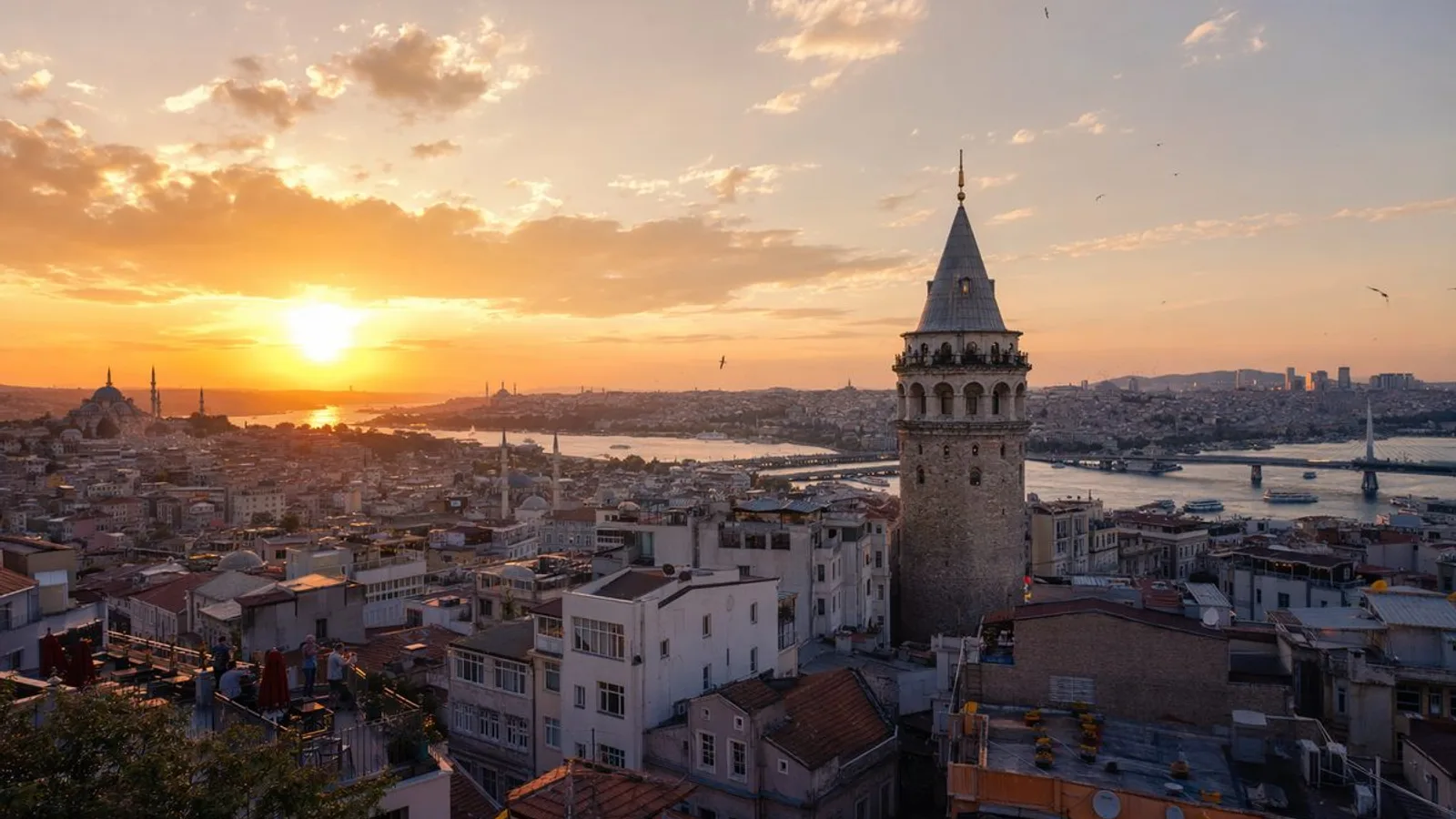
Galata Tower is the medieval stone tower on the hill above Karakoy and a useful landmark for this part of the city. Karakoy gives you waterfront access, tram connections, ferries, and easy movement toward the old city. Galata adds character hotels, side streets, cafes, and more of a neighborhood feel. Together, they offer one of the most flexible bases in Istanbul.
Main drawbacks
The main issue is topography. The climb between the waterfront and upper Galata streets can be tiring, especially in heat or with luggage. Noise can also come from traffic, nightlife, and nearby works.
Transport and terrain
This area works well for travelers who combine walking with trams and ferries. It is highly connected, but not gentle underfoot. Exact street choice matters a lot more here than the district name alone suggests.
When not to book there
Skip Karakoy-Galata if you need flat routes, are traveling with mobility concerns, or want a very quiet night. For easier terrain, Sultanahmet or parts of Sisli may be simpler.
Before publishing or booking, the waterfront between Karaköy and Galata has been under near-continuous redevelopment for years, so check what is fenced off on your dates rather than assuming the map..
Besiktas for local life and ferry access
Who it suits
Besiktas suits return visitors, travelers who like local neighborhoods, families who want a less tourist-heavy stay, and anyone planning to use ferries often.
Why stay
Besiktas feels lived-in and practical. It has markets, breakfast spots, dense local food options, and strong ferry connections. Dolmabahce Palace is the grand 19th-century Ottoman palace on the Bosphorus edge near Besiktas, so this area also works well if that waterfront zone is part of your plan.
Main drawbacks
It is not as direct for old-city sightseeing as Sultanahmet or Karakoy. Depending on your exact hotel, buses and traffic can also make cross-city trips feel slower than the map suggests.
Transport and terrain
Besiktas is best for ferry users and travelers comfortable mixing ferries with buses or taxis. Terrain is usually easier than upper Beyoglu, but some side streets still slope.
When not to book there
Do not choose Besiktas if your trip is built around dawn starts at the historic sights or if you want to be in the middle of the main nightlife core. It is a better local base than a pure sightseeing base.
Kadikoy for a more local stay on the Asian side
Who it suits
Kadikoy suits longer stays, repeat visitors, remote workers, food-focused travelers, and anyone who wants a local neighborhood rather than a classic tourist setting.
Why stay
Kadikoy gives you room to breathe, a strong cafe and dining scene, and some of the most enjoyable ferry rides in the city. Moda is the seaside subarea of Kadikoy known for parks, cafes, and a slower atmosphere, and many visitors split their time between the market streets and Moda's waterfront.
Main drawbacks
The compromise is distance from the classic European-side sights. You can absolutely visit them, but you will usually spend more time in transit than if you stayed on the European side.
Transport and terrain
Kadikoy works best if you are happy using ferries and metro connections as part of the trip. It is often more comfortable for day-to-day life than for landmark sprinting.
When not to book there
Skip Kadikoy for a very short first trip focused on Sultanahmet, especially if you want to minimize transfers. It is better for travelers who value atmosphere and routine over instant landmark access.
Late returns can matter more here than in central European districts, so the question that decides it is how you get back late. Ferries stay frequent well past dinner and the Marmaray runs under the strait, but both stop before the night is over..
Sisli and Nisantasi for shopping and modern comfort
Who it suits
Sisli and Nisantasi suit shopping trips, business travel, mixed work-leisure stays, and travelers who want newer hotels and straightforward metro access.
Why stay
This part of Istanbul feels more modern, practical, and comfortable for travelers who care less about old-city atmosphere. Nisantasi is polished and upscale, while Sisli is often more functional and better connected.
Main drawbacks
The main downside is not convenience but mood. If your idea of Istanbul is waking up near mosques, old stone streets, and major monuments, this is not that experience.
Transport and terrain
Metro proximity matters more than the neighborhood label here. A hotel close to a station can feel easy; one on a longer uphill walk can feel much less central in practice.
When not to book there
Do not choose Sisli-Nisantasi if this is your first short trip and your days are dominated by Sultanahmet sights. In that case, staying closer to the historic core usually makes more sense.
Best area by travel style
For a first trip
Choose Sultanahmet if landmarks lead your list. Choose Karakoy-Galata if you want a broader city feel, better dining range, and still-solid access to the main sights. If you only have two or three days, Sultanahmet usually saves the most time.
For families
Sultanahmet works well for families who want short sightseeing transfers and easy midday rests. Besiktas is a good alternative for families who want ferries, parks, and a more local rhythm. In any district, avoid steep streets, tiny lifts, and rooms directly above late-night venues.
For nightlife
Taksim-Beyoglu is the clearest pick for bars, music venues, and late evenings. Karakoy is the better compromise if you want nightlife nearby without sleeping in the busiest nightlife core.
For views and romance
Karakoy, Galata, and some Bosphorus-edge parts of Besiktas are strong choices for couples. Instead of booking a room based on a vague “sea view” claim, verify whether the category is partial, full, or obstructed and whether terrace access is guaranteed. "Sea view" and "partial sea view" are doing very different work in the same sentence, and a rooftop terrace that is open to the restaurant only is not a rooftop terrace you have..
For longer stays and remote work
Kadikoy, Sisli, and parts of Besiktas often work best. Daily life is easier there, dining gets less repetitive, and the neighborhoods feel more sustainable over a week or longer. Also check workspace photos, elevator access, and laundry details before reserving.
Areas to avoid choosing by default
Avoid choosing a hotel only because the nightly rate looks low. In Istanbul, a cheaper room in a far-out district with weak transport can cost more in time, taxi use, and daily fatigue than a better-located room.
Also avoid booking directly on the busiest nightlife strips if you are sensitive to noise. A hotel one or two streets away is often a better compromise. The same applies in sightseeing zones: a place that is technically near a landmark may still have awkward vehicle access, crowding, or a surprisingly noisy street.
Do not trust “near” on a booking map without checking the actual route. In Istanbul, near can still mean stairs, steep pavement, tram crossings, or a long uphill finish with luggage.
The safest default is to pick the right district first, then reject hotels with bad micro-location, poor soundproofing, or difficult access.
Practical booking tips before you reserve
Book the area first, then the hotel. Many travelers reverse that order after spotting a deal, but neighborhood fit matters more than a slightly lower rate.
Check these details in reviews and maps before reserving:
- uphill walk from the nearest tram, metro, or ferry
- midnight noise and whether rooms face a busy street
- small rooms or low ceilings in older buildings
- lift size and stair count
- whether cars can stop at the door
- actual walking time to transport, not just a map radius
- room view wording, if views matter to you
Worth checking against your own dates:
- whether any headline monument near your area is part-closed for restoration
- how you get back after dinner, and when that option stops running
- what the hotel means by "view" — and whether the terrace is actually yours to use
- how loud the street is at midnight, not at midday, which is when most reviews are written
- the real walking time to the nearest tram or ferry, rather than the distance on a map
For related planning, readers may also need practical transport pages and district guides. Useful next steps include airport transfer options, an Istanbulkart guide for public transport, Bosphorus ferry advice, family-friendly stays, nightlife areas, and district hotel roundups.
You can also compare sightseeing logistics on our Istanbul city pass page and review key attraction locations through Galata Tower, Dolmabahce Palace, and Topkapi Palace.
Final neighborhood picks
If you want the fastest answer:
- Best for first-time visitors: Sultanahmet
- Best for nightlife: Taksim-Beyoglu
- Best all-round base: Karakoy-Galata
- Best for local atmosphere on the European side: Besiktas
- Best for longer local stays: Kadikoy
- Best for shopping and modern hotels: Sisli-Nisantasi
If you are torn between two areas, decide based on your evenings. Travelers who finish the day near historic sights usually prefer Sultanahmet. Travelers who want dinner, drinks, and a wider restaurant scene usually prefer Karakoy, Galata, or Beyoglu.
Choose Sultanahmet if landmarks lead your trip, Taksim-Beyoglu if nightlife matters most, and Karakoy-Galata if you want the best mix of both. That choice alone will make the rest of your Istanbul trip much easier.