
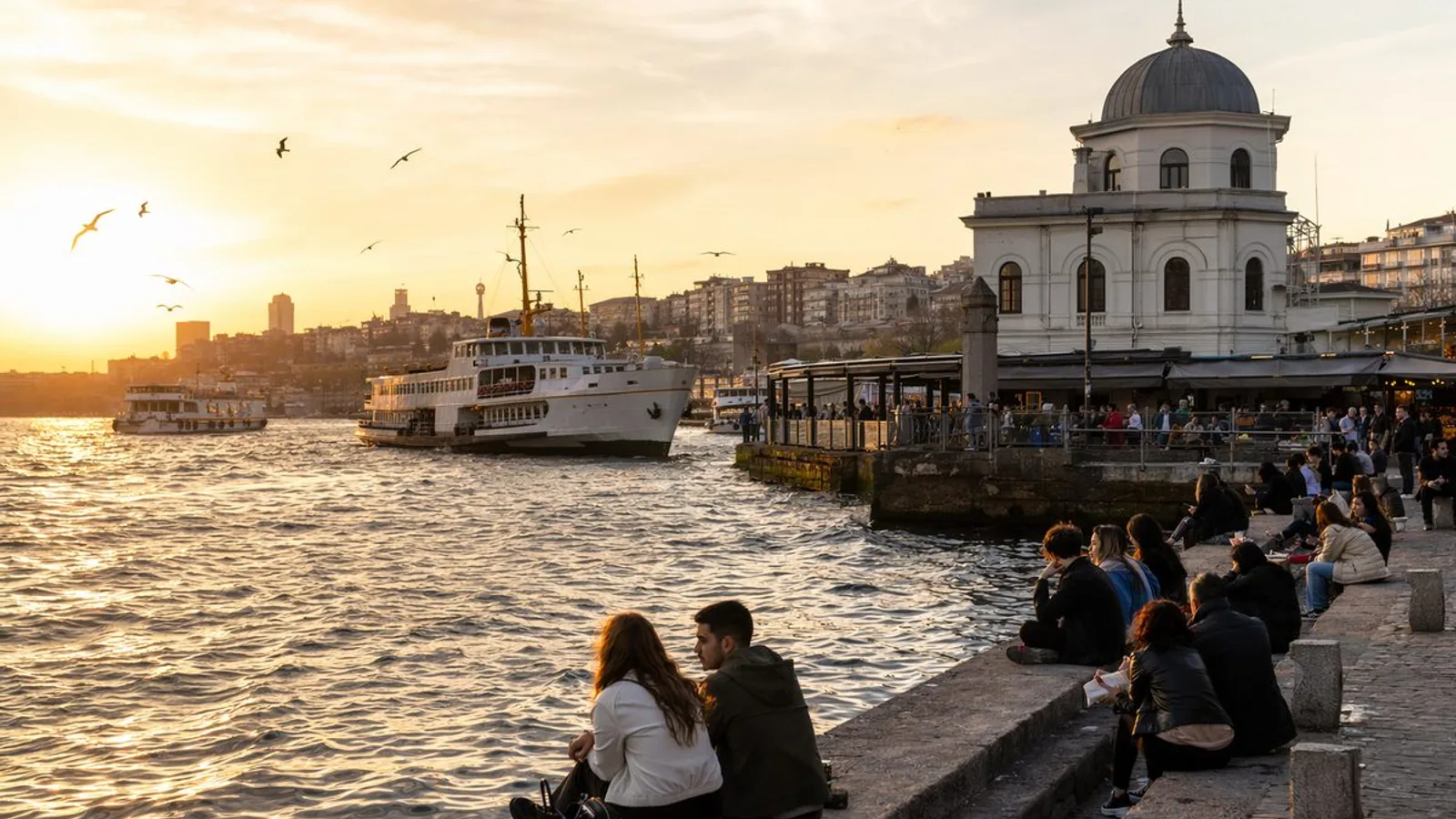
Kadıköy is one of Istanbul’s main districts on the Asian side, known for ferries, market streets, cafés, bars, and the seaside neighborhood of Moda. People visit for food, local street life, and a break from the city’s monument-heavy sightseeing. It works well for half a day if you want the highlights, but a full day is better if you want to eat slowly, browse, and stay into the evening.
Kadıköy at a glance
Kadıköy is a large district on Istanbul’s Asian side and one of the city’s busiest everyday hubs for transport, dining, shopping, and nightlife. Most first-time visitors focus on three linked areas: the ferry waterfront, Kadıköy Market near the center, and Moda, the quieter seaside neighborhood further south.
This is not the district for grand Ottoman landmarks. You come here for a different side of Istanbul: ferries pulling in, lunch counters filling up, bookstores and record shops on side streets, and people meeting friends after work by the sea.
Kadıköy is also easy to fit into a wider trip. You can arrive by ferry from common tourist areas such as Eminönü, Karaköy, and Beşiktaş, or use Marmaray if you want a faster rail connection under the Bosphorus. The area is walkable in sections, though it is large enough that a rough route helps.
Why people visit Kadıköy
People usually come to Kadıköy for four reasons:
- better access to everyday Istanbul life than in the historic core
- strong food options across bakeries, casual restaurants, meyhanes, dessert shops, and coffee spots
- a scenic ferry ride that feels like part of the visit
- an easy market-to-neighborhood walk that ends by the water
Kadıköy also balances energy and flexibility well. You can keep the visit simple and still get a lot from it: arrive by ferry, eat in the market area, walk up Bahariye, continue to Moda, and stay for sunset or dinner if the mood fits.
If your trip has already been heavy on major sights, Kadıköy is a good reset. It still feels distinctly Istanbul, just in a more lived-in, social, and contemporary way.
Best things to do in Kadıköy
Arrive by the waterfront
The best start is the ferry area near the piers. If you come from Eminönü, Karaköy, or Beşiktaş, the crossing gives you open water views and drops you close to the district’s busiest streets. For many travelers, this is the most enjoyable arrival because it combines transport and sightseeing in one step.
From the waterfront, take a few minutes to look around before heading inland. You will see commuters, tea sellers, gulls, and ferries moving between the two sides of the city. That first impression explains Kadıköy well: practical, social, and tied closely to the water.
If ferry service is reduced by weather or timing, Marmaray is the under-Bosphorus commuter rail line that links the European and Asian sides and is often the easiest backup. Ferries cross to Kadıköy from Eminönü, Karaköy and Beşiktaş, often enough through the day that you turn up rather than plan, but the last boats go in the evening. Marmaray runs later: the nearest stops are Ayrılık Çeşmesi and Söğütlüçeşme, a short metro or bus ride from the centre of Kadıköy rather than a walk from the pier.
Walk through Kadıköy Market
From the piers, head into Kadıköy Market, the compact central area known for fishmongers, produce shops, bakers, pickle sellers, casual restaurants, and meyhanes. This is the district at its busiest and most food-focused.
The best approach is to wander with a loose structure instead of chasing one single must-see stop. A practical first visit looks like this:
- start with simit, börek, or another bakery stop
- browse fish and produce streets
- choose one lunch place rather than several small queues
- leave room for dessert or coffee later
This area gets crowded, especially around lunch, dinner, and weekends. Expect narrow pavements, busy crossings, and a lot of visual noise. That is normal here.
Prices vary by street and by venue style, and the market is consistently cheaper than the waterfront a few minutes away. Timing matters more than price: the fish and produce stalls are at their best from late morning and start closing in the early evening, while the bars and late-night food places are only getting going then.
Continue to Bahariye and side streets
After the market, walk toward Bahariye Street for a more gradual transition from busy center to neighborhood life. This stretch and the nearby side streets are good for bookshops, record stores, casual shopping, murals, and people-watching.
The route works well because it keeps the day moving naturally:
- waterfront first
- market streets second
- Bahariye for browsing and a slower pace
- Moda last for sea views and a break
This middle section is where Kadıköy feels most mixed: local shoppers, students, office workers, and visitors all sharing the same streets. Exhibitions, live music and one-off events turn over constantly here, and the side streets around Bahariye are covered in posters for them — the walls are a better listings guide than anything written in advance.
Slow down in Moda
Moda is the seaside neighborhood within Kadıköy that most visitors pair with the market area. It is calmer, more residential, and better for lingering. Think cafés, older apartment blocks, quieter side streets, and shoreline views back toward the European side.
Moda is not about ticking off attractions. It works best as a slow finish to the day:
- stop for coffee or tea
- pick one bakery or dessert place
- walk toward the water
- sit for a while instead of rushing back
Families often find Moda easier than the center because there is more room to pause. Solo travelers usually find it comfortable because it stays active without feeling too hectic. Couples often come for the coastal walk and evening light.
Stay for the evening if you like food and nightlife
Kadıköy changes noticeably after late afternoon. The daytime errands and shopping rhythm gives way to dinner plans, drinks, and groups meeting outdoors. The market area and nearby streets get louder, and the seafront in Moda fills with people sitting on the grass or by the rocks.
If you enjoy city atmosphere, evening is one of the best times to be here. If you prefer quiet streets, finish earlier and leave before the dinner rush.
The reason to be here at sunset is the direction: from the Moda shore you face west across the water to the old city, so the domes and minarets go dark against the sky. Türkiye does not change its clocks, so in autumn and winter that happens earlier than many visitors expect.
What to eat and drink in Kadıköy
Kadıköy is worth visiting for food alone, but the district makes more sense if you eat in stages rather than book one heavy meal too early.
A simple way to structure it:
- morning or early start: simit, börek, or another bakery stop
- lunch: a home-style restaurant or other casual local spot
- afternoon: coffee, tea, or dessert
- evening: meze, seafood, or drinks if you stay later
The main advantage here is range. You can keep it traditional, mix old and new places, or do a lighter café-based visit. Specialization is common, which usually helps quality: bakeries focus on baking, dessert shops focus on sweets, fish places focus on fish.
If you want a meyhane evening, book for Friday and Saturday — the popular places fill with locals, not visitors — while a weeknight usually needs nothing more than turning up early. For food allergies or dietary needs, ask directly at each venue, since menus and preparation vary.
For more specific eating ideas, see our guides to Istanbul food and Turkish breakfast in Istanbul.
How to get to Kadıköy
For many visitors, the best way to get to Kadıköy is by ferry. It is scenic, easy to understand, and brings you straight to the waterfront.
Common starting points from the European side include:
- Eminönü: useful if you are staying near the old city
- Karaköy: convenient from Galata and nearby central areas
- Beşiktaş: often one of the easiest ferry links from the north side of central Istanbul
If ferries do not line up well with your plans, Marmaray is often the fastest alternative. Metro and buses also connect to the district. Taxis are possible, but traffic can make them slower than they look on the map.
From Sultanahmet, the tram to Eminönü and the ferry across is the classic route and the nicest; from Taksim, the funicular down to Kabataş and a boat from nearby Beşiktaş; from Sabiha Gökçen airport, the M4 metro runs straight into Kadıköy. All of it runs on one İstanbulkart, bought and topped up at the machines in any station or pier.
For broader planning, see our guides to Istanbul public transport, Istanbul ferries, and Asian-side neighborhoods in Istanbul.
Half-day and full-day plans
Half-day plan
- Arrive by ferry if possible.
- Spend a short time at the waterfront.
- Walk into Kadıköy Market for browsing and an early lunch or substantial snack.
- Continue through Bahariye and nearby side streets.
- Finish in Moda with coffee and a short coastal walk.
This is the best plan if you want a clear first visit without rushing too hard.
Full-day plan
- Start with a ferry arrival and waterfront pause.
- Explore Kadıköy Market more slowly, including shops and lunch.
- Browse Bahariye, bookshops, record stores, and side streets.
- Move to Moda for coffee, dessert, and time by the water.
- Stay into the evening for sunset, dinner, or drinks.
This works better if food is a major reason for visiting or if you want to see how the district changes after dark.
Fenerbahçe is one of Turkey’s major football clubs, and its home ground, Şükrü Saracoğlu Stadium, is in the wider Kadıköy area. Sports fans may want to build around match-day atmosphere. Check the fixture list on the club's own site, and note that tickets in Turkish football are sold against a registered fan card, so a last-minute ticket at the gate is not realistic.
If you want to build a bigger Asian-side day, pair Kadıköy with Üsküdar or a dedicated Moda guide. If you are comparing districts, see Eminönü and Beyoğlu.
Practical tips before you go
A few practical points make Kadıköy easier to enjoy:
- Payment: Card payment is common, but carrying some cash is still useful for small purchases or simpler shops.
- Crowds: Weekends and evenings are the busiest, especially in the market area and around popular food streets. Saturday afternoon is the peak; a weekday morning is the calmest the district ever gets.
- Safety: Kadıköy is widely visited and generally comfortable for most travelers, but it is still a busy urban district. Use normal city awareness around crowds, crossings, and late-night streets.
- Accessibility: The ferry area and larger roads are easier to navigate than some side streets. Pavements can be uneven, crowded, or narrow, and hills become more noticeable as you move toward Moda.
- Shoes: Wear comfortable shoes. The best version of Kadıköy involves a lot of walking.
- Weather: Rain does not ruin the visit, but it changes the rhythm. You will rely more on indoor food stops and shorter walks. If ferries are part of the plan, strong wind occasionally suspends the smaller sea-bus routes, but the main city ferries rarely stop — and Marmaray is always there under the water as a backup.
If you prefer a calmer visit, choose a weekday morning or early afternoon. If you want atmosphere, come later and stay into the evening.
Is Kadıköy worth visiting?
Yes. Kadıköy is worth visiting if you want to see a more everyday, food-focused, and social side of Istanbul beyond the major historic monuments.
It is especially worth adding if your itinerary already includes places like Hagia Sophia, Topkapi Palace, or the Blue Mosque. Those landmarks show Istanbul’s imperial history. Kadıköy shows how the city feels in the present.
For most travelers, half a day is enough to understand why people like it. A full day is better if you want to eat properly, browse without rushing, and stay for sunset or nightlife.
If you are choosing between districts, pick Kadıköy when you want food, ferries, and local street life more than major monuments.