
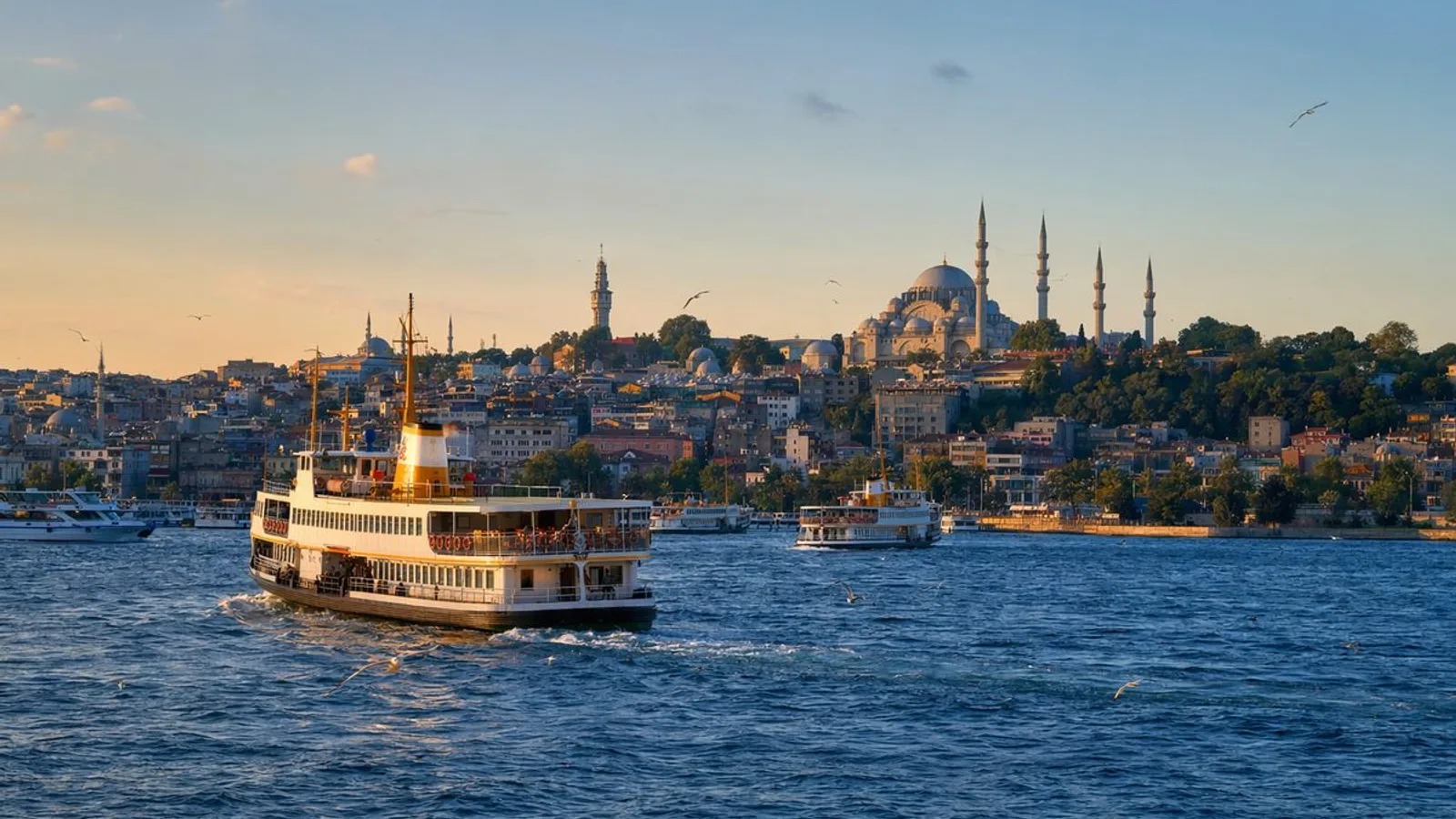
September is usually one of the best months for Istanbul weather: warm days, milder evenings than peak summer, and enough daylight for full sightseeing days. For a short first trip, a sightseeing pass often does pay off if you plan several paid headline attractions across a two- to four-day stay; if your plan is mostly mosques, neighborhoods, ferries, and café time, single tickets are often better.
Key Takeaways
- September is one of the strongest months for balanced sightseeing weather in Istanbul.
- Expect major landmarks to stay busy, especially in Sultanahmet and at Bosphorus departure points.
- Pack light layers, comfortable shoes, sun protection, and one rain-ready item.
- A pass works best for short, attraction-heavy trips with early starts and a clear list of paid sights.
Istanbul is Türkiye's largest city, spanning Europe and Asia, with major historic landmarks, ferry routes, dense neighborhoods, and extensive public transport. September is the early-autumn transition month after peak summer heat, with warm conditions that still suit long days outside. A sightseeing pass is a bundled admission product that may include attraction entry, hosted access, guided visits, cruises, or transport-related extras depending on the provider.
Istanbul in September 2026
If you are planning Istanbul in September 2026, expect warm sightseeing weather, busy flagship attractions, and strong conditions for ferries, palace grounds, and evening views. It is a practical month for first-time visitors because the city is still fully active, but the climate is often easier than July or August.
The trade-off is clear: September is not a quiet season. Sultanahmet, Galata, Eminönü, and popular Bosphorus stops can get crowded, especially from late morning onward. The best fix is not to avoid the big sights, but to visit them early and leave flexible time later in the day.
If your trip depends on exact opening hours, museum access rules, or pass inclusions, verify them close to departure. Hagia Sophia runs daily, 09:00 - 19:30, Topkapı Palace daily except Tuesday, 09:00 - 21:00 and is closed Tuesday, and the Basilica Cistern daily, 09:00 - 18:30. The pass currently covers 78 included attractions, tours and experiences, from €249.
What the weather feels like in September
September weather in Istanbul is often warm, bright, and easier to handle than high summer. Early September can feel closer to late summer, while later September is often milder, especially in the evenings.
Temperature, sun, wind, and sea conditions
Use this quick weather snapshot before you fine-tune your packing list:
| Weather factor | What to expect | Verification |
|---|---|---|
| Daytime high | around 26-28°C, easing through the month | warm but past the August peak |
| Nighttime low | around 17-19°C | a light layer is enough after dark |
| Rain | a handful of wet days, rising late in the month | rarely enough to rewrite a day |
| Sea temperature | still around 22-24°C | warmer than the air feels by evening |
You should plan for daytime warmth rather than cool autumn weather. Stone-heavy areas with limited shade can feel hotter than the forecast suggests, especially around Sultanahmet squares, tram stops, and uphill streets in Beyoğlu. Ferry decks and Bosphorus promenades can feel cooler once the wind picks up.
Humidity also changes how the day feels. Pack for sun, walking, and a mild evening breeze rather than for a strict summer-versus-autumn label.
What September daylight means for your itinerary
Daylight is one of September’s biggest advantages. You usually have enough usable light for a full sightseeing day and an evening plan. Daylight shortens noticeably across the month: sunset slips from around 19:45 at the start to nearer 19:00 by the end, which moves your cruise slot earlier as you go.
That makes split-day planning easy. You can visit a major museum in the morning, slow down in the warmest part of the day, then return for a cruise, mosque visit, or rooftop dinner later.
If you care about photography, early morning and late afternoon are often the best windows around the Blue Mosque square, the Galata Bridge area, and Bosphorus viewpoints.
How crowded Istanbul feels in September
September is busy, but it is manageable if you plan around the city’s rhythm. Crowds gather fast at the same famous sites, while many other districts still feel comfortable once you move away from the main queues.
Where crowds build first
The first pressure points are usually Sultanahmet landmarks, Topkapi Palace approaches, the Basilica Cistern line area, Galata Tower surroundings, and major Bosphorus departure piers. Weekends add more pressure to shopping streets and ferry hubs.
Sultanahmet is the historic core where Hagia Sophia, the Blue Mosque, the Basilica Cistern, and Topkapi Palace sit within easy walking distance. The Bosphorus is the strait dividing Europe and Asia and one of the city’s main scenic corridors.
Cruise schedules, prayer times, domestic travel patterns, and weekends can all affect flow. Domestic travel thins out once Turkish schools go back in mid-September, which is part of why the second half of the month feels calmer than the first.
Best times of day to visit major sights
The simplest strategy still works best: go early. Near-opening arrivals usually mean shorter security waits, easier movement, and better indoor comfort before midday heat builds.
Late afternoon can also work for some sights, but only if final entry times and seasonal closing rules support it. Verify before you commit.
For mosques and active religious spaces, leave room for prayer-time restrictions and visitor flow changes. Both are active mosques: entry pauses for visitors around each of the five daily prayers, shoulders and knees stay covered, and shoes come off at the door. Hagia Sophia's visitor hours are daily, 09:00 - 19:30.
What to pack for September in Istanbul
Pack for warm days, active walking, and one or two weather shifts. Most travelers do not need a heavy autumn wardrobe for September.
A practical list:
- Light tops that breathe well
- Comfortable walking shoes with grip for stone streets
- One light layer for evening breeze or ferry rides
- Sunglasses and sun protection
- A compact umbrella or light rain shell
- Modest cover-up for mosque visits
- A refillable water bottle
Footwear matters more than extra outfits. Many parts of Istanbul are steep, uneven, and paved with polished stone, so stable shoes will help more than stylish but slippery pairs.
For mosque visits, dress rules should be part of your plan from the start. Carry a light scarf or extra layer so you can enter respectfully without last-minute scrambling. See current guidance in a dedicated mosque dress code guide.
If you plan a Bosphorus cruise, rooftop dinner, or evening ferry, bring a layer even after a warm day. Wind can change the feel of the city quickly.
Which attractions shine this month
September is one of the easiest months to mix indoor and outdoor sights. You can keep a broad plan and still adapt if the afternoon turns hotter or wetter than expected.
Best outdoor choices
September is excellent for the Bosphorus. Short ferry rides, longer cruises, and waterfront walks all feel rewarding in the softer light of the month. With sunset moving earlier through the month, the late-afternoon cruise slot shifts with it. A short sightseeing cruise with an audio guide starts around €12 on its own; the public ferry crossings cover much of the same water for a fraction of that.
It is also a strong month for palace grounds, skyline viewpoints, and neighborhood walks. Good pairings include:
- Topkapi Palace for history plus courtyards
- Blue Mosque and Hagia Sophia early in the day
- Bosphorus Cruise near sunset
- Galata Tower area for skyline views
- Dolmabahce Palace with a waterfront walk after
Public parks, ferries, and shoreline areas can also reset the pace after dense museum time.
Best indoor backups for hot or wet days
Your best indoor backups are museums, cisterns, hammams, covered bazaars, and food-focused stops. If the afternoon turns hot or wet, switch to places where you can stay engaged without forcing more outdoor walking.
Good backup options include:
- Basilica Cistern
- Archaeological Museums
- Dolmabahce Palace
- Grand Bazaar
The Basilica Cistern runs daily, 09:00 - 18:30 on a one-way walkway route, Topkapı is closed Tuesday with the Harem ticketed separately, and Dolmabahçe is closed Monday.
Does a sightseeing pass pay off in September?
For most short first-time trips, yes, a sightseeing pass can pay off in September if you plan several paid sights in a compact schedule. For slower trips built around free mosques, neighborhoods, markets, long meals, and ferries, single tickets are usually the better buy.
September helps pass users because the weather supports long sightseeing days. You are more likely to fit multiple major entries into one day than in harsher weather months. But the pass only works if the included attractions match what you genuinely want to do.
Use this simple framework:
- Buy a pass if you want a palace, cistern, cruise, tower, and other paid highlights in a tight window.
- Buy single tickets if your list is short or mostly free-entry sites.
- Skip the pass if you dislike structured days or do not want pressure to “use it enough.”
For broader comparisons, link your research to an Istanbul pass comparison hub, Istanbul Attractions, and Istanbul Itinerary.
When the pass usually makes sense
A pass usually makes sense if you plan several major paid attractions over two to four days, and if those attractions are included on terms you would actually use.
Concrete pass-friendly use cases:
- First-time visitor on a 2- or 3-day trip: You want Topkapi Palace, the Basilica Cistern, a cruise, and at least one more paid sight.
- Efficient early starter: You are happy to enter major sights near opening time and move quickly between districts.
- Traveler comparing queue friction as well as price: Hosted entry, bundled booking, or skip-the-line features may matter if they are genuinely included and useful.
This is the type of traveler who often gets both savings and convenience from a pass.
As it stands the pass covers 78 included attractions, tours and experiences with 20 add-ons at member prices, starting at €249. For comparison, the headline stops run to about €30 for Hagia Sophia, €75 for Topkapı Palace and €50 for the Basilica Cistern bought on their own.
When single tickets may be better
Single tickets may be better if your trip is slower, lighter, or less museum-focused.
Concrete single-ticket use cases:
- Neighborhood-first traveler: You care more about Karaköy, Kadıköy, Beşiktaş, cafés, and street life than paid entries.
- Mosque-and-ferry traveler: Several of your top sights are free-entry religious spaces plus scenic ferry time using regular transport.
- Low-count attraction planner: You only want one or two paid sights, such as Topkapi Palace and the Basilica Cistern.
- Flexible trip style: You do not want to shape your day around pass validity, inclusion rules, or attraction sequencing.
If your must-do list is short, single tickets avoid artificial pressure. If your plan includes palace, cistern, tower, cruise, and transport-linked movement in a compact window, the pass is much more likely to justify itself.
A practical 3-day September plan
Here is a realistic first-trip plan that fits September conditions without overloading each day.
Day 1: Historic core early, Bosphorus later
Start in Sultanahmet near opening time with Hagia Sophia, the Blue Mosque, and the Basilica Cistern. Keep lunch slow once the area gets busier. In the late afternoon, move toward Eminönü or Karaköy and finish with a Bosphorus Cruise or a regular ferry ride using local transport. A dedicated Istanbul ferry guide can help if you prefer public ferries to a cruise product.
Day 2: Topkapi first, Galata side later
Visit Topkapi Palace early, while energy and queue tolerance are highest. After lunch, cross toward Galata or Karaköy for a lighter afternoon of side streets, cafés, and skyline viewpoints. If you want another ticketed stop, add a tower or museum only if your pace still feels good.
Day 3: Palace waterfront or Asian side swap
Choose Dolmabahce Palace in the morning, then continue through Beşiktaş and along the waterfront. If you want a different city mood, take a ferry to the Asian side for a slower district walk and meal. Use current transport guides to plan ferry and tram connections. If weather turns wet or too warm, switch the outdoor portion for the Grand Bazaar, the Archaeological Museums, or another indoor stop.
This is exactly the kind of 3-day plan where a pass can work well, but only if the included attractions match your actual list and pace.
Final planning notes for September 2026
September is one of the safest months to recommend for balanced city sightseeing in Istanbul. The weather is often warm but workable, daylight is generous, and ferry conditions are usually strong enough to make time on the water part of the trip rather than an afterthought.
Three planning rules matter most:
- Do major landmarks early. This is the best defense against both queues and heat.
- Protect the middle of the day. Use lunch, indoor sights, or slower neighborhoods when central tourist areas feel heaviest.
- Judge pass value by your real behavior. Do not buy one for your most ambitious version of the trip if you know you prefer a slower pace.
Before departure, recheck opening rules for major religious and historic sites, final cruise and ferry schedules, and the latest pass terms. Useful planning links from this page include Topkapi Palace, Hagia Sophia, Basilica Cistern, Bosphorus Cruise, mosque dress code, Istanbul ferry guide, transport guides, and an Istanbul pass comparison hub.
If you build around early starts, midday flexibility, and scenic evenings, Istanbul in September 2026 is usually an excellent fit for a short first visit.