
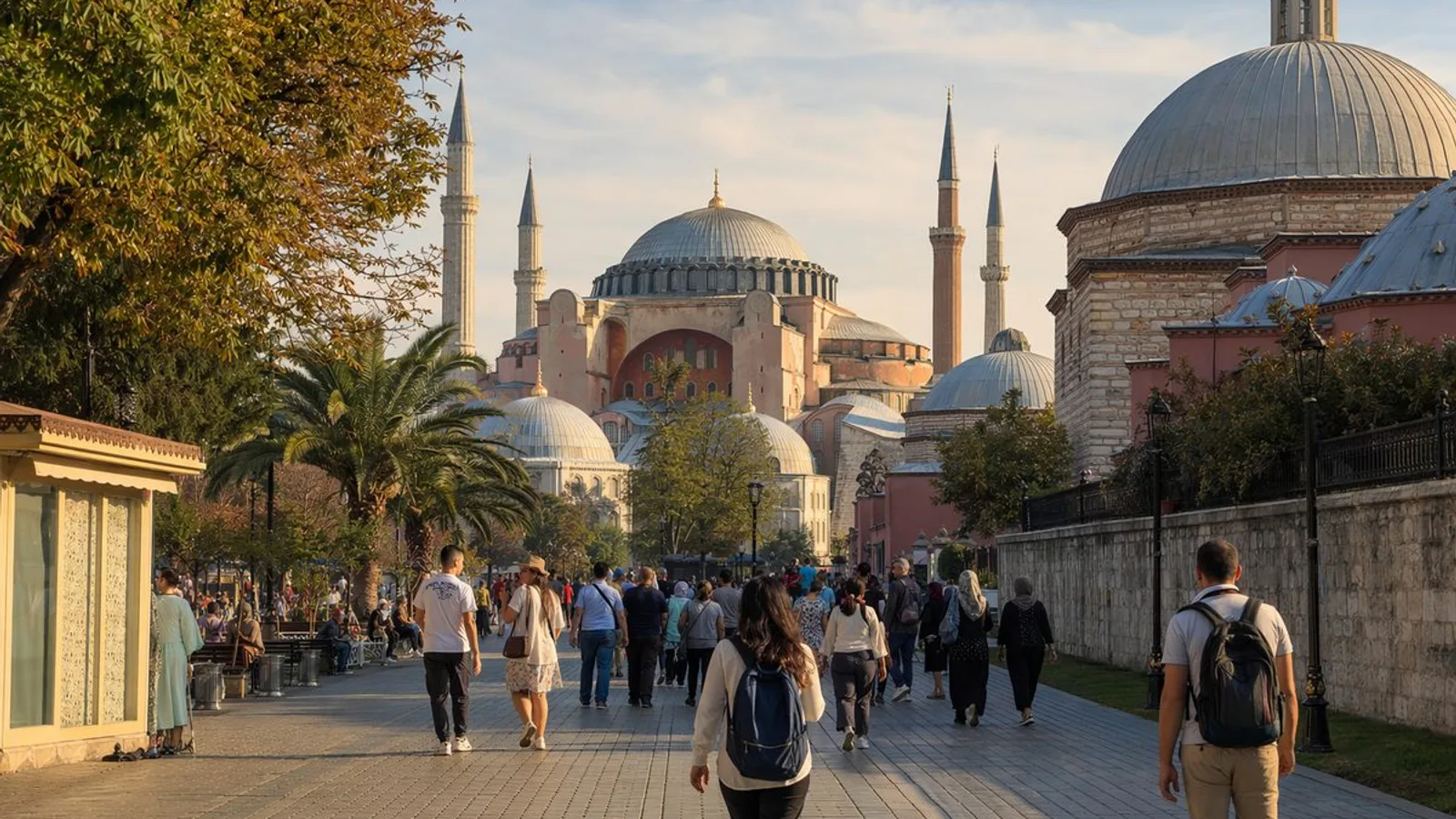
Yes—an Istanbul sightseeing pass can be worth it in September if you plan to do several paid sights in a short trip, but it is usually not worth it for a slow itinerary with only a few ticketed stops.
- Buy it if: you want a dense first-time itinerary, expect to use major paid attractions plus a cruise or tour, and prefer preplanned costs.
- Skip it if: you want one main sight per day, care more about neighborhoods and cafés than ticketed entries, or do not want reservations shaping your schedule.
An Istanbul sightseeing pass is a bundled product that may combine attraction entry, guided tours, cruises, or transport-style extras in one purchase. A museum pass is different: it is usually focused on museum and heritage-site access rather than mixed sightseeing extras like cruises or city tours.
September is often one of the easier months to get real use from a pass because full sightseeing days are more realistic than in harsher weather. But value still depends on what your specific pass actually includes, whether key sights need reservations, and whether your must-see list matches the pass instead of just sounding impressive in the brochure.
Is an Istanbul sightseeing pass worth it in September?
For many first-time visitors, yes. September usually supports long sightseeing days, a practical indoor-outdoor mix, and good use of bundled attractions. That makes it a stronger month for pass value than periods with heavier weather disruption or shorter days.
The fast decision rule is simple: a sightseeing pass is usually worth it if you will use several paid inclusions across two to four sightseeing days. It is usually not worth it if your trip is built around one or two headline sights, mosque visits with access limits, neighborhood wandering, and long meal breaks.
Before you buy, clarify three things:
- What kind of pass you are comparing. A sightseeing pass may include cruises, guided walks, towers, or tours. A museum pass is usually narrower and stronger for archaeology- and museum-focused travelers.
- What counts as a true inclusion. Some products include full entry, some include only discounts, and some hinge on guided access or fixed departures.
- What can limit use in September. The PRIME Pass currently lists 78 included attractions, tours and experiences, plus 20 add-ons at member prices. Cruises run daily through September, though the sunset departures shift earlier as daylight shortens.
If your shortlist includes major historic sights plus a Bosphorus activity, a sightseeing pass can make sense. If your priority is mainly heritage sites, compare it directly with a museum-only option in our museum pass vs sightseeing pass guide.
What changes in Istanbul in September
September often offers a useful balance: active tourist season, comfortable-enough conditions for walking, and enough daylight for full sightseeing days. That helps pass users because bundled products work best when you can fit multiple attractions into the same day without feeling rushed.
Weather, crowds, and queue times
Istanbul weather is the mix of temperature, humidity, sun, and rain that affects how much sightseeing you can realistically complete.
September weather is often favorable for walking between major sights, taking ferry rides, and combining indoor and outdoor stops. September typically sits around 26-28°C by day and 17-19°C at night, with only a handful of wet days — enough to make outdoor inclusions reliably usable, which is part of why the month suits a pass, because even a few wet days can reduce the usefulness of outdoor-heavy plans.
Crowds remain important. Major landmarks such as Hagia Sophia, Topkapi Palace, the Blue Mosque, and the Basilica Cistern can still be busy. In that context, a pass with reserved entry, guided access, or timed booking support may be more useful than one that simply bundles standard admission.
Treat closures, prayer-time restrictions, and restoration work as one planning check rather than separate afterthoughts. Prayer-time pauses at the working mosques are the access limit that actually bites, and restoration work moves around the major monuments from year to year before deciding that a pass covers your ideal route.
Which attractions are usually strong in September
A Bosphorus cruise is a boat trip along the strait, often included in sightseeing-style passes rather than museum products. Topkapi Palace is the former Ottoman imperial residence and one of the city's longer major visits.
In September, the strongest pass days usually mix one long headline sight, one shorter indoor stop, and one scenic activity. A day built around Topkapi Palace, the Basilica Cistern, and a Bosphorus cruise is easier to imagine in September than in a month with harsher weather or shorter daylight.
Still, check the practical details first. Topkapı runs daily except Tuesday, 09:00 - 21:00 and is closed Tuesday, the Basilica Cistern runs daily, 09:00 - 18:30 on a one-way route, and the sunset cruise slot moves earlier through the month.
If you want to cluster landmarks in the old city, our 3 days in Istanbul guide and Sultanahmet guide are the best next step.
How the savings math works in September
Do not start with the advertised discount. Start with your real itinerary.
Simple formula:
Pass value = total cost of attractions you will actually use - pass price - any extra fees not included
If that result is positive, the pass may save money. If it is negative, paying as you go is usually better.
Bought separately, Topkapı Palace runs to about €75, the Basilica Cistern €50, Hagia Sophia €30 and a short sightseeing cruise €12 — against a pass from €249.
When a pass saves real money
A pass usually starts to make sense when you have:
- at least four paid attractions in two to three days days
- at least one expensive inclusion such as a cruise or guided experience
- a fixed plan with realistic early starts
- enough energy to do a major site and a second activity on the same day
September helps because the weather often makes that kind of schedule more achievable.
Here is the compact comparison to use:
| Scenario | Likely better choice | Why |
|---|---|---|
| four paid sights in two to three days days, plus a cruise or guided tour | Sightseeing pass | Mixed inclusions can outweigh the pass price if you use them all |
| One or two paid monuments, then free wandering and cafés | Pay as you go | You are unlikely to use enough inclusions |
| Mostly museums and heritage sites, few tours | Museum pass comparison needed | A museum-focused product may fit better than a sightseeing bundle |
| Dense old-city itinerary with timed entries you will actually keep | Sightseeing pass | Convenience may add value alongside savings |
A practical September example is a traveler choosing Topkapi Palace, Basilica Cistern, and a Bosphorus cruise, then comparing that total with the pass price using the formula above. If your pass also relies on reservations, count that as part of the value only if the times fit your day.
When paying as you go is smarter
Paying as you go is often better when your trip is lighter, slower, or less predictable.
That is usually true if:
- you want only one or two major ticketed attractions
- you will skip cruises, towers, bus tours, or guided add-ons
- you prefer one big sight per day
- you need full flexibility because of children, work, fatigue, or uncertain weather
It is also the smarter choice when your must-sees are partly free or have access limits that reduce how much a bundled pass can really do for you. For example, if your day revolves around Hagia Sophia, the Blue Mosque, and time around Sultanahmet, a sightseeing pass may not be the best-value tool.
Who should buy a sightseeing pass in September
The best September pass buyer is usually a first-time visitor with a short, structured trip. If you want the historical core, one or more paid landmarks, and a cruise or guided experience, a pass can reduce friction and simplify budgeting.
It can also work well for travelers who dislike repeated ticket purchases and want one product to organize the paid part of the trip. That matters more in a busy sightseeing month when small delays can add up.
Check one practical issue before buying: whether where you are staying puts the included attractions within reach. A pass bought from the far side of the city loses to travel time before it loses on price. A pass loses value fast if the attractions are spread awkwardly around your real base and timing.
Families, couples, and short stays
Families: A pass can work if the included sights already match your plan and the day has room for breaks. Families usually do better with one anchor attraction per half day, not a maximalist checklist. If your rhythm is uncertain, flexibility may beat theoretical savings.
Couples: Couples on a first trip often get better use from a pass because they can move faster and keep timed reservations more easily. A pass can cover the high-cost daytime attractions, then leave the evening open for neighborhoods, dinner, or a scenic ferry.
Short stays: Short trips are where passes often look strongest, because compressed itineraries increase the chance that a bundle beats pay-as-you-go pricing. If your trip is a single day, every hour matters. Location, queue strategy, and reservation fit become part of the value calculation. Transfer time is the quiet cost here: the old-city cluster is walkable, but anything across the water or up the hill turns a spare hour into a half-hour move.
If you are planning a quick old-city trip, start with 3 days in Istanbul, then decide whether a pass supports that route naturally.
Who should skip it
Skip a sightseeing pass if you are a repeat visitor with a narrow list, or if your Istanbul plan is built more around atmosphere than ticketed attractions.
It is usually a poor fit for:
- repeat visitors who only want one or two specific paid sites
- travelers who dislike fixed slots and departure times
- budget travelers tempted by the idea of savings rather than the reality of usage
- museum-focused visitors who may be better served by a museum pass than a sightseeing bundle
This is where the comparison matters most: a sightseeing pass is not automatically the right product just because it includes more items on paper. More inclusions do not help if they are the wrong inclusions.
Best September attraction mix for pass value
The best September strategy is balance, not volume. Aim for one major landmark, one shorter indoor attraction, and one scenic activity.
Good-value indoor and outdoor balance
A realistic high-value day might look like this:
- morning: Topkapi Palace
- midday: Basilica Cistern
- late afternoon: free time around Sultanahmet
- evening: Bosphorus cruise
That works because it mixes a long visit, a shorter paid stop, and a scenic inclusion without forcing too many major entries into one day.
Another good pattern is to use the pass heavily in the morning and early afternoon, then stop. You do not need to maximize every listed inclusion to get value; you only need enough real use to beat the pay-as-you-go total.
If your route is centered on the classic monument zone, see our guides to Hagia Sophia, Topkapi Palace, the Blue Mosque, and the Basilica Cistern before choosing a pass.
Common September mistakes before you buy
The first mistake is buying the wrong type of product. A sightseeing pass, a museum pass, and a single-operator tour bundle are not interchangeable. If your list is mostly museums, compare museum options first. If your list includes cruises and guided activities, compare sightseeing products.
The second mistake is counting every inclusion as if you will use it. You probably will not. Build a realistic September day, not an idealized one.
The third mistake is ignoring reservations and closure logic. Treat closures as one combined check: Topkapı is closed Tuesday, Dolmabahçe closed Monday and the Grand Bazaar closed Sunday, and the timed-entry products are the ones that want booking ahead.
The fourth mistake is overlooking religious-site access rules. Hagia Sophia and the Blue Mosque may have prayer-time restrictions, dress expectations, or visitor-flow rules that reduce how much a pass helps. Both are active mosques: Hagia Sophia's visitor hours are daily, 09:00 - 19:30, the Blue Mosque is free to enter between prayers, and at either one shoulders and knees stay covered with shoes off at the door.
The fifth mistake is overrating bus-style inclusions without checking whether trams, ferries, or walking are better for your actual route. Istanbul often rewards simple geographic planning more than long inclusion lists.
The sixth mistake is buying before you map your base. Hotel location can turn a good-looking pass into a bad fit if transfers eat your usable sightseeing time.
If you are deciding between products, read museum pass vs sightseeing pass. If you want a more product-specific review, see Is Istanbul Prime Pass worth it?.
Final verdict
An Istanbul sightseeing pass is often worth it in September for first-time visitors with a packed, paid-sight itinerary. September usually gives you a good chance to use multiple inclusions in the same day, which is exactly when these passes perform best.
It is usually not worth it for a slow trip, a museum-only trip that might fit a different product better, or an itinerary built around a few headline sights plus free wandering.
The safest way to decide is:
- list the attractions you genuinely plan to do
- separate sightseeing-pass inclusions from museum-pass coverage
- check closures, reservations, and access rules
- total your pay-as-you-go cost
- compare that number with the pass price using the formula above
If the savings are real and the schedule looks comfortable, buy it. If the plan already feels tight on paper, skip it and keep your September trip flexible.