
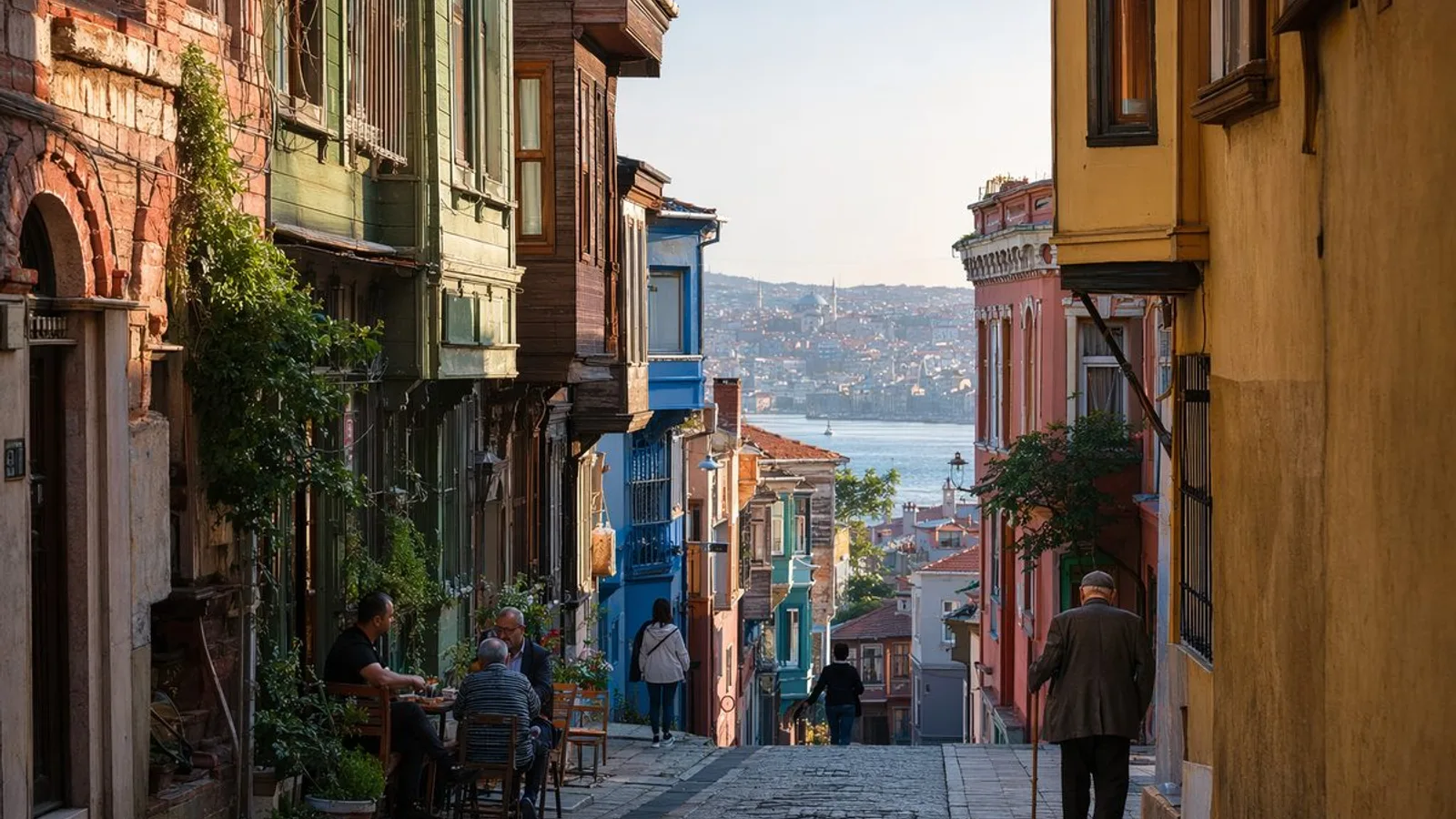
Balat and Fener are two adjoining historic neighborhoods on the southern side of Istanbul's Golden Horn, best known for steep residential streets, colorful older houses, cafés, churches, and layered Jewish, Greek, Armenian, and Muslim heritage. They are worth visiting if you enjoy walking, street photography, and neighborhoods that feel lived-in rather than polished; most first-time visitors should allow two to three hours, with the best start being the waterfront edge and then an uphill walk into the lanes.
Balat is a historic neighborhood on the western side of this pair, known for colorful facades, older houses, and a mixed communal history. Fener is the neighboring historic quarter to the east, closely associated with the Greek Orthodox community and several major religious landmarks. Golden Horn is the long natural inlet that branches inland from the Bosphorus and shapes the historic shoreline of this part of Istanbul.
These two districts are usually explored together on one walk. Balat tends to feel busier, more café-lined, and more obviously photogenic at first glance. Fener often feels quieter and more monumental, with heavier brick architecture, religious sites, and clearer visual links to the water.
What to see first in Balat and Fener
If this is your first visit, start with three priorities: one short shoreline approach, one uphill section through the best-known streets, and one or two landmark stops that explain the area's history. That gives you color, context, and a manageable route without turning the visit into a checklist.
Begin near the Golden Horn, where the flatter streets help you orient yourself. From there, head inward and uphill toward the better-known Balat lanes. Within a few minutes, you move from roadside walls and shopfronts to narrow sloping streets with bay windows, painted facades, hanging laundry, and cats stretched out on steps.
A simple first-timer plan looks like this:
- Walk a few side streets rather than staying only on the main road.
- Stop at one staircase area and one sloping residential street instead of chasing every photo pin.
- See the red-brick Greek school from below for one of Fener's clearest landmark views.
- Pause at a local café before the busiest hours if you want a quieter break.
- Leave an hour to wander without a map.
Why Balat and Fener feel different
A quick sense of place
Balat and Fener sit next to each other, but the experience changes as you walk. Balat usually gives you the postcard version first: brighter facades, tables on the street, vintage-styled café fronts, and more people stopping for photos.
Fener reveals itself more through scale and architecture. You notice higher walls, school buildings, church compounds, iron gates, and longer views toward the shoreline. A few blocks can shift the mood from cheerful and busy to quiet and institutional.
That contrast is one reason the walk works so well. In a short distance, you move from colorful residential lanes to places that carry the weight of Istanbul's religious and communal history.
What makes the streets so photogenic
The streets photograph well because several visual elements stack together. The lanes are narrow and steep, which creates strong lines and depth. The facades mix bright paint with peeling plaster, wood, stone, and patched repairs. Many corners also combine plants, shutters, signs, overhead wires, and steps in a single frame.
Light matters as much as color. Early morning tends to soften the brightest walls and bring out more texture in older surfaces. Later in the day, some streets catch side light that works well for façades and doorways. Midday can still work for graphic shots, but contrast is stronger and the busiest corners tend to feel more crowded.
Best photo spots in Balat and Fener
You do not need a long shot list here. A better approach is to combine two or three known stops with the quieter connecting streets between them.
Colorful staircases and painted corners
The painted staircases are the easiest landmark-style photo stop to recognize, and they are usually easy to locate once you reach the more visited Balat lanes. They are cheerful, quick to visit, and often busy.
For better results, treat the staircase as a brief stop rather than the whole goal. Look one street over for a painted corner with less foot traffic, a diagonal uphill view, or a doorway framed by plants and chipped plaster. Those nearby details often produce stronger photos than the most obvious staircase shot.
Merdivenli Yokuş and the rows of old houses
Merdivenli Yokuş is a steep historic street in Fener-Balat known for its sloping profile and rows of older houses. This is one of the streets visitors associate most with the classic colorful-house image.
It helps to arrive with realistic expectations. Some houses are bright and freshly painted. Others are faded, weathered, or under repair. Parked cars, delivery scooters, and normal daily life are part of the scene. That is not a flaw; it is part of why the area still feels like a neighborhood rather than an open-air set.
For photos, start from lower down the slope for a wider composition, then move closer for details such as knockers, shutters, worn thresholds, and stair rails. The best images here often come from texture and angle, not only from one full-street shot.
The waterfront and side streets of Fener
The Golden Horn edge gives the walk some breathing room after the tight lanes. It also helps with orientation. From the shoreline road, turn inland again toward Fener's larger landmarks, especially the uphill streets below the red-brick school and around the religious compounds.
This part of the route feels different from the café-heavy Balat corners. The architecture is more formal, with more brick, stone, walls, and gates. If you like documentary-style street photography or quieter architectural frames, Fener often rewards more patient walking.
A walking route for first-time visitors
Start by the Golden Horn
Begin near the shoreline so the route builds naturally uphill. That makes navigation easier and lets you understand how the neighborhood sits against the Golden Horn before you climb into the denser streets. The easiest arrivals are the T5 tram and the Golden Horn ferry, which both stop at Fener and at Balat, or any of the buses running up the shore road from Eminönü. See our future guide to the Golden Horn and broader Istanbul public transport options when available.
Spend a few minutes on the flatter approach streets first. This is a good place to photograph walls, corner groceries, older facades, and the contrast between the water-facing road and the lanes behind it.
Move uphill into Balat
From the shoreline, head uphill into the better-known Balat streets. This is where first-time visitors usually encounter the busiest corners, painted stair areas, and the strongest concentration of café fronts and colorful houses.
Keep your route flexible, but use landmark anchors rather than chasing every marked photo stop. If a staircase is crowded, continue one block uphill or one block across and look back downhill. If one lane feels too busy, turn toward a quieter residential street and rejoin the main route later.
A short tea or coffee break helps once you have climbed a bit, especially in warm weather. The climb is steep enough that heat changes the walk: in summer do it early and save the upper streets for last; in winter the same lanes are cold, quiet and at their most photogenic.
If you want to pair this neighborhood walk with a major monument, Blue Mosque works better as a separate stop elsewhere in the day rather than something squeezed into the same morning.
End with cafés and softer light
The last part of the walk is a good time to slow down rather than add more landmarks. Pick one café terrace or a simpler tea stop, rest your legs, and then take one final pass through a nearby side street while the light softens.
For many visitors, the best rhythm is early arrival, slow uphill walking, a late breakfast or coffee, and a final loop before leaving. If neighborhoods matter more to you than interiors or museum visits, this area can easily fill a half day.
Churches, schools, and landmarks to notice
Balat and Fener are not only about colorful facades. Their historical weight becomes clearer once you notice the schools, churches, synagogues, and smaller everyday religious buildings embedded in the street pattern.
Greek Orthodox heritage in Fener
Phanar Greek Orthodox College is a historic Greek Orthodox school and one of the most recognizable buildings in Fener. Its red-brick mass on the hill gives the area one of its strongest visual anchors, and many visitors first notice it from lower streets looking upward.
Nearby, the Ecumenical Patriarchate of Constantinople is the seat of the Greek Orthodox Patriarch in Istanbul and a major religious institution in Orthodox Christianity. Its Church of St George is open to visitors through the day, behind a security gate; dress as you would for a mosque, and expect it to be closed to sightseers during services.
Synagogues, mosques, and layers of history
Ahrida Synagogue is one of Istanbul's most historically significant synagogues and reflects Balat's long Jewish heritage. It is not open for walk-in visits: synagogue visits in Istanbul are arranged in advance through the Chief Rabbinate, with passport details, so treat it as a planned stop rather than something to add on the day.
You will also pass smaller mosques, local schools, apartment entrances, and ordinary homes that show how mixed this district has been across centuries. That layering is the real context for the colorful-house image: the area is not a staged photo district but a living neighborhood with visible traces of many communities.
If you want a stronger Ottoman-history contrast later in your trip, Topkapi Palace and Basilica Cistern complement this walk well.
Practical tips for photos, crowds, and timing
Best time of day
Early morning is usually the best time for photos. Light is softer, the busiest corners are calmer, and you are less likely to wait for clear frames. If photography is your main goal, aim for the first hour after sunrise, which in Istanbul runs from around half past five in June to about half past eight in late December.
Weekdays often feel easier than weekends, but local routines also shape the atmosphere. School movement, deliveries, holidays, and religious dates can all change the rhythm of the streets. Weekends bring the heaviest crowds of visitors and photo shoots to the colourful stretch; on a weekday morning it is simply a neighbourhood.
Late afternoon can also work well on selected streets, especially if you are less concerned about empty frames and more interested in a relaxed neighborhood stop with coffee and softer side light. Midday is the least forgiving for both heat and harsh contrast, particularly on exposed uphill sections.
Respect, privacy, and steep streets
This matters because many of the most photographed places are directly beside people's homes. Do not block doors, lean on windows, move chairs, step onto private thresholds, or photograph residents without permission.
The streets are also steeper than many first-time visitors expect. Wear shoes with grip, take the downhill sections slowly, and carry water in warm months. Some paving is uneven, and smoother old stone can be slippery.
If you need frequent breaks, plan them before the steepest sections instead of after you are already tired. Cafés are the practical answer to breaks and toilets alike — most open mid-morning, so an early start means walking first and sitting down second. If you are building a wider itinerary, this is also a good place for related neighborhood and timing resources such as a future Istanbul neighborhood guide or best time to visit Istanbul page.
Where to eat, drink, and pause
Cafés are part of the Balat experience, but the best stop is not always the most photographed one. A simple tea place with shade, a few outdoor tables, and a good view back down the street can be more relaxing than a heavily styled corner built around photo traffic.
For a first visit, divide your stop options into three types:
- Choose a quick tea stop near the lower streets if you want to pace the uphill walk.
- Pick a brunch-style café in Balat if the social, colorful atmosphere is part of the appeal.
- Look for a quieter local place in or near Fener if you want a less staged break.
Menus, openings, and prices change often; as a rule the places on the most photographed streets charge for the location, and a street or two away the same breakfast costs noticeably less. If you want other neighborhood contrasts elsewhere in the city, Kadikoy offers a different local atmosphere, while Galata Tower fits well with another walkable district plan.
Is Balat and Fener worth visiting?
Yes, especially for travelers who like photo-focused walks, layered urban history, and neighborhoods with clear personality. Balat gives you color, café life, and the most immediately recognizable street scenes. Fener adds stronger architecture, religious history, and a quieter, heavier mood.
They are most worth it if you enjoy walking slowly and noticing details between the famous photo stops. They are less ideal if you want a polished heritage zone, step-free access, or a schedule built around major interior attractions.
For many Istanbul itineraries, Balat and Fener work best as a half-day neighborhood walk that balances the city's monument-heavy sights. After major sites such as Hagia Sophia, time here can feel more local, close-up, and human in scale. If that sounds like your style, they earn a place easily in the plan.