
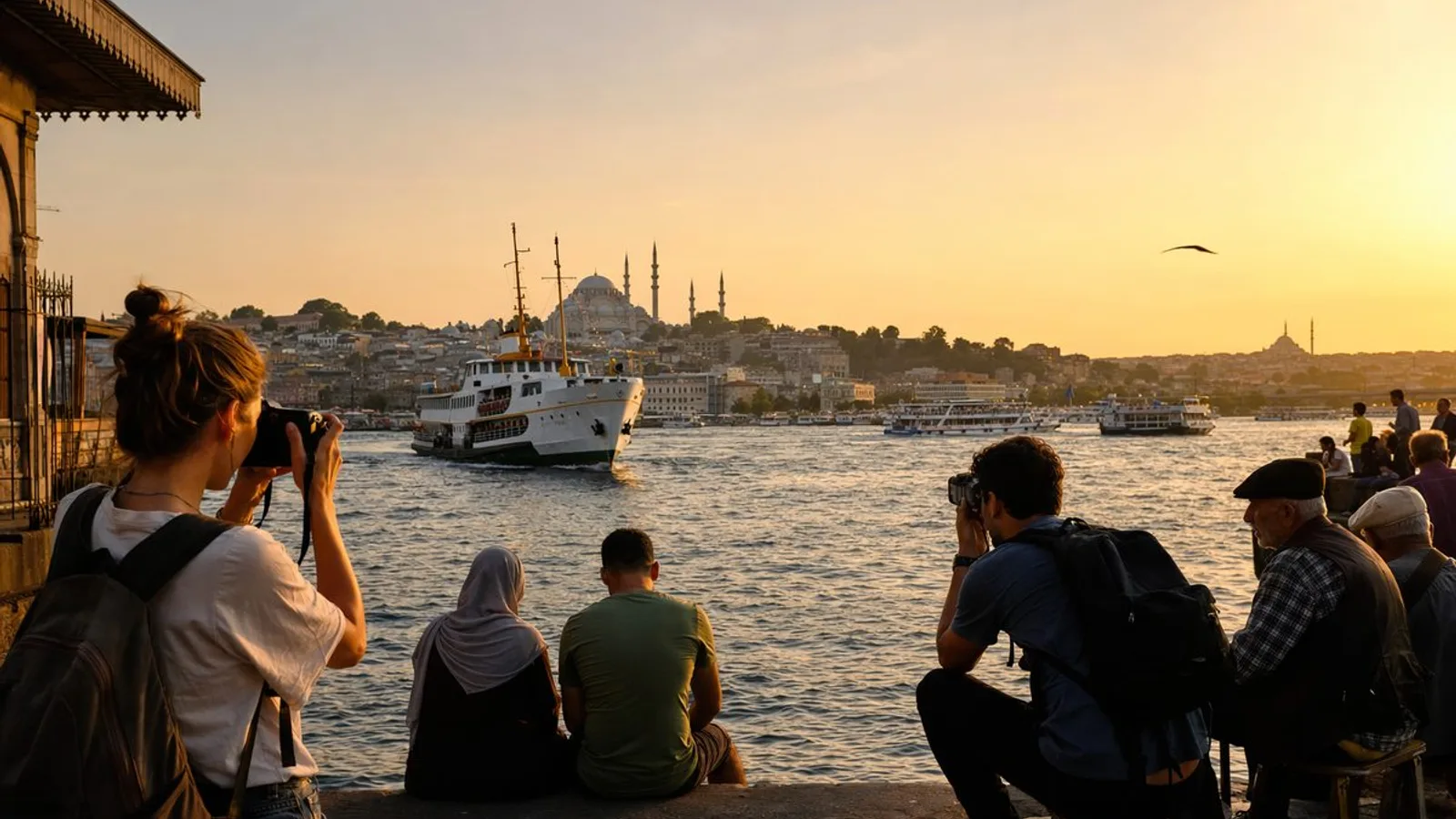
If you want the quickest shortlist, start with Süleymaniye at sunrise, Galata Bridge and Eminönü early or late, Balat in the morning, Ortaköy and Üsküdar at sunset, and ferry decks anytime the light is soft. Add one high view like the Galata Tower area or Çamlıca Hill if you want a wider city read, but most people get a better Istanbul set by mixing one skyline stop, one street neighborhood, and one waterside location.
Key Takeaways
- Best fast picks: Süleymaniye at sunrise, Balat in the morning, Galata Bridge and Eminönü early or late, Ortaköy and Üsküdar at sunset, ferries in soft light.
- For a better photo day, stay on one side of the city for half a day instead of zigzagging everywhere.
- Streets and ferry decks usually give more character than chasing only rooftops.
- Respect prayer spaces, private homes, and people who do not want to be photographed.
Istanbul is a city spread across Europe and Asia along the Bosphorus. The Bosphorus is the strait linking the Black Sea and the Sea of Marmara and dividing the city into European and Asian sides. The Historic Peninsula is the old central area where many of the best-known skyline views sit close together.
Best Istanbul photo spots
These are the strongest Istanbul photo spots for most travelers. Each one is listed in a practical format so you can decide fast.
Before you start shooting in Istanbul
A good photo walk here is simple: pick one side of the city, start early or late, and build around walking, trams, metros, or one ferry crossing instead of trying to cover everything.
Best light, weather, and timing
Morning usually works best for the Old City. Süleymaniye, Balat, and Eminönü feel cleaner, quieter, and easier to frame before crowds build. Late afternoon into sunset is often strongest on the Bosphorus and the Asian side, especially in Üsküdar where the historic skyline lights up across the water.
Cloudy days are useful for street scenes. They soften contrast and help in neighborhoods like Balat, Karaköy, and Kadıköy where color and texture matter more than dramatic sun. Across the year, late September to November and April to May give the most usable light: the sun sits lower, the air clears after rain, and the heat haze that flattens summer afternoons is gone. Winter is underrated here for dramatic skies over the Golden Horn. July and August are the hardest months, with long flat middays and the heaviest crowds at exactly the spots you want.
Respect, safety, and simple street etiquette
Süleymaniye Mosque is an imperial Ottoman mosque complex on one of the city's main hills. Galata Bridge is the bridge spanning the Golden Horn between Karaköy and Eminönü. Balat is a historic neighborhood known for steep streets, old houses, and residential life.
Dress respectfully around mosques and prayer areas. You can usually photograph exteriors from public streets, but avoid blocking entrances or standing in the way of worshippers. If you want a close street portrait, ask first.
Watch your bag in busy transit areas. Use a wrist strap on ferry decks. Tripods can attract attention in crowded places, and some landmarks or transport hubs may restrict commercial-looking setups. The workable rule: handheld shooting on public streets and ferry decks is never a problem, while a tripod inside a museum, on a station platform, or anywhere with a security desk should be treated as needing permission until someone tells you otherwise. Ask at the entrance rather than setting up and waiting to be moved on.
Historic skyline views
Süleymaniye Mosque terraces and streets
Why it works: layered skyline views, sloping streets, mosque silhouettes, and street detail all in one area.
Best time: sunrise to early morning, especially on weekdays.
Exact angle or subject: work the downhill streets below the mosque for frames that stack cobblestones, parked cars, rooftops, and minarets. Alternate between wide skyline shots and tighter details like domes, windows, laundry lines, and stone walls.
Nearest transit: tram access is easiest via the Old City side, then walk uphill. Pair it naturally with Süleymaniye Mosque and a walk down toward Eminönü.
Caution: the best streets are still lived-in residential blocks, so keep clear of doorways and avoid treating homes like props.
Galata Bridge and Eminönü waterfront
Eminönü is the transport and market district at the foot of the Historic Peninsula.
Why it works: ferries, fishermen, gulls, mosque silhouettes, and constant movement make this one of the easiest places in the city to get usable frames fast.
Best time: early morning or late afternoon into blue hour.
Exact angle or subject: shoot from the bridge for fishermen and repeating lines; shoot from below for stronger geometry and shadows; move to the waterfront for ferry arrivals and skyline layers.
Nearest transit: major tram and ferry connections meet here, so it is easy to combine with Karaköy, Galata Tower, or a ferry guide.
Caution: midday light can be harsh and the area gets crowded quickly, so keep gear compact.
Pierre Loti Hill
Pierre Loti Hill is a hilltop viewpoint above the Golden Horn.
Why it works: it gives a wider, calmer city read with water, hillsides, cemetery cypresses, and long neighborhood layers.
Best time: late afternoon on a clear or lightly hazy day.
Exact angle or subject: aim for broad Golden Horn frames, compressed neighborhood layers, and dark tree shapes against pale light rather than trying to isolate a single monument.
Nearest transit: this is farther from the main old-center loop, so plan it as its own stop. See Pierre Loti Hill. Two ways up from Eyüp: walk through the cemetery, which is the better photo route because the frames build as you climb, or take the cable car beside Eyüp Sultan Mosque and save the twenty minutes for shooting at the top.
Caution: visibility matters here more than at street level, so check haze before you commit.
Street scenes and local texture
Balat color and steep streets
Why it works: steep lanes, old facades, cats, stairs, cables, corner shops, and strong color give you street texture that feels distinct from the grander Old City skyline points.
Best time: morning.
Exact angle or subject: skip only chasing the most painted facades. Look for uphill lines, layered doorways, side streets with people moving through them, and small ordinary details that show the neighborhood as lived-in.
Nearest transit: easiest to combine with the Golden Horn side and continue toward Balat and nearby streets.
Caution: this is a residential neighborhood first, so avoid crowding doorsteps or photographing private homes as if they were a set.
Karaköy backstreets and passages
Karaköy is a waterfront district known for ferries, workshops, cafes, and mixed historic commercial streets.
Why it works: close behind the waterfront, you get walls, reflections, older buildings, tram wires, steep climbs, and the contrast between old and new businesses.
Best time: late morning to late afternoon, with better street atmosphere once the area is active.
Exact angle or subject: shoot reflections in windows, people moving uphill, overhead lines, side alleys, and the climb toward Galata Tower.
Nearest transit: tram, ferry, and walking links make it easy to connect with Karaköy and the tower area.
Caution: the best part of Karaköy is wandering, so do not over-script the stop or you will miss the in-between frames.
Kadıköy market streets and murals
Kadıköy is a major district on the Asian side known for markets, ferry docks, bars, residential streets, and murals.
Why it works: you get documentary-style images with fish stalls, tea houses, handwritten signs, bicycles, murals, and fast-changing side streets.
Best time: late afternoon into blue hour.
Exact angle or subject: focus on market gestures, storefront details, mural backdrops, and people moving through narrower side streets rather than searching for one landmark composition.
Nearest transit: ferries and metro links make it easy to pair with Kadıköy or continue across the water.
Caution: market rhythm changes during the week. The fish and produce streets are busiest from late morning to early evening and quietest on Sunday mornings, so go midweek if you want stalls working rather than shutters. The big open-air street market in the surrounding blocks runs on set weekdays and will reroute your walk when it does.
Water, ferries, and Bosphorus frames
Ortaköy square and mosque view
Ortaköy is a Bosphorus neighborhood known for its waterside square and mosque view beneath the bridge.
Why it works: mosque, bridge, water, and passing boats line up in one of the city's cleanest compositions.
Best time: late afternoon to sunset.
Exact angle or subject: move slightly off the most obvious center point so you can include people, café tables, or boat traffic in the foreground instead of only making the standard straight-on postcard frame.
Nearest transit: easiest by bus or taxi connections from the Beşiktaş side, or as part of a longer Bosphorus walk. See Ortaköy.
Caution: crowding, barriers, or works in the square can affect the classic angle. The waterfront here is rebuilt and rearranged often, so treat the straight-on postcard frame as a bonus rather than the plan. The side angles from the promenade and from a passing ferry survive whatever is happening on the square, and the mosque is a working one, so time a close visit around prayer.
Üsküdar coast at sunset
Üsküdar is a large district on the Asian shore with broad waterfront views back toward the historic skyline.
Why it works: it is one of the most reliable sunset locations in Istanbul, with domes, minarets, ferries, and long water reflections all facing the right direction.
Best time: arrive before sunset and stay through blue hour.
Exact angle or subject: work the shoreline for skyline panoramas, ferry crossings, silhouettes, and tea-glass foregrounds. If visibility is good, include Maiden's Tower in wider compositions.
Nearest transit: ferry and metro access make it easy to connect with Üsküdar and other Asian-side stops.
Caution: the strongest color often comes after sunset, so do not leave too early. Maiden's Tower sits offshore, which means the shoreline at Salacak is your viewpoint whatever the tower itself is doing, and it stays the better angle: you get the tower, the water and the European skyline in one frame. If you do want to go out to it, the boat leaves from Salacak and entry runs daily, 09:00 - 18:00.
Ferry decks between continents
City ferries are public boats connecting major districts across the Bosphorus and the Sea of Marmara.
Why it works: ferries give you moving water-level views, skyline distance, gulls, wakes, passengers, and changing angles without needing a cruise.
Best time: any crossing in soft morning or late-day light.
Exact angle or subject: stand near the side rail rather than the middle, keep one camera ready, and watch for three elements at once: a clean skyline background, a wake or crossing boat, and one human detail such as a passenger at the rail.
Nearest transit: use regular city ferry routes between hubs like Eminönü, Karaköy, Kadıköy, and Üsküdar. See our ferry guide and related Bosphorus cruise guide. For photography the boat matters more than the route: on the commuter crossings the open rear deck is where you want to be, and the Eminönü–Kadıköy and Üsküdar–Beşiktaş runs both hold the historic skyline broadside for most of the crossing. Board early enough to claim a corner of the rail before the deck fills.
Caution: wind, spray, and crowding make lens changes awkward, so one versatile setup is better than a full kit.
Rooftops, towers, and high viewpoints
High views help, but they are best used as one stop in a broader photo day, not the whole plan.
Galata Tower area
Galata Tower is a medieval stone tower above Karaköy and Beyoğlu.
Why it works: the tower itself is a strong subject from nearby streets, and the area around it gives cobbles, uphill lines, café scenes, and tighter architectural frames.
Best time: early morning for cleaner street frames, or blue hour for atmosphere.
Exact angle or subject: photograph the tower from ground level first, especially from side streets where the round mass rises above tighter facades. If you go up, use the height for broad city orientation shots rather than expecting your best image of the day.
Nearest transit: walk uphill from Karaköy or come through Galata Tower area streets. Entry runs daily, 09:00 - 18:00 and the line is shortest in the first hour after opening; by late afternoon the wait for the lift can cost you the light you came for, which is the main argument for shooting the tower from the ground instead of from the top of it.
Caution: long queues can eat a lot of shooting time.
Çamlıca Hill viewpoints
Çamlıca Hill is a major panoramic viewpoint on the Asian side.
Why it works: it gives one of the broadest city reads, useful when you want to understand the scale of Istanbul rather than isolate a single quarter.
Best time: clear late afternoon or early evening.
Exact angle or subject: aim for broad panoramas showing the Bosphorus, bridge lines, and the stacked shape of both sides of the city.
Nearest transit: plan this as a dedicated stop on the Asian side, possibly combined with Üsküdar. Two things share the name and it is worth keeping them apart: Çamlıca Hill is open parkland with free viewpoints, reached by bus or taxi up from Üsküdar, while the Çamlıca Tower observation deck nearby is a ticketed enclosed view open daily, 10:00 - 21:30. The park gives you foreground, sky and no glass; the tower gives you height and stays open well past sunset.
Caution: this is a longer detour, so it makes less sense on a very short first visit.
Practical route ideas for one day
Old City sunrise route
Start at Süleymaniye at sunrise. Work the downhill streets for 45 to 60 minutes. Continue to Eminönü for ferry movement and mosque silhouettes. Cross Galata Bridge on foot and finish in Karaköy or around the Galata Tower area.
Why this route works: you get your best morning light in the Old City, then shift naturally into movement, water, and street texture without wasting time in transit.
Good add-ons: Süleymaniye Mosque, Eminönü, Karaköy, Galata Tower.
Bosphorus afternoon route
Start in Karaköy or Beşiktaş after lunch. Continue to Ortaköy for late-afternoon waterside frames. Cross by ferry to Üsküdar for sunset and stay into blue hour.
Why this route works: instead of fighting flat midday light in the Old City, you save your strongest conditions for the Bosphorus and the skyline-facing Asian shore.
Good add-ons: Ortaköy, Üsküdar, ferry guide, Bosphorus.
Final tips for better photos in Istanbul
Travel lighter than you think. One camera and one lens often beat a heavy bag in a city full of hills, stairs, tram stops, ferry ramps, and crowds.
Wait for the frame to build. In Istanbul, one more minute often gives you the ferry, gull, silhouette, or open gap you wanted.
Do not over-prioritize rooftops. Ground level usually gives more character.
Keep diacritics straight when you save locations in your map or notes: Süleymaniye, Eminönü, Ortaköy, Üsküdar, Çamlıca, Kadıköy.
If you want to add landmark stops between photo locations, see Blue Mosque, Hagia Sophia, and Topkapı Palace. Scaffolding moves around the Old City monuments constantly and it is the one thing that reliably ruins a planned exterior frame, so build the route around the streets and the water, which never close, and treat any single facade as replaceable. If you are going inside Topkapı rather than around it, note it is closed Tuesday.
FAQ
What are the best photo spots in Istanbul for first-time visitors?
Start with Süleymaniye, Galata Bridge, Eminönü, Balat, Ortaköy, Üsküdar, and one ferry crossing. That mix gives you skyline, street life, water, and sunset without a complicated plan.
Where should I go for sunset photos in Istanbul?
Üsküdar is the most reliable easy answer because you face the historic skyline across the water. Ortaköy also works well, and ferry decks are excellent if you want moving frames.
Is Balat still worth it for photography?
Yes, if you shoot it as a neighborhood rather than a backdrop. The better frames usually come from slopes, daily routines, shopfronts, and ordinary street details, especially in the morning.
Do I need a rooftop for great Istanbul photos?
No. Some of the strongest images come from streets, bridge edges, ferry decks, and waterfronts. One high stop is enough for most people.
What time of day is best for photography in Istanbul?
Early morning is usually best for the Old City and Balat. Late afternoon through blue hour is often strongest for Ortaköy, Üsküdar, and ferry crossings.
Are ferries good for taking photos in Istanbul?
Yes. They are one of the most practical photo platforms in the city because they give distance, movement, skyline layers, and daily life in a single trip.
Which side of Istanbul is better for photos, European or Asian?
Both. The European side is better for classic skyline landmarks and older street texture. The Asian side, especially Üsküdar and Kadıköy, is stronger for sunset views and neighborhood scenes.
Can I do the best Istanbul photo spots in one day?
You can cover a strong shortlist in one day if you stay disciplined. Pick either an Old City sunrise route or a Bosphorus afternoon route, then add only one ferry crossing and one extra neighborhood.