
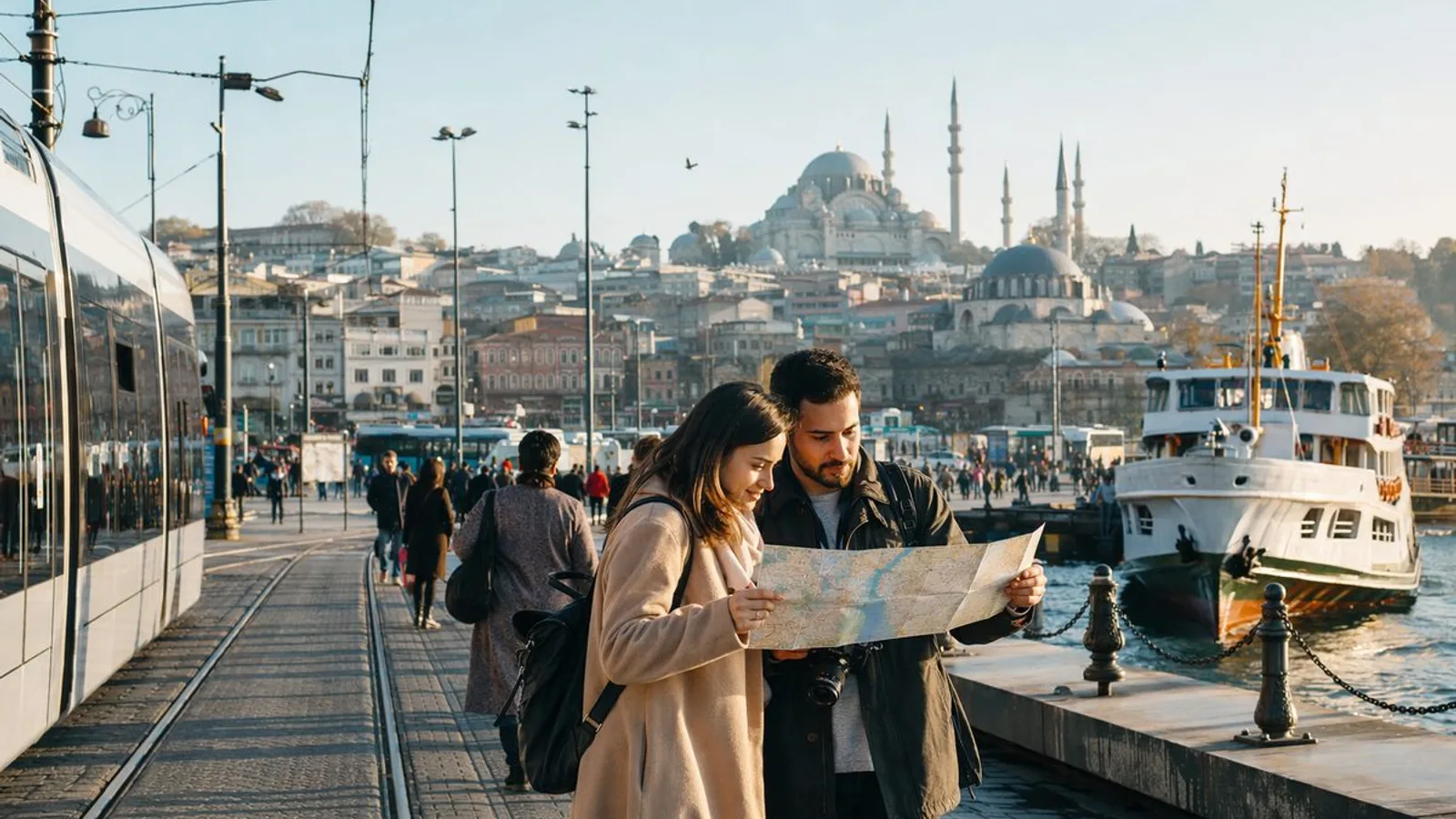
If you want to avoid the biggest Istanbul travel mistakes, do three things first: group your days by area, use public transport instead of defaulting to taxis, and verify current rules before each major sightseeing day. Most first-time problems in Istanbul come from poor pacing, not from choosing the wrong attractions.
Istanbul is a city spread across Europe and Asia, shaped by water, hills, ferries, traffic, and dense sightseeing zones. A shorter plan usually works better than a longer wish list.
Key takeaways
- Stay where your real sightseeing plan happens, not just where the hotel price looks good.
- Use ferries, trams, and metro lines early in the trip.
- Visit headline sights at lower-pressure times when possible.
- Pack for hills, wind, and mosque visits.
- Recheck closures, access rules, and ticket details close to your visit.
Istanbul Travel Mistakes First-Timers Make
1) Trying to Do Too Much in One Day
The most common first mistake is building a day that looks efficient on a map but falls apart on the ground. Istanbul rewards focus and punishes overstuffed itineraries.
A lot of first-timers try to combine Hagia Sophia, the Blue Mosque, the Basilica Cistern, Galata, a Bosphorus ferry or cruise, and a big dinner in one day. That usually turns into lines, transport friction, and fatigue.
Sultanahmet is the historic old-city district with major landmarks like Hagia Sophia, the Blue Mosque, and nearby cisterns and museums. If this is your first trip, start there, but keep that day centered there.
A better rule is to choose one main district for the morning and one nearby area later. Pair Sultanahmet sights together, then add one relaxed meal or one easy evening walk instead of more landmarks.
Do this instead: plan one anchor district per day and stop adding sights once the route starts looking clever.
2) Staying in the Wrong Area for Your Plan
Many visitors choose a hotel by price or photos, then spend the trip commuting. The better choice is a base that matches how you want your days to feel.
Beyoğlu is the broader central area around Galata, Karaköy, and Taksim, known for dining, nightlife, and easier access to modern neighborhoods. Karaköy works well for ferry and tram connections. Sultanahmet works well for early historic-site starts.
If your priority is old-city landmarks, staying near Sultanahmet attractions can save energy. If your priority is restaurants, evening walks, and mixed neighborhood time, Beyoğlu or Karaköy often makes more sense. If you want a more local-feeling contrast day, Kadıköy is worth building into the trip even if you do not sleep there.
The most useful hotel feature is often not luxury but a short walk to a tram, metro, or ferry connection.
Do this instead: book your hotel around your actual morning and evening plans, with transport access as the first filter.
3) Ignoring Istanbul Traffic and Travel Times
A short ride on the map can take much longer than expected, especially if you are crossing busy parts of the city or moving at rush hour.
Bosphorus is the strait separating Istanbul’s European and Asian sides. Crossing it can be beautiful by ferry and frustrating by road.
Do not assume you can move between districts in twenty minutes. Airport transfers, dinner reservations, and timed entries all need buffer time.
This matters most when people try to jump between Sultanahmet, Beyoğlu, Karaköy, palace visits, and waterfront stops in one afternoon. If you have a timed ticket, arrive early. If you are changing districts late in the day, expect delays and keep a backup option nearby.
Do this instead: add slack to every cross-city move and treat rush-hour road travel as a risk, not a plan.
4) Using Only Taxis Instead of Public Transport
Taxis can help in specific situations, especially late at night or with luggage, but relying on them all day is one of the slowest and costliest ways to see Istanbul.
The tram is useful for old-city sightseeing. Metro lines help with longer urban jumps. Ferries are both practical and memorable, especially for moving between European and Asian sides or for seeing the city from the water without adding a separate sightseeing cruise.
For many first-timers, transport improves once they stop thinking of ferries as a bonus and start using them as part of the route. A public ferry can do the work of transport and sightseeing at the same time. If you do use taxis, keep trips short, confirm the destination on your map, and settle the payment question before you start. The meter should always be running, app-hailed cars are the same yellow taxis with a record of the trip, and small cash saves an argument when the card reader is "broken".
For route planning, connect your day through public transport and keep taxis as a fallback, not the backbone.
Do this instead: use Istanbul transport and Istanbulkart guidance to build your day around ferries, trams, and metro lines first.
5) Not Getting an Istanbulkart Early
This is one of the easiest wins on a first trip.
Istanbulkart is the city’s reloadable public transport card used on many trams, metros, buses, and ferries. Getting one early removes small frictions that add up over several days.
Do not wait until you are tired, in a queue, or trying to catch a connection. Get it as soon as practical after arrival or before your first full sightseeing day. Machines at every station sell it, and one card covers tram, metro, bus, funicular and ferry.
Top up at the same machines before you need to — the queue at a busy station at rush hour is the moment you will wish you had. That matters more than people think when you are switching lines quickly.
Do this instead: buy and top up your Istanbulkart early so transport stays simple for the rest of the trip.
6) Visiting Major Sights at the Worst Time
The biggest landmarks are not just crowded; they change character depending on when you visit.
Midday is often the hardest time for top sights because you get larger tour groups, hotter open areas in warmer months, and longer lines. Hagia Sophia and the Blue Mosque both feel better when you plan around peak congestion and current access rules. Hagia Sophia runs daily, 09:00 - 19:30 and the Blue Mosque is free to enter between prayers; both close to visitors around each of the five daily prayers, and the first hour after opening is the quietest of the day.
If one place looks packed, switch the order of your day. Visit the Basilica Cistern, walk, take a break, or return later. Flexibility matters more here than squeezing everything into a fixed order.
Do this instead: aim for opening time, later-day windows, or quieter weekdays, and reorder the day if one landmark is overloaded.
7) Dressing Wrong for Mosques and the Weather
Visitors often plan for photos or temperature alone. Istanbul usually asks for better practical judgment.
For mosques, wear modest clothing and carry a scarf. Shoulders and knees stay covered, shoes come off at the door, and most mosques lend a wrap at the entrance if you arrive without one. For the city itself, wear shoes with grip and support.
The weather can shift quickly near the water. Wind on a ferry can feel much cooler than inland streets. Rain can make stone streets and slopes slippery. In summer, large open squares can feel hotter and more exposed than expected.
A small day bag with layers, water, and basic rain or sun protection is enough for most first-timers.
Do this instead: dress for walking, wind, and mosque access first, then worry about style second.
8) Eating Only Near Major Attractions
You can eat well near famous sights, but many forgettable meals in Istanbul happen because people stop at the first convenient place outside a landmark.
The area around the Grand Bazaar, Sultanahmet, and some busy waterfront strips can push visitors toward overpriced or underwhelming options. Walking a few streets away often changes the menu, the pace, and the value.
Food neighborhoods like Karaköy, Kadıköy, and parts of Beyoğlu usually give you more range and a better read on everyday city life. It also helps to plan one or two meals on purpose instead of treating food as an afterthought between attractions.
Do this instead: build at least one meal a day around a neighborhood you actually want to explore, not the nearest table to a queue.
9) Forgetting That Istanbul Is Hilly and Huge
From some waterfront views, Istanbul can look easier to cover on foot than it really is. It is not.
Short walks can include steep climbs, uneven paving, stairs, and longer stretches than expected. This catches people who packed the wrong shoes, stacked too many neighborhoods together, or assumed they could walk everything.
You feel this around Galata, Cihangir, Balat, and the links between waterfronts and upper streets. It also affects your energy more than your map suggests. If your feet are done by late afternoon, the evening plan usually suffers next.
Use ferries for resets, save some climbs for the start of the day, and leave room for a lower-effort evening after a heavy sightseeing block.
Do this instead: assume every walking day will be harder than it looks online and pace your route around hills and breaks.
10) Underestimating Bosphorus Weather and Ferry Value
Many first-time visitors treat the Bosphorus as scenery rather than part of the city’s practical rhythm. That misses one of Istanbul’s best tools.
A ferry ride can connect neighborhoods, reduce road stress, and give you the clearest sense of the city’s scale. If you are choosing between another road transfer and a useful water crossing, the ferry is often the better call.
Still, the weather matters. Even on mild days, wind can change the experience fast. Bring a light layer and do not assume the waterfront will feel the same as inland streets. The crossings worth building a day around are Eminönü to Kadıköy for the long one and Eminönü or Beşiktaş to Üsküdar for the short one.
If you only have time for one water-based experience, either use a public ferry strategically or choose a dedicated Bosphorus ferry or cruise that fits your day cleanly.
Do this instead: treat a Bosphorus ferry or cruise as both transport and sightseeing, and pack one more layer than you think you need.
11) Exchanging Money Badly and Assuming Cards Work Everywhere
Money mistakes are rarely dramatic, but they quietly make a trip more expensive and more annoying.
Do not exchange a large amount at the first airport counter unless you need immediate cash. Compare options once you are settled and keep withdrawals or exchanges smaller until you know what your daily card use looks like. Airport exchange desks give the worst rate you will see all trip; cards work almost everywhere indoors, and cash is for street stalls, markets and short taxi rides.
Cards are common in many places, but cash can still help with smaller purchases, some transit situations, tips, and local shops. Carry some cash without overdoing it, and check your own bank fees before departure.
Do this instead: use cards where practical, carry backup cash, and avoid making your biggest exchange decision when you have just landed.
12) Planning Without Checking Current Rules and Closures
This is the mistake that can undo an otherwise smart itinerary.
Opening hours change. Prayer-access windows change. Restoration work affects views and routes. Museum entry systems shift. Airport transfer options and late-night service patterns can also change.
Do not trust an old screenshot, an outdated blog post, or a saved social video as your final source. Check official or current pages close to your visit for every major stop on your plan. The closures that break itineraries are Topkapı Palace (closed Tuesday), Dolmabahçe (closed Monday) and the Grand Bazaar (closed Sunday). Restoration work moves around the major monuments from year to year, so check the specific building rather than assuming.
This matters most for places with timed entry, active worship, security screening, or changing visitor flow. It also matters for transport links that look simple on paper but behave differently on weekends, holidays, or late evenings.
A good Istanbul itinerary should be structured, but not rigid. Keep your priorities fixed and your sequence flexible. If one landmark is unexpectedly busy, switch to a nearby site. If a route changes, look for the next-best ferry, tram, or metro option instead of forcing the day back into an old plan.
Do this instead: recheck each major sight and transfer the night before, then adjust the order of your day if conditions have changed.
A Simple First-Time Istanbul Plan That Works
If this is your first visit, keep the structure simple and area-based rather than trying to sample the whole city every day.
Day one: Sultanahmet and the old city. Start with Hagia Sophia, the Blue Mosque, and the Basilica Cistern. Add the Grand Bazaar only if your energy is still good. Keep dinner easy rather than crossing the city again.
Day two: Beyoğlu, Karaköy, and the waterfront. Explore Beyoğlu, walk down toward Karaköy, and take at least one ferry. If palace time matters to you, consider Dolmabahçe Palace, but build the transport around it carefully and avoid squeezing too much else into the same day. It opens daily except Monday, 09:00 - 18:00, is closed Monday, visits follow a set route rather than a wander, and the Harem is ticketed separately.
Day three: One contrast neighborhood and one water element. Choose Kadıköy for food and a different pace, or plan a longer Bosphorus ferry or cruise. If you prefer neighborhood walking over another landmark, this is a good day for that.
This kind of plan leaves room for weather, queues, prayer times, and spontaneous stops. It also gives you a much better chance of enjoying the city instead of only moving through it.
Do this instead: build your first trip around three clear day zones—Sultanahmet, Beyoğlu/Karaköy, and one ferry-based contrast day.
Final Tips Before You Go
Pack for walking, not just for photos. Keep your daily list shorter than you think you need. Use ferries early in the trip so the city makes sense faster.
If you are booking attractions, leave breathing room between them. Skip-the-line buys you the ticket queue, not the security queue — at the busiest sights you will still stand in one of them. If one day goes off-plan, do not try to fix it by adding more to the next one.
Before you leave your hotel each day, check four things: weather, transport, entry rules, and what your realistic second stop will be if the first one is too crowded. That small habit prevents a lot of first-time friction.
The cleanest recap is also the most useful one: stay in the right area, group sights by district, use Istanbul transport and Istanbulkart guidance, ride a Bosphorus ferry or cruise, and verify current rules before every big day. Do that, and your first Istanbul trip is far more likely to feel spacious and enjoyable instead of rushed.
Do this instead: leave for Istanbul with a short, flexible plan and a habit of checking the details that change.