
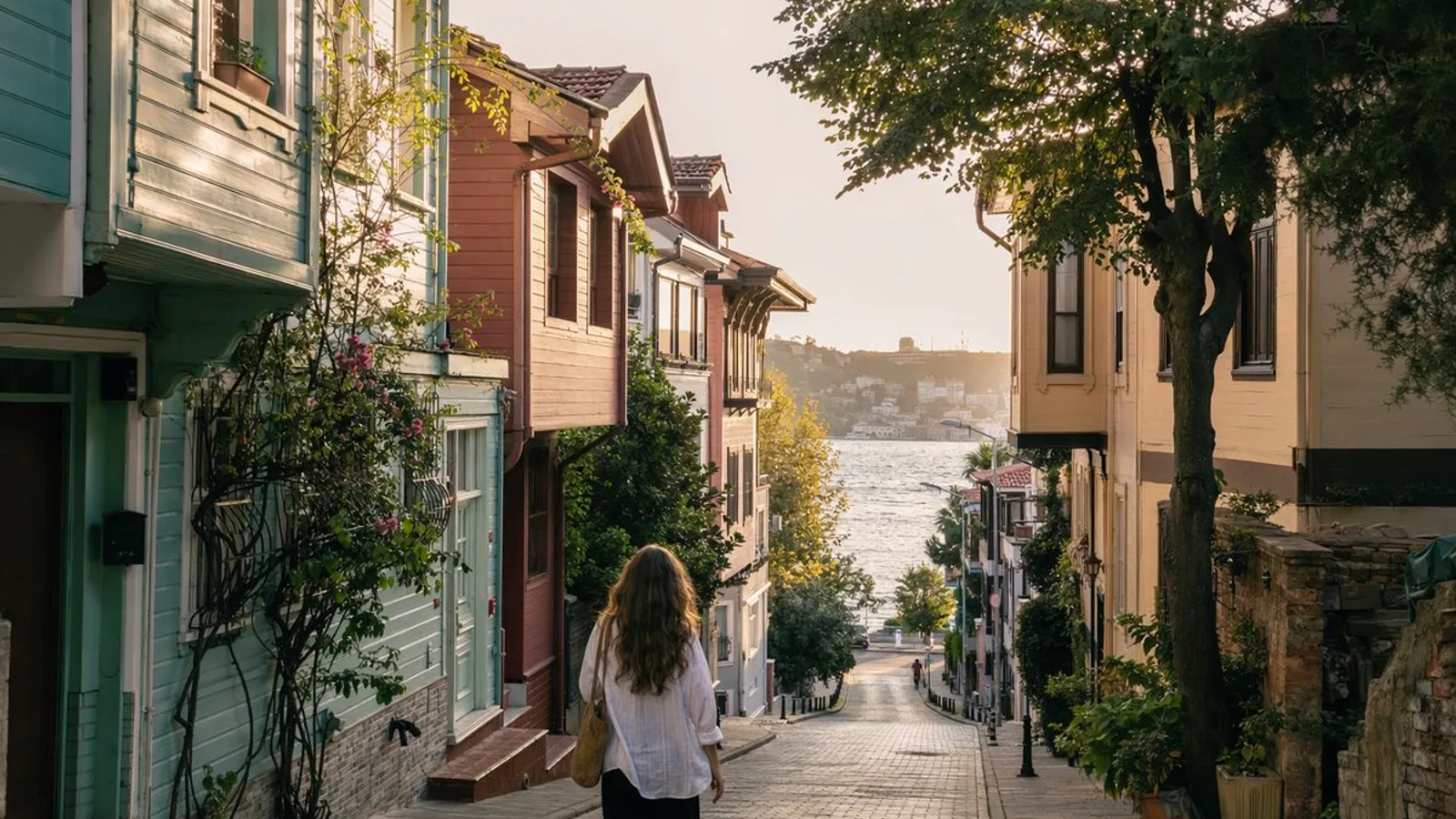
If you want the best istanbul hidden gems, start with Kuzguncuk, Atik Valide Mosque complex, Theodosius Cistern, Little Hagia Sophia, and Büyükada’s inland pine roads. These are not secret places in the literal sense. They are quieter alternatives to the standard first-time route, with more neighborhood life, less queueing, and a better chance to see how Istanbul actually feels between its headline monuments.
This guide focuses on places that are underrated rather than unknown: uphill mosque complexes, backstreets beyond the social-media corners, smaller historic sites, and waterfront districts that reward slower walking. Most work best when paired by area, not scattered across the city in one rushed day. If you are also planning time in Sultanahmet, around the Blue Mosque, or at bigger landmarks such as Topkapi Palace, use this list as the quieter half of your itinerary.
Istanbul is a city spread across two continents and divided by water, hills, and long transit times. Alternative attractions are places that reveal daily rhythm, local architecture, or historical layers without the biggest crowds. Underrated spots are places many visitors skip even though they are rewarding and practical to visit.
Istanbul Hidden Gems: 15 Underrated Spots
1) Kuzguncuk streets and waterfront
Kuzguncuk is a small waterside neighborhood on Istanbul’s Asian shore, north of central Üsküdar, known for wooden houses, bakeries, and a lived-in residential feel.
Why it is underrated: Many visitors cross to the Asian side only for a quick stop in Üsküdar or Kadıköy. Kuzguncuk offers one of the easiest low-effort, high-reward walks in the city: short streets, historic facades, small local shops, and a waterfront that feels calmer than the central Bosphorus stretch.
Nearest area/transit cue: Best reached via Üsküdar and then a short bus or taxi north along the Bosphorus. It also pairs naturally with nearby Beylerbeyi Palace.
Best time to visit: Early morning on a weekday for the quietest streets and best light on the houses.
How long to spend: 1 to 2 hours.
Logical pairing: Combine it with an Üsküdar half-day or with Beylerbeyi on a Bosphorus-focused route.
2) Fener Greek Orthodox College viewpoint
Fener Greek Orthodox College is a monumental red-brick school building rising above Fener on the Golden Horn. Even when you cannot enter, its exterior and hillside setting make it memorable.
Why it is underrated: People often see the building only in passing while heading to Balat. The better experience is the uphill approach through Fener’s steep residential streets, where the climb gives the facade more impact and the district’s layered history becomes clearer.
Nearest area/transit cue: In Fener, above the Golden Horn waterfront, usually reached on foot from the Fener/Balat area.
Best time to visit: Morning or late afternoon, when the streets are less busy and uphill walking is easier.
How long to spend: 30 to 45 minutes as part of a wider Fener-Balat walk.
Logical pairing: Pair it with Balat backstreets and, if you want a fuller district walk, nearby Balat/Fener guides.
For practical planning, treat the college primarily as an exterior stop unless current rules clearly say otherwise. It is a working school, not a museum, so there is no interior visit: the views are from the lanes around and below it, and those are the good ones anyway.
3) Balat backstreets beyond the photo stops
Balat is a historic Golden Horn district often reduced online to colorful staircases and a few heavily photographed facades.
Why it is underrated: The underrated part of Balat is not the famous photo corners. It is the ordinary fabric behind them: workshops, groceries, apartment blocks, side streets climbing uphill, and the sense that this is still a working neighborhood rather than an open-air set.
Nearest area/transit cue: Along the Golden Horn, next to Fener and easy to combine on foot with it.
Best time to visit: Early morning, before the busiest café and photo-stop hours.
How long to spend: 1.5 to 2 hours if you wander properly rather than ticking off a few addresses.
Logical pairing: Pair it with Fener, then continue into a longer Golden Horn day. If you want more context before you go, link it with your Balat/Fener guide.
4) Atik Valide Mosque complex
Atik Valide Mosque is a large 16th-century Ottoman mosque complex in Üsküdar designed by Mimar Sinan. A külliye is a mosque-centered social complex that can include courtyards, a school, charitable buildings, and service spaces.
Why it is underrated: It gives you a clearer sense of Ottoman urban planning than many busier monuments because the site still reads as a full complex rather than a single building swallowed by crowds. The uphill location filters out casual drop-ins.
Nearest area/transit cue: Uphill from central Üsküdar on the Asian side.
Best time to visit: Late morning or mid-afternoon outside prayer peaks.
How long to spend: 45 to 75 minutes.
Logical pairing: Combine it with Kuzguncuk for a strong Üsküdar day, or use it alongside a broader Üsküdar guide.
Because this is an active place of worship, check etiquette and timing before you go. Visitors should expect modest dress, quiet behavior, and pauses around each of the five daily prayers; Friday midday is the one time to avoid entirely.
5) Yıldız Park upper paths
Yıldız Park is a large historic park between Beşiktaş and Ortaköy with slopes, wooded sections, and longer walking routes than many visitors expect.
Why it is underrated: Most people use only the lower entrances or stop at the first scenic areas. The upper paths are calmer, greener, and much better for escaping traffic without leaving central Istanbul.
Nearest area/transit cue: Between Beşiktaş and Ortaköy, convenient if you are already exploring the Bosphorus or visiting Dolmabahçe Palace.
Best time to visit: Morning in warmer months, or late afternoon for softer light.
How long to spend: 1 to 1.5 hours.
Logical pairing: Pair it with Ihlamur Pavilion or a Bosphorus walk toward Ortaköy.
6) Ihlamur Pavilion gardens
Ihlamur Pavilion is a small imperial pavilion set in a green hollow between Beşiktaş and Nişantaşı, much more manageable than Istanbul’s biggest palace sites.
Why it is underrated: It gives you palace architecture and gardens in a format that does not exhaust half a day. For travelers who like Ottoman elite spaces but not major-crowd logistics, it is one of the easiest wins.
Nearest area/transit cue: Inland from Beşiktaş, between Beşiktaş and Nişantaşı.
Best time to visit: Late morning or early afternoon, when the gardens are bright and you can combine it with nearby neighborhoods.
How long to spend: 45 to 60 minutes.
Logical pairing: Pair it with Yıldız Park or a Beşiktaş-to-Nişantaşı day.
Like the other national palaces it is usually closed on Mondays. The garden is the real reason to come; if the pavilion interiors happen to be open, treat them as a bonus rather than the plan.
7) Büyük Valide Han roof area
Büyük Valide Han is a historic han, meaning an Ottoman commercial inn built around a courtyard for merchants, storage, and trade. It sits in the busy Eminönü area and is often discussed because of its roof views.
Why it is underrated: The building is worth visiting even if roof access is restricted. The courtyard, worn stone, workshop atmosphere, and commercial context make it more interesting than a simple photo stop.
Nearest area/transit cue: In the Eminönü commercial district, within reach of the old-city core and Sultanahmet-area sightseeing.
Best time to visit: Morning, before the surrounding lanes become fully crowded.
How long to spend: 30 to 45 minutes.
Logical pairing: Pair it with a market-and-old-city walking route, not with a museum-heavy day.
The key practical point here is caution. Roof rules have changed over time, and online photos are not proof of legal or safe access. It is not an official visitor area. If the door is shut, or someone asks you to leave, that is the answer — the courtyards and the working han below are the reason to come in any case.
8) Theodosius Cistern
Theodosius Cistern is a restored Byzantine underground water reservoir in the old city. A cistern is a covered structure built to store water, often supported by rows of columns.
Why it is underrated: It offers the atmosphere many visitors want from an underground Byzantine monument, but in a smaller format that can be easier to fit into a day than larger, more famous sites such as Basilica Cistern.
Nearest area/transit cue: In the historic center, convenient for a Sultanahmet-based day.
Best time to visit: Early opening hours or later in the day, depending on current crowd patterns.
How long to spend: 30 to 45 minutes.
Logical pairing: Pair it with Little Hagia Sophia or a lighter old-city route after the major landmarks.
It is open daily, 10:00 - 18:00 and included in Istanbul PRIME Pass; the light installations change from time to time, which is part of the appeal.
9) Little Hagia Sophia courtyard
Little Hagia Sophia is a former Byzantine church and later Ottoman mosque near the Sea of Marmara, just outside the busiest concentration of Sultanahmet foot traffic.
Why it is underrated: It gives you major historical significance in a quieter setting. The courtyard and surrounding streets feel noticeably calmer than the core around Hagia Sophia and the Blue Mosque.
Nearest area/transit cue: South of Sultanahmet, closer to the Marmara side of the historic peninsula.
Best time to visit: Early morning or between prayer periods, when the courtyard is quietest.
How long to spend: 30 to 45 minutes.
Logical pairing: Pair it with Theodosius Cistern, or use it as a calm stop before or after your Sultanahmet route.
As with any active mosque, visiting pauses during prayer, so dress respectfully and time it between prayers rather than around lunch on a Friday.
10) Küçük Mustafa Paşa Hammam area
Küçük Mustafa Paşa Hammam is a historic bath building in Kocamustafapaşa, a mostly residential district on the historic peninsula. A hammam is a traditional bathhouse.
Why it is underrated: The appeal is not only the structure itself but the surrounding district, which feels grounded, local, and far removed from the standard old-city route. It is a good example of how much historical Istanbul survives outside the most photographed streets.
Nearest area/transit cue: In Kocamustafapaşa, south-west of the busiest Sultanahmet core.
Best time to visit: Late morning or early afternoon, when neighborhood streets are active but not rushed.
How long to spend: 45 minutes to 1 hour if you are exploring the area on foot.
Logical pairing: Pair it with Little Hagia Sophia only if you are comfortable with a longer historic-peninsula route; otherwise give Kocamustafapaşa its own slower half-day.
Smaller historic buildings like this open irregularly — sometimes for an exhibition, sometimes not at all — so fold it into a neighbourhood walk rather than crossing the city for the interior alone.
11) Moda seaside stairs and tea gardens
Moda is a waterfront neighborhood in Kadıköy known for sea views, tea gardens, everyday local life, and a slower pace than the busiest European-side waterfronts.
Why it is underrated: Visitors often treat Kadıköy as a food stop and leave. Staying for the shoreline, stair viewpoints, and tea gardens gives you one of the city’s best low-pressure afternoons.
Nearest area/transit cue: In the Moda section of Kadıköy on the Asian side.
Best time to visit: Late afternoon into sunset, when locals gather by the water.
How long to spend: 1.5 to 2 hours.
Logical pairing: Pair it with a Kadıköy market-and-cafés route.
12) Rumeli Hisarı neighborhood lanes
Rumeli Hisarı is both a Bosphorus fortress zone and a surrounding hillside neighborhood with steep lanes, walls, gates, and strong water views.
Why it is underrated: Many visitors stop for a quick exterior look at the fortress and move on. The neighborhood streets are the better surprise: quieter, more atmospheric, and full of angles that show how closely everyday life sits against historic fortification.
Nearest area/transit cue: On the European Bosphorus, north of Beşiktaş.
Best time to visit: Morning for easier walking on the hills and gentler light on the water.
How long to spend: 1 to 1.5 hours.
Logical pairing: Pair it with a broader Bosphorus guide or with Yıldız Park if you are prepared for transit between stops.
The fortress museum has spent long stretches closed for restoration, so do not build the trip around getting inside; the walls from the shore road and the Bosphorus below them are worth the journey on their own.
13) Basilica ruins at Küçükyalı Arkeopark
Küçükyalı Arkeopark is an archaeological site on the Asian side with Byzantine-period remains. An arkeopark is an archaeological park: an open site where ruins are preserved and interpreted for visitors.
Why it is underrated: It shows how much Byzantine history lies beyond the historic center. This is less about spectacle and more about context, scale, and seeing the city’s past outside the usual tourist circuit.
Nearest area/transit cue: In Küçükyalı on the Asian side, well away from the main old-city route.
Best time to visit: Morning or late afternoon, especially in warmer weather because open sites can have limited shade.
How long to spend: 45 minutes to 1 hour.
Logical pairing: Pair it with a longer Asian-side history day rather than trying to squeeze it into a cross-city itinerary.
It is a small open-air site with modest signage, so read up on the Byzantine palace remains before you go; the site rewards context more than it provides it.
14) Beykoz Mecidiye Pavilion grounds
Beykoz Mecidiye Pavilion is a 19th-century pavilion on the Asian side, farther north along the Bosphorus than the districts most short-stay visitors reach.
Why it is underrated: Its distance from the center keeps it off many itineraries, but that is exactly what makes it useful if you want a calmer Bosphorus day with more greenery and fewer crowds.
Nearest area/transit cue: In Beykoz on the upper Asian Bosphorus.
Best time to visit: A clear morning or early afternoon, when the grounds and outlook matter most.
How long to spend: 1 hour.
Logical pairing: Pair it with a Beykoz or upper-Bosphorus route rather than central-city sightseeing.
It is far enough up the Bosphorus that the journey is half the day, so make it part of a coast day by ferry or bus to Beykoz, and treat the pavilion's interior as a bonus if it is open.
15) Büyükada inland pine roads
Büyükada is the largest of the Princes’ Islands, a group of islands in the Sea of Marmara reached by ferry from Istanbul. Most day-trippers stay near the waterfront, but the inland roads are the more rewarding part of the island.
Why it is underrated: The harbor zone can feel busy and predictable. Once you leave it behind, the island changes: pine roads, longer walks, changing viewpoints, and a quieter atmosphere that feels far from central Istanbul. This is the side of Büyükada that suits travelers who prefer walking over checking off attractions.
Nearest area/transit cue: Reached by ferry to Büyükada, then best explored on foot away from the port area.
Best time to visit: Weekday mornings or shoulder-season days if you can choose, since the island gets much busier on popular weekend sailings.
How long to spend: Half a day to a full day.
Logical pairing: Give it its own route rather than combining it with city-center sights. If you are choosing among islands, start with a Princes’ Islands guide.
Ferry timing matters here more than at most places on this list. Boats leave from Kabataş and Eminönü all year, more often in summer, and take roughly an hour to an hour and a half. On summer weekends the return boats are the crowded ones, so leave earlier than everyone else or later than everyone else.
How to plan an alternative-attractions day
Plan by zone, not by popularity. Istanbul looks manageable on a map until hills, traffic, ferry gaps, and walking time turn a neat list into an exhausting day.
A good rule is to choose one main area and two to four stops, depending on how much uphill walking and transit you can handle. If you also want a major landmark such as Hagia Sophia, Topkapi Palace, or Galata Tower, treat that as a separate anchor rather than squeezing five underrated stops around it.
A practical structure looks like this:
- Historic Peninsula light day: Theodosius Cistern + Little Hagia Sophia + one slower neighborhood stop such as Kocamustafapaşa.
- Golden Horn day: Fener Greek Orthodox College viewpoint + Balat backstreets, with café and wandering time built in.
- Üsküdar day: Kuzguncuk + Atik Valide Mosque complex.
- Kadıköy day: Moda plus wider Kadıköy food and waterfront time.
- Bosphorus day: Yıldız Park or Ihlamur as one cluster, Rumeli Hisarı as another. Do not underestimate transfer time.
- Island day: Büyükada only.
Start earlier than you think you need to if your goal is quiet streets, cooler uphill walks, or less crowded courtyards. Use midday for shaded parks, indoor sites, or lunch in the area you are already visiting. Mosques, schools, working hans, and small museums all have their own rhythms, so a place can be technically open but not ideal to visit at every hour.
If ferries are part of your route, build in buffer time: the main crossings run often through the day, but the last boats go in the evening and the island and upper-Bosphorus routes run far less frequently.
Best areas to combine on one route
Golden Horn is the waterway dividing the historic peninsula from districts to the north and northwest. Fener and Balat are the cleanest pairing on this list because they are adjacent and best explored on foot. This is one of the easiest low-stress routes for first-time visitors.
Üsküdar is a major Asian-side district with ferry access, hills, and important Ottoman monuments. Kuzguncuk and Atik Valide fit well together because they show two sides of the area: neighborhood texture and monumental architecture. If you want more context, use your Üsküdar guide to connect the route.
Kadıköy and Moda work best as a single relaxed day, not as an add-on after a packed cross-city schedule. This is the route to choose when you want food, sea views, and local pace rather than monument-heavy sightseeing. Start with Kadıköy, then drift south toward Moda.
Bosphorus routes need more discipline. Yıldız Park and Ihlamur Pavilion can work together because they are relatively close in the Beşiktaş area. Rumeli Hisarı fits the same general corridor but not always the same walking route, especially if traffic is slow. Use your Bosphorus guide if you want to connect these efficiently.
Historic Peninsula alternatives can sit beside a Sultanahmet day, but they work better as the quieter half of it. Theodosius Cistern and Little Hagia Sophia combine naturally. Kocamustafapaşa is better for travelers who enjoy going beyond the standard tourist envelope.
Princes’ Islands deserve their own day. Even though Büyükada is a ferry trip from the city, it is not a quick side stop. If you go, commit to it and make use of the inland roads rather than only the waterfront.
Tips before you go
Wear shoes for hills, stone paving, and uneven sidewalks. Several of the best spots here look simple on paper but involve slopes, stairs, or long walks from the nearest useful transit point.
Travel light. A water bottle, sun protection, and a small layer for ferry wind will matter more than carrying a full day bag across the city.
Respect active religious spaces. For mosques, expect modest dress, quieter behavior, and access pauses around prayer times. If a courtyard is busy with worshippers or local use, wait and re-enter later rather than pushing through.
Treat old online rooftop tips carefully. Places such as Büyük Valide Han are especially sensitive because legal access, safety rules, and restoration work can change.
Do not overpack the day. The most common itinerary mistake in Istanbul is not choosing the wrong places; it is choosing too many neighborhoods that look close but are separated by traffic, hills, or water.
If you are balancing major sights with quieter stops, consider doing the famous-ticket landmarks first or last. Dolmabahçe Palace, Basilica Cistern, and Topkapi Palace all work better when they do not eat the middle of a neighborhood-walking day.
FAQ
What are the best hidden-gem neighborhoods in Istanbul?
For first-time visitors, the strongest hidden-gem neighborhoods are Kuzguncuk, Balat/Fener, Moda, and parts of Üsküdar beyond the waterfront. They are not unknown, but they feel more local and less packaged than the standard monument circuit.
What is a good one-day hidden-gems route in Istanbul?
The easiest one-day route is Fener + Balat because it is compact and walkable. On the Asian side, Kuzguncuk + Atik Valide is a strong alternative. If you want a quieter old-city day, choose Theodosius Cistern + Little Hagia Sophia and stop there rather than forcing in too much more.
Are these places safe to visit?
Most are as safe as other well-used parts of Istanbul if you apply normal city awareness: watch traffic, mind steep pavements, keep valuables secure, and avoid assuming a rooftop or restricted area is open just because you saw it online. Some neighborhoods are quiet rather than tourist-polished, which is not the same as unsafe.
What should I know about prayer-time etiquette?
For active mosques such as Atik Valide and Little Hagia Sophia, dress modestly, speak quietly, and expect temporary limits during prayer. If access is paused, wait respectfully or return later. Shoulders and knees covered, hair covered for women, shoes off at the door.
Do these hidden gems suit first-time visitors?
Yes, if you treat them as quieter alternatives rather than trying to replace every major sight. The best approach for a first trip is to mix one or two big landmarks with one area from this list. That gives you both the iconic version of Istanbul and a more grounded one.