
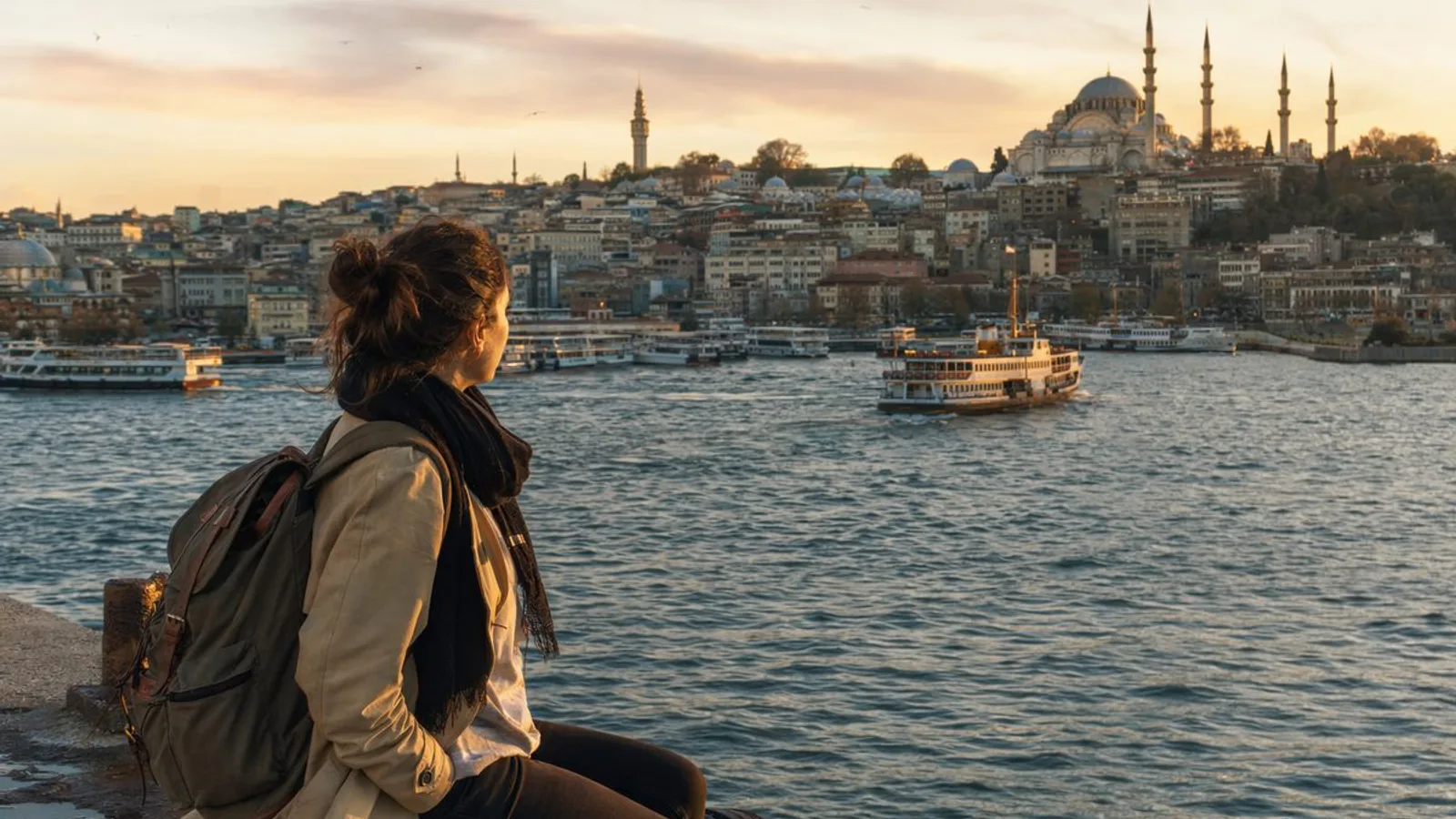
Istanbul is generally manageable for solo travelers, especially if you stay in a central area, use public transport, and watch for common scams. It suits travelers who like flexible days, big-city energy, and a mix of major sights, food stops, ferry rides, and neighborhood walks.
The city is large and busy, but the main visitor areas are straightforward to use, and many top experiences work especially well alone. If you keep your base convenient and your plan realistic, solo travel in Istanbul can feel rewarding rather than overwhelming.
Key takeaways
- Stay in a central area like Sultanahmet, Karaköy, Beyoğlu, or Kadıköy to cut travel time.
- Use public transport for most trips, and verify taxi details before you start.
- Dress simply, stay aware in crowded places, and ignore pushy street approaches.
- Solo-friendly highlights include major historic sites, ferries, food walks, hammams, and rooftop views.
- Keep time-sensitive details flexible, pick up an İstanbulkart on day one, and decide how you are getting in from the airport before you land.
Solo travel in Istanbul: what to know first
If this is your first solo trip to Istanbul, focus on three things first: where you stay, how you move, and how much you try to do each day. Istanbul is not usually hard in the usual sense. It is intense. Streets are steep, distances look short on a map, and one neighborhood can easily fill half a day.
For most solo travelers, the sweet spot is a central hotel with good public transport nearby, a short list of must-see sights, and one flexible block each day for food or wandering. That gives you structure without turning the trip into a checklist.
A smart first trip often mixes the old city with one or two modern districts. Spend one day around Blue Mosque, Hagia Sophia, and the old streets near Sultanahmet. Add another day for Galata, Karaköy, or a ferry ride. Then save time for a slower local area like Kadıköy.
Here are the main places and districts to know before you plan:
- Istanbul is Turkey's largest city, spread across Europe and Asia, with major historic districts, busy local neighborhoods, and a transport network that links them well.
- Sultanahmet is the old city area with many headline landmarks close together.
- Beyoğlu is the wider central district that includes İstiklal Street, Galata, and lively dining streets.
- Karaköy is a waterfront area known for ferries, cafes, and easy connections.
- Kadıköy is a popular district on the Asian side with markets, bars, and a more local daily rhythm.
Traveling alone here gives you freedom. You can slow down in a mosque courtyard, spend extra time in a museum, or take a ferry just for the view. Solo travel works best when you keep your plan light and your base convenient.
Is Istanbul safe for solo travelers?
For most visitors, yes. Istanbul is usually safe enough for solo travel if you use the same caution you would use in any large city. The main tourist areas are busy and active, which helps, but crowds, traffic, and occasional scams mean you still need to stay alert.
The more common problems are minor rather than dramatic: overcharging, unwanted sales pressure, confusing taxi situations, and pickpocket risk in packed areas. Busy transport hubs, famous squares, and nightlife streets need the most attention.
Many women visit Istanbul alone and have positive trips. Street attention can happen, especially in crowded or highly touristed areas, but a calm, firm no and continued walking usually work better than engaging.
Street smarts that matter in real life
Dress in a way that helps you blend in rather than stand out. You do not need to erase your style. Aim for practical clothes, comfortable shoes, and a bag that closes fully. In mosques, carry a layer or scarf: shoulders and knees covered, hair covered for women, shoes off at the door. The busiest mosques hand out wraps free if you forget, and visits pause for the five daily prayers.
At night, stick to well-used streets and avoid dark shortcuts, especially if you are returning alone. In Sultanahmet, evenings can feel quiet earlier than in Beyoğlu or Karaköy. In Beyoğlu and Karaköy, there are usually more people around later, but some side streets are steep, dim, or feel rougher after dark. In Kadıköy, the busier dining and bar areas tend to feel easier than empty back streets near the end of the night.
Keep your route home simple. Save your hotel location offline, keep your phone charged, and know whether you are taking a tram, ferry, metro, or prebooked ride before you head out.
Keep valuables simple. Do not flash cash, and avoid leaving your phone on a cafe table near the street edge. Use card payments where practical, but carry a small amount of local cash for snacks, toilets, or smaller shops. Cards work almost everywhere in the centre; cash matters for street food, small corner shops and public toilets, which charge a small fee.
Common scams and small hassles
The most likely annoyance is an overly friendly stranger trying to steer you toward a bar, shop, carpet store, or service you did not ask for. If the conversation feels staged, it probably is. A polite no, thank you and continued walking is enough.
Taxi issues can include route padding, meter problems, refusal of short rides, or arguments over payment. Many solo travelers prefer public transport or ride apps when available for exactly that reason. Hailing through an app such as BiTaksi or Uber, which both summon ordinary licensed yellow taxis, removes most of that: the route is tracked and the fare is on record.
Restaurant confusion is usually about unclear prices rather than outright fraud. Ask for a menu before ordering, and confirm anything sold by weight. This matters most around major landmarks.
A quick solo-safety comparison:
| Situation | Lower-stress choice | Higher-friction choice |
|---|---|---|
| Late-night return | Main streets, ferry plus short walk, or verified ride | Empty shortcuts or improvised taxi decisions |
| Airport arrival | Prebooked transfer or verified app-based ride | Negotiating while tired after landing |
| Tourist-area dining | Places with visible menus and steady local turnover | Restaurants with unclear pricing near major sights |
| Getting help | Step into a cafe, hotel, pharmacy, or shop | Arguing on the street |
Where to stay if you are traveling alone
Where you stay shapes the whole trip. For solo travelers, convenience matters more than a perfect room view. You want a district that lets you get home easily, find food without effort, and start early without a long commute.
A quick comparison:
| Area | Best for | Main trade-off |
|---|---|---|
| Sultanahmet | First-time visits and classic sightseeing | Quieter evenings, more tourist-focused dining |
| Karaköy | Ferries, food, and easy connections | Noise and hills on some streets |
| Beyoğlu | Nightlife, dining, and lively atmosphere | Exact street choice matters more |
| Kadıköy | Local feel, food, and longer stays | More cross-city travel for old-town sights |
Sultanahmet for first-time visitors
Sultanahmet is the easiest base if your priority is classic sightseeing. You can walk to major landmarks, see the city early before crowds build, and return for breaks during the day. This works well if you like structure or have a short trip.
The trade-off is that evenings can feel quieter than other districts, and some restaurants are more tourist-focused. Still, for a first solo visit, the ease is hard to beat. If this area is your focus, see our guides to Topkapı Palace, Basilica Cistern, Blue Mosque, and Hagia Sophia.
Beyoğlu and Karaköy for food and nightlife
Beyoğlu and Karaköy suit travelers who want a more social base. You get cafes, bars, late dinners, and strong transport links. These areas often feel better if you enjoy walking out alone at night for food or a drink.
Expect hills, noise, and more movement. Pick your exact street carefully. A hotel two blocks away from the action can feel much calmer than one directly on it. If you plan to use ferries often, Karaköy is especially convenient, with the tram and three ferry routes on its doorstep.
Kadıköy for a local feel
Kadıköy works well for repeat visitors or solo travelers who prefer neighborhood energy over headline sights. It has excellent food, relaxed daytime streets, and easy ferry access. You will spend more time crossing the city if your main goal is the old town.
If your trip is longer than a few days, Kadıköy can be a strong choice. If your trip is short, a more central European-side base is usually simpler.
How to get around on your own
Istanbul rewards travelers who learn the transport basics early. The network is broad, and it saves both money and stress. Once you understand the main lines, the city feels much smaller.
Using trams, metro, ferries, and buses
The tram is especially useful for first-time visitors because it links several major sightseeing areas. The metro helps with longer cross-city trips. Ferries are both transport and one of the best low-effort experiences in the city.
Get a transport card or current equivalent soon after arrival, then load enough credit for a few trips. The İstanbulkart covers metro, tram, ferry and funicular on one tap, and one card can pay for more than one person if you are ever travelling with someone. If you expect to stay out late, note that the last ferries go in the evening, while Marmaray and the main metro lines keep running later.
Google Maps can help, but do not rely on mobile signal alone. Download offline maps and save your hotel. This is especially useful when you leave a station in a new district and need a clear walking route.
A practical transport comparison:
| Option | Best use | Watch for |
|---|---|---|
| Tram | Old-city sightseeing and easy first routes | Crowding at peak times |
| Metro | Longer city crossings | More walking after stations |
| Ferry | Scenic cross-city trips and neighborhood changes | Schedule timing late at night |
| Bus | Filling route gaps | Harder for first-time visitors |
| Taxi or ride app | Late returns or airport trips | Fare disputes or route issues |
Taxis, ride apps, and airport transfers
For airport arrivals, many solo travelers prefer a prebooked transfer or a verified app-based ride over improvising after a long flight. That lowers stress right away. From Istanbul Airport the M11 metro links into the city network, and the ride to Sultanahmet takes the better part of an hour by any method, longer at rush hour; from Sabiha Gökçen the M4 metro runs straight to Kadıköy.
If you use a taxi, confirm the route and payment setup early. Keep maps open and avoid arguments in the middle of the ride. If something feels off, prioritize getting to a busy public place rather than winning the dispute. This section can also link naturally to a dedicated Istanbul airport transfer guide.
Best things to do alone in Istanbul
Istanbul is strong for solo travel because many of its best experiences do not require company. Some are better alone. You can move at your own pace, stay longer where you connect, and skip what does not interest you.
Historic sights that work well solo
The old-city landmarks are easy to do alone because they are close together and rich in detail. You can spend as long as you want in Hagia Sophia, walk through Topkapı Palace, or head underground to Basilica Cistern without matching anyone else's pace.
Go early where possible. Hagia Sophia runs daily, 09:00 - 19:30, Topkapı daily except Tuesday, 09:00 - 21:00 and the Basilica Cistern daily, 09:00 - 18:30; the first hour after opening is when a solo visitor gets the most room. If you plan to visit several big sights, look at Istanbul attraction tickets or city pass options — Istanbul PRIME Pass covers 78 attractions and tours over one to seven days from €249, which pays off only if you will genuinely use several of the big paid ones.
Food, hammams, views, and neighborhoods
Solo meals are easy in Istanbul. Casual places, bakeries, lokantas, and cafe counters work especially well. Food halls and market areas also help if you prefer low-pressure dining. Keep a short list of dishes you want to try, but do not overschedule every meal.
A hammam can be a good solo activity, especially on a slower afternoon. Read the service options first and confirm what is included. The process is simple once you know it: you are given a peştemal, a thin cotton wrap, you lie on the heated marble to warm up, and an attendant scrubs you with a kese mitt before the soap wash. Historic hammams separate men and women by section or by hours, and a tip for the attendant is customary. Hammams are add-ons to Istanbul PRIME Pass at member prices, not inclusions.
For a simple solo win, take a ferry with no fixed purpose, then walk one neighborhood for an hour. Karaköy, Galata, Balat, Kadıköy, and parts of the Bosphorus shoreline each give you a different mood. Try one or two well, not five badly.
Good solo-friendly ideas beyond the main landmarks:
- Take a ferry crossing at sunset and stay on deck for skyline views.
- Plan one neighborhood food walk in Karaköy, Kadıköy, or Beyoğlu.
- Book a hammam on the afternoon of your longest walking day.
- Choose one viewpoint or rooftop rather than chasing several in one evening.
- Visit one museum or palace in the morning, then leave the afternoon open for wandering.
A simple 3-day solo itinerary
This itinerary keeps movement manageable and leaves room for breaks.
Day 1: Old city basics
- Base yourself around Sultanahmet.
- See the Blue Mosque area and Hagia Sophia.
- Add Topkapı Palace or Basilica Cistern, depending on your pace.
- Keep dinner close to your hotel so the first day stays easy.
Day 2: Karaköy, Galata, and Beyoğlu
- Start in Karaköy for coffee or breakfast.
- Walk uphill toward Galata and continue into Beyoğlu if your energy is good.
- Leave time for snacks, people-watching, and a viewpoint instead of overbooking sights.
- End with a ferry ride or an easy dinner in a lively area.
Day 3: Kadıköy or a Bosphorus day
- Cross to Kadıköy if you want a more local pace and better food focus.
- Or keep the day Bosphorus-focused with a ferry, a shoreline walk, and one flexible stop.
- Use the afternoon for anything you missed or want to revisit.
If you have more time, add a hammam, a food tour, or a second museum day. If you have less time, cut neighborhoods before cutting sleep.
Solo travel mistakes to avoid
A few common mistakes make Istanbul feel harder than it needs to be:
- Booking a hotel far from the areas you care about just to save a little money.
- Planning every hour instead of leaving space for transport, hills, queues, and food stops.
- Assuming walking times from the map will feel easy in real life.
- Relying only on taxis when public transport is often simpler.
- Leaving closed days unchecked — Topkapı is closed Tuesday and Dolmabahçe closed Monday, and both have ended more than one solo itinerary.
- Returning late without deciding in advance whether you are walking, taking transit, or using a verified ride.
- Trying to cover the old city, Galata, a Bosphorus stop, and Kadıköy all in one day.
Final tips for a smooth trip
Pack for walking, layers, and changing conditions. Check the forecast in the last week before you fly: Istanbul summers are humid and hot, winters cold and wet, and spring and autumn change from day to day, so one warm layer and a compact rain shell cover most of the year.
Keep one offline note with your hotel name, address, and key bookings. Share your rough plan with someone at home so small disruptions stay small.
If this is your first visit, aim for around four to five days. That is usually enough time to see the old city, add one or two modern districts, and still have one slower day.
Most of all, do not try to master all of Istanbul in one trip. Pick a few strong neighborhoods, learn the transport basics, and let the city open at its own pace. That is usually when solo travel here feels easiest.