
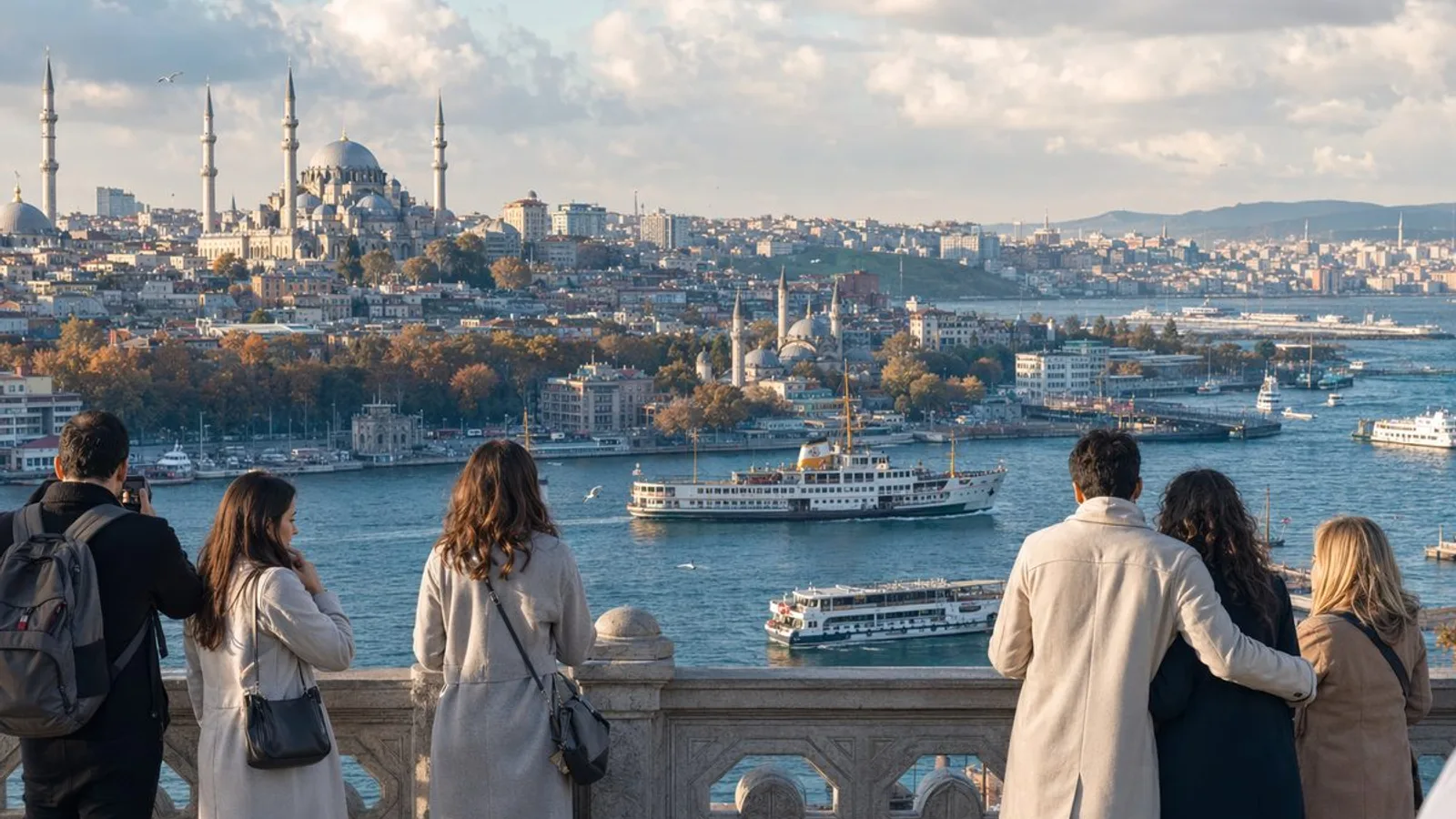
November suits travelers who want Istanbul’s major sights with less summer pressure, don’t mind cool and changeable weather, and are happy to mix outdoor views with indoor monuments, museums, hammams, and food stops. Expect shorter days, some rain risk, and generally easier crowd conditions than peak season. A sightseeing pass is usually worth it only if you have two to four focused sightseeing days and will use several included paid attractions in a tight window.
Istanbul is Türkiye’s largest city, spanning Europe and Asia along the Bosphorus. A sightseeing pass is a bundled product that can combine attraction entry, guided access, transport elements, or add-ons, depending on the specific pass.
Is November a good time to visit Istanbul?
Yes, for many travelers, November is a good time to visit Istanbul. The month works especially well for first-time visitors who want Hagia Sophia, Topkapi Palace, the Basilica Cistern, mosque visits, ferry views, and neighborhood food stops without the heaviest summer congestion.
The tradeoff is simple: better pace, worse weather. You get cooler air, earlier sunsets, and a higher chance of wind or rain, so your days work best when they combine one outdoor scenic element with two or three indoor anchors.
That makes November a strong fit for travelers who like structured city breaks. If your ideal trip is all-day rooftop lounging, long beach-style waterfront time, and light evening clothing, another season will probably suit you better.
In practical terms, plan around areas rather than trying to zigzag across the city. Blue Mosque, Hagia Sophia, Topkapi Palace, and Basilica Cistern fit naturally into a Sultanahmet day. A Bosphorus cruise works best when paired with Karaköy, Beşiktaş, or a flexible indoor backup.
What the weather feels like in November
Istanbul November weather is usually cool, changeable, and damp at times rather than truly wintry. You may get crisp, clear stretches that are excellent for walking, but you should also expect some days with wind off the water and passing rain.
Use a comfort-based planning range rather than assuming one steady pattern. Mornings can feel chilly, midday may feel fine in layers, and evenings often need a proper outer layer. On average, highs are around 15°C and lows around 10°C, both sliding through the month.
For most visitors, the main issue is variability. That affects how long you want to stay outside in open squares, whether a ferry deck feels enjoyable, and how much walking you want to do between districts.
If you enjoy walking cities, November can still be rewarding in Sultanahmet, Karaköy, Balat, Fener, and Kadıköy. Just expect wet pavement, hills, and slick stone surfaces to slow you down.
Rain, wind, and daylight
Rain is part of the November pattern, but that does not mean every day is lost to bad weather. More often, it means you need a plan that can switch indoors fast. November averages around eleven rainy days, one of the wetter months of the year.
Wind is often what catches visitors out. The Bosphorus and ferry routes can feel much colder than inland streets, especially in the afternoon or after sunset. A light sweater alone is usually not enough for a November cruise or evening ferry.
Daylight is the other big planning factor. Shorter days mean late starts cost you more than they do in spring or summer: in mid-November the sun is up around 07:50 and down around 17:45, and Türkiye does not change its clocks, so there is no extra evening hour to win back. A good rule is to place your most scenic outdoor stop before lunch, then move toward indoor monuments, museums, or a hammam later in the day.
How crowded Istanbul feels in November
November usually feels easier than summer, but not empty. Big-name sites still attract queues, especially in the late morning, on weekends, and on days with cruise arrivals or school-group traffic. Cruise-ship traffic tails off after October, but Turkish schools take a one-week break in mid-November, which fills the family-friendly sights for those days.
The practical upside is that the city often feels more manageable. Sultanahmet can still be busy, but you are less likely to spend the whole day in crowd-control mode. Security checks, tram stops, and ticket lines may still slow you down, yet the overall pace is usually more forgiving than in peak season.
Weekdays are often better for headline indoor attractions. Dining and shopping districts, by contrast, stay lively year-round. Istiklal Avenue, Galataport, Eminönü, and Kadıköy still have energy even when tourism softens.
The best way to use November well is to start early and group nearby sights. Sultanahmet rewards an opening-time approach. Galata Tower works better as part of a Karaköy or Beyoğlu day than as a rushed add-on after crossing the city.
What to pack for comfort in November
Pack for changing conditions, not for a single forecast snapshot. The most useful setup is light-to-medium layers that you can add or remove quickly as you move between heated interiors, breezy ferry decks, and open squares.
Bring:
- A medium-weight jacket or coat
- A light waterproof shell or compact umbrella
- Two light sweaters or mid-layers
- Comfortable walking shoes with grip
- Quick-drying socks
- A scarf for wind on ferries and exposed viewpoints
- A small day bag for layers, water, and chargers
You usually do not need heavy winter gear for a standard November city break. What matters more is staying comfortable in damp air and wind. Smooth-soled shoes are a weak choice on polished stone streets and steep hills.
Dress codes also matter at religious sites, so carry or wear items that help you cover shoulders or legs if needed: shoulders and knees covered for everyone, hair covered for women, shoes off at the door.
If you plan to visit a hammam, check inclusions before you go rather than assuming towels, slippers, lockers, or treatment basics are standard everywhere. The peştemal wrap is always provided; towels, lockers and the length of the scrub and massage depend on the package. Hammams are add-ons to Istanbul PRIME Pass at member prices, not inclusions.
Best things to do in Istanbul in November
November is best for a balanced mix: major indoor monuments, one scenic Bosphorus element, and neighborhood time with easy indoor fallback options. It is not the month to build a trip around exposed viewpoints alone.
Indoor sights that earn their time
Hagia Sophia is a major historic monument and active mosque, and it remains one of the clearest November priorities because the visit still holds up well in poor weather. Access rules can change, so reconfirm visitor entry, prayer-time restrictions, and ticket policy before booking or planning your day. Visitors use a separate route to the upper galleries, visits pause around prayer (most noticeably Friday midday), and the guided visit included in the pass runs daily, 09:00 - 19:30.
Topkapi Palace is the former Ottoman imperial residence, with a mix of indoor displays, courtyards, and Bosphorus-facing viewpoints. That mix works especially well in November because you can alternate short outdoor stretches with interior sections. It runs daily except Tuesday, 09:00 - 21:00.
Basilica Cistern is a historic underground reservoir supported by columns, and it is one of the easiest weather-proof stops in the city. It pairs well with a Sultanahmet morning or as a same-area backup if rain arrives. It runs daily, 09:00 - 18:30 and is included in Istanbul PRIME Pass.
Beyond the headline sights, November is also a good month for museum-focused pacing. You are more likely to appreciate the interiors, collections, and historical context when the city is not pushing you to stay outside all day.
Outdoor areas that still work well
The Bosphorus is still worth your time in November, but with realistic expectations. Choose a public ferry or a cruise for the skyline and waterfront views, bring an extra layer, and assume that weather may push you indoors for part of the ride. Sightseeing cruises run through November and are only called off in genuinely bad weather; one is included in Istanbul PRIME Pass, so a lost cruise day costs you a seat rather than a ticket.
Neighborhood walks also still work well, especially in shorter blocks. Balat and Fener are good for café-hopping and photography with indoor pauses. Kadıköy works well for food, ferries, and local pace. Karaköy is easy to combine with Galata-area sightseeing. Internal planning help: see the Bosphorus cruise page, Sultanahmet guides, transport card and airport transfer pages, hammam guides, and neighborhood pages for Kadıköy and Balat.
Open viewpoints are best treated as bonuses rather than the backbone of your day. Pierre Loti Hill can be beautiful in clear weather, but it is much less compelling if wind and visibility turn against you.
Is a sightseeing pass worth it in November?
Sometimes, yes. But it is not a default win just because November is shoulder season.
The right question is not “Is the pass good?” It is “Will I actually use enough included paid attractions, within the validity window, at a realistic November pace?” If the answer is yes, a pass can save money and simplify logistics. If not, pay-as-you-go is often the better deal.
Before booking, compare the exact pass inclusions with your real shortlist, not a wish list. Istanbul PRIME Pass covers 81 attractions and tours plus 20 add-ons at member prices, runs for one to seven consecutive days from its first use, and starts at €249.
A simple break-even framework
Use this four-step check:
- List the paid attractions you are genuinely likely to visit.
- Remove anything that depends on perfect weather or unrealistic cross-city timing.
- Add up the standard ticket costs for the remaining sights.
- Compare that total with the pass price — from €249, on passes of one to seven consecutive days.
If the pass costs less than or roughly the same as your realistic ticket total, it may be worth it for convenience alone. If you only break even by cramming in one extra attraction on paper, that is usually a sign to skip it.
A simple traveler-type view helps:
- First-time, sight-heavy traveler: often the best pass candidate if you want several major paid sights in two to four days.
- Return visitor: often better paying individually if you only want one or two specific monuments.
- Food and neighborhood traveler: usually better without a pass.
- Family with slower pacing: only worth it if the included attractions closely match your actual daily rhythm.
- Rain-sensitive traveler: a pass can work if it leans toward indoor attractions you can cluster.
For the full break-even working, see is the Istanbul sightseeing pass worth it in October — the same logic applies in November.
When the pass usually makes sense
A sightseeing pass usually makes sense in November if you have a short trip, want structure, and plan to focus on paid headline attractions. It is strongest for travelers who start early, group attractions by area, and can keep a steady pace for two to four days.
It can also make sense if the pass helps reduce booking friction or bundles experiences you already want, such as selected guided visits or transport-related add-ons, depending on the product. But only count those benefits if you know you will use them, and remember that add-ons such as hammams and airport transfers are member-price discounts, not part of the pass value.
A strong pass itinerary in November is usually indoor-friendly: Sultanahmet monuments, a palace, a cistern, one or two museums, and perhaps a cruise if conditions look good.
When pay-as-you-go is the better move
Pay-as-you-go is usually better if your trip is slower, more neighborhood-led, or built around food, ferries, hammams, and spontaneous time rather than a checklist of paid monuments. It also tends to be the better option for return visitors who only want a few specific sights.
Skip the pass if any of these describe your plan:
- You only want one or two paid attractions
- Your must-see list leans heavily toward free mosques, markets, and street life
- You expect to spend long afternoons in Kadıköy, Balat, or café-heavy districts
- You are traveling with a slower pace and do not want to optimize every hour
- The attractions you care about are excluded from the pass or have access rules that reduce pass usefulness — check your shortlist against the included list, not the add-ons
November makes this decision more important because weather and daylight can shrink your usable sightseeing window. A pass that looks good on an ambitious spreadsheet can lose value quickly if rain, wind, ferry delays, or simple fatigue remove one attraction from each day.
A data-honest verdict: the pass is worth it when your itinerary is dense, paid-sight focused, and realistic for November. It is not worth it just because you want the feeling of having everything covered.
Sample 2-day and 4-day November itineraries
These examples are built for November conditions: early starts, clustered areas, and a clear indoor backup each day.
Sample 2-day itinerary
Day 1: Sultanahmet priority day
- Start early in Sultanahmet
- Visit Hagia Sophia first if it is your top priority
- Continue to Basilica Cistern
- Add Topkapi Palace if you want one longer paid visit
- Take lunch nearby rather than losing time on a cross-city move
- Keep late afternoon flexible for the Blue Mosque, a museum, or a slower café break depending on weather and energy
Why this works in November: you anchor the day around close-together headline sights and avoid wasting daylight in transit.
Day 2: Bosphorus + Galata/Karaköy
- Put your Bosphorus ferry or cruise in the clearest weather window
- After the boat, explore Karaköy and continue toward Galata
- Visit Galata Tower only if visibility and queue length make sense
- Use a museum, hammam, or long lunch as your indoor fallback
- If conditions are poor, skip the exposed viewpoint and lean into indoor stops instead
Why this works in November: you get the essential water view without making your whole day weather-dependent.
Sample 4-day itinerary
Day 1: Sultanahmet core
Build the day around Hagia Sophia, the Blue Mosque, Basilica Cistern, and Topkapi Palace, with breaks nearby rather than transit-heavy detours.
Day 2: Bosphorus + palace or museum
Do a ferry or cruise in the better weather slot, then pair it with Dolmabahçe Palace or another substantial indoor sight. Dolmabahçe runs daily except Monday, 09:00 - 18:00.
Day 3: Balat and Fener at a relaxed pace
Use the day for neighborhood walking, cafés, photography, and churches or small museums as weather allows. Keep the plan loose because this area works best when you let the streets lead a little. See neighborhood support pages for Balat and nearby guides.
Day 4: Kadıköy or Üsküdar + one final paid sight
Take the ferry to the Asian side for a different rhythm, food stops, and waterfront views. If weather and energy hold, add one final paid attraction back on the European side. If not, let the day stay local and slower. See Kadıköy and transport-planning pages for the easiest route.
How to adapt these plans if it rains:
- Move ferry views earlier or to the clearest day
- Swap open viewpoints for cisterns, palaces, museums, or a hammam
- Keep meals and coffee stops near your main sights so you do not burn time relocating
- Do not force a pass itinerary if the weather is reducing your pace
Final booking and planning tips
Book with flexibility where you can. November rewards travelers who can adjust a little more than travelers with rigid hour-by-hour schedules.
Before paying for tickets, passes, or tours:
- Check the closed days against your dates: Topkapı is closed Tuesday, Dolmabahçe closed Monday
- Recheck access conditions for mosques and major monuments, especially around prayer times and visitor routing
- Verify Bosphorus operating schedules and cancellation terms close to travel
- Check practical transport planning, including airport transfer timing and whether an Istanbulkart still fits your trip style
- Watch the weather trend in the final 7 to 10 days rather than reacting too early to a long-range forecast; the Turkish State Meteorological Service (MGM) publishes the official one
If classic sightseeing is your main goal, November is a very solid month to visit Istanbul. If your trip depends on long outdoor evenings and guaranteed clear conditions, it is a weaker fit.
FAQ
Is November a good month to visit Istanbul?
Yes. November is a good month for travelers who want major monuments, museums, mosque visits, food neighborhoods, and Bosphorus views with less pressure than peak summer. The tradeoff is cooler weather, shorter daylight, and some rain risk.
How cold is Istanbul in November?
It is usually cool rather than deeply cold. Expect jacket weather in the mornings and evenings, with some middays feeling comfortable in layers: average highs around 15°C, lows around 10°C.
Is Istanbul very rainy in November?
It can be wet, but not every day is a washout. Rain falls on roughly one day in three, so indoor backup plans matter.
What should I wear in Istanbul in November?
Wear layers, a medium-weight outer layer, and shoes with grip. Add a waterproof shell or umbrella, and bring a scarf for ferry rides and windy viewpoints.
Are crowds low in Istanbul in November?
Usually lower than summer, yes, but headline attractions can still be busy in late morning and on weekends. Start early and group nearby sights to use the month well. Cruise-ship traffic tails off after October, but Turkish schools take a one-week break in mid-November, which fills the family-friendly sights for those days.
Is a sightseeing pass worth it in November?
Only if you will use several included paid attractions within the pass validity period at a realistic November pace. If your trip is slower or more neighborhood-focused, pay-as-you-go is often better. The pass starts at €249 and covers 81 attractions and tours.
Are Bosphorus cruises worth it in November?
Yes, often. Clear days can be excellent, but wind and weather matter more than in warmer months. Reconfirm schedules and cancellation rules before booking.
Do I need to recheck attraction rules for 2026 before I book?
Yes. Hours, visitor routing, inclusions, and access rules can change, so reconfirm official 2026 details before paying for tickets, tours, or a pass. This matters especially for mosques, palaces, and bundled sightseeing products.