
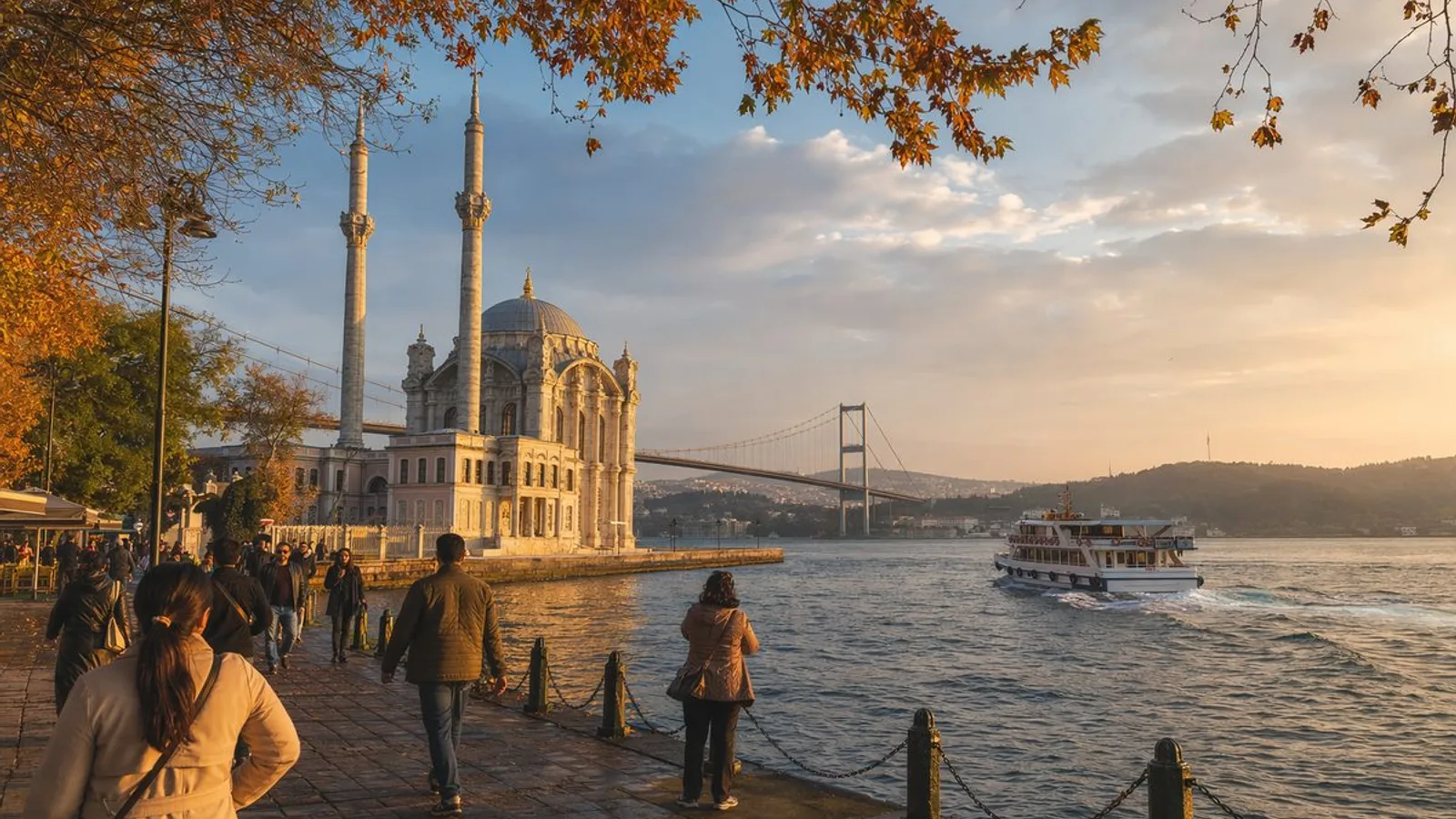
Yes, autumn is one of the best times to visit Istanbul if you want comfortable sightseeing, ferry rides that still feel pleasant, and a better balance between major landmarks and neighborhood time. September suits travelers who still want warmth, October is usually the best all-round choice, and November works best if you prefer lower-intensity city breaks and do not mind cooler, grayer weather.
The tradeoff is simple: as the season goes on, temperatures drop, daylight shortens, and rain matters more. If you want the broadest mix of good walking weather and flexibility, autumn is a very strong bet.
Key Takeaways
- Autumn usually brings cooler days, fresher evenings, and better walking conditions.
- Big attractions can still be busy, but they are often easier to handle than in peak summer.
- September feels closest to late summer, October is the most balanced, and November needs warmer layers and rain planning.
- Ferry rides, palace visits, hammams, and food-focused neighborhood days work especially well in this season.
Istanbul is Turkey's largest city, spread across Europe and Asia and connected by ferries, bridges, trams, metros, and buses.
Istanbul in autumn
Autumn gives you the version of Istanbul many travelers enjoy most: easier walking, more pleasant afternoons in open squares, and enough flexibility to combine big sights with local neighborhoods. You can spend the morning in Sultanahmet, take a ferry after lunch, and still have energy for dinner or a hammam.
The season is not identical from start to finish. Early September can still feel warm and bright, while late November can feel cool, windy, and damp. That difference matters when you choose where to stay, what to book in advance, and how tightly to plan your days.
Autumn also fits the way the city works best. Istanbul rewards travelers who move through it in stages: one cluster of major sights, a ferry crossing, a tea stop, a food street, then an evening neighborhood. In cooler weather, that rhythm is much easier to enjoy.
Why autumn feels better than summer for many travelers
The biggest advantage is comfort. Open-air places like palace courtyards, mosque forecourts, waterfront walks, and uphill streets become easier to manage when the heat drops. That can make the same itinerary feel far less tiring.
Crowds do not disappear. Istanbul is busy year-round, and famous places such as Hagia Sophia, Blue Mosque, Topkapi Palace, and the Basilica Cistern stay popular. Still, many visitors find autumn more manageable than high summer because they are not dealing with the same level of heat and fatigue.
Autumn also improves pacing. You can start early without feeling rushed, keep walking through midday, and still enjoy sunset on the water. If you like trips built around both landmarks and everyday city life, that balance is a major plus.
There is one tradeoff to remember: Istanbul is fully active in autumn. Commuter routes are busy, workday rush hour is real, and ferries and trams can get crowded. You are visiting the city in a very livable season, but also in a season when locals are fully out and about.
What the weather is really like from September to November
Autumn weather in Istanbul shifts month by month, so it is easier to plan if you think of September, October, and November separately.
| Month | General feel | Best for | Main tradeoff |
|---|---|---|---|
| September | Warm, early-autumn, often bright | Travelers who still want warmth and longer-feeling days | Can still feel quite summery early in the month |
| October | Mild, balanced, classic fall city-break weather | First-time visitors and walking-heavy itineraries | Popular month, so major sights still get busy |
| November | Cooler, moodier, more changeable | Museum trips, hammams, shorter city breaks, lower-intensity travel | Shorter days, more rain risk, sharper wind by the water |
September
September is the bridge month between summer and fall. It often starts warm and can still feel close to summer, especially in the first half: average highs are around 25°C and nights around 18°C.
It is a strong pick if you want an autumn trip without giving up outdoor meals, scenic ferry rides, and longer neighborhood walks. This is often the easiest month for travelers who want the idea of fall but still prefer light clothing during the day.
Pack for light layers. Short sleeves may still work in the afternoon, but a thin overshirt or light jacket helps in the evening and on the water. Sun can still be strong, so sunglasses and sunscreen are still worth carrying.
Some travelers wonder whether September is warm enough for sea-related plans. For most Istanbul itineraries, the more relevant question is whether ferry time and waterfront walks are comfortable, not whether the city functions like a beach destination.
October
October is often the best all-round month for an Istanbul city break. The weather usually feels more balanced, with fewer hot afternoons and a clearer autumn atmosphere, with highs around 20°C and nights around 14°C.
This is the month that best suits walking-heavy plans. You can combine Hagia Sophia, Blue Mosque, and Topkapi Palace in one day, then still have enough energy for a ferry crossing or dinner by the Bosphorus.
October can also bring rain, so treat “mild” as “changeable,” not “dry.” A compact umbrella or light rain shell is enough for many trips. Build at least one indoor backup into each full day, especially if you are traveling late in the month.
November
November is late autumn and feels much closer to winter. Days are shorter, skies can be gray, and Bosphorus wind can feel colder than the temperature suggests; average highs are around 15°C, nights around 10°C.
That does not make it a bad month. It just changes the kind of trip that works best. November is good for mosques, museums, palaces, covered bazaars, food-focused days, and a Turkish Hammam. If you enjoy a moodier city and do not need long sunny evenings, it can be rewarding.
Bring warmer layers, a medium-weight coat, and shoes that can handle wet pavement. Full winter gear is not usually necessary unless a colder spell arrives — a northerly wind can pull temperatures into single figures for a few days, though snow in November is rare.
What to wear and pack for fall in Istanbul
Layering is the simplest strategy. A single autumn day can move from warm sun to cool ferry wind to a damp evening.
Start with comfortable walking shoes. Hills, cobbles, long tram platforms, and large historic sites add up quickly. Then build around flexible layers: T-shirts or light tops, a long-sleeve layer, an overshirt or cardigan, and a jacket that handles wind or light rain.
A simple packing rule works well:
- September: light layers
- October: flexible layers plus rain backup
- November: warmer layers and water-aware footwear
Mosque visits need a little planning too. Clothing should be modest enough for entry, especially if you are visiting active religious sites in Sultanahmet or Uskudar: shoulders and knees covered, hair covered for women, shoes off at the door.
Useful extras include a compact umbrella, portable charger, lip balm for windy ferry rides, and a small day bag. If you plan a Bosphorus Cruise, keep one extra layer with you even on a clear day.
Best things to do in autumn
Autumn does not change what Istanbul offers. It changes how comfortable those experiences feel.
Cruise the Bosphorus in cooler air
The Bosphorus is the strait separating the European and Asian sides of Istanbul and linking the Black Sea with the Sea of Marmara. In autumn, cooler air and softer light make time on the water especially appealing.
You have two main options: a dedicated Bosphorus Cruise or regular city ferries. If you want a set route and commentary, a cruise makes sense. If you want flexibility, lower cost, and a more local feel, ferries often do the job just as well.
Sightseeing cruises keep running through autumn, and one is included in Istanbul PRIME Pass; later in the season the sunset departures simply move earlier with the light.
Visit big sights with less stress
Sultanahmet is the historic core of Istanbul and the area most first-time visitors prioritize. In autumn, it becomes easier to spend a full day here without the same level of summer fatigue.
A strong route is Hagia Sophia, Blue Mosque, the Basilica Cistern, and Topkapi Palace. These are still busy places, but cooler weather makes queueing, walking between sites, and spending time in open courtyards much more comfortable.
Book timed-entry attractions ahead where possible. Popular sights can still be crowded on weekends, public holidays, and cruise-heavy days — September and October are busy months at the Galataport cruise terminal. Guided entries need booking ahead; open-entry venues do not.
Enjoy parks, viewpoints, and ferry rides
Autumn is ideal for half-planned scenic time. Walk the waterfront in Ortakoy, take a ferry to Uskudar or Kadikoy, stop for tea, and build the rest of the day around how the weather feels.
Kadikoy is a lively Asian-side district known for food streets, local shopping, and frequent ferry links. Uskudar is a historic waterfront district on the Asian side known for mosque silhouettes, Bosphorus views, and a more local pace.
These districts work so well in autumn because they reward slower travel. A ferry crossing, a bakery stop, and an hour by the water can be as memorable as a major museum visit.
Eat and drink with the season
Cooler weather improves the food rhythm of the city. Soup, grilled fish, meze, kebabs, tea, and Turkish coffee all fit naturally into an autumn day, and outdoor seating often still feels pleasant.
A hammam is a traditional Turkish bath centered on heat, steam, and cleansing rituals. It works especially well after a long walking day or on a rainy afternoon. If that sounds appealing, our guide to Turkish Hammam can help you choose the right experience.
Neighborhoods that shine in autumn
Some parts of Istanbul are especially rewarding in fall because they combine walkability, views, and easy transport.
Sultanahmet is the best base for first-time visitors focused on landmarks. Cooler weather makes long days around mosques, cisterns, palace grounds, and historic streets much easier. If that is your priority, pair this guide with our Sultanahmet coverage and your core sightseeing plans.
Karakoy and Galata are strong for travelers who want cafes, hills, viewpoints, and easier access to both old-city sights and Beyoglu evenings. Galata is the steep, historic area around Galata Tower, while Beyoglu is the larger central district known for Istiklal Street, dining, and nightlife.
Beyoglu works best if your autumn trip leans more toward restaurants, bars, shopping, and late evenings than early-start monument days. It is a good fit for second-time visitors or travelers splitting time between classic sights and contemporary city life.
Kadikoy is excellent if you want food, markets, and a more residential local feel. It is easy to build a half-day or full day around ferries, coffee, casual eating, and waterfront time here. In mild autumn weather, it can become a highlight rather than a side trip.
Uskudar is a quieter alternative with strong Bosphorus views and a more relaxed rhythm. It is especially good for a slower morning or golden-hour waterfront walk.
If you are deciding where to stay, match your base to your trip style:
- Landmark-first first trip: Sultanahmet or Sirkeci
- Dining and nightlife: Karakoy, Galata, or Beyoglu
- Repeat visit or more local pace: Kadikoy or nearby Asian-side areas
In a short autumn trip, being on the tram line or near a ferry pier saves more time than any other choice you make about the hotel.
Sample 3-day autumn itinerary
Here is a simple 3-day plan that works well in September, October, or November with small weather adjustments.
Day 1: Sultanahmet and the historic core
Start early in Sultanahmet while the area is at its calmest. Visit Hagia Sophia, Blue Mosque, and the Basilica Cistern, then break for lunch before heading to Topkapi Palace.
If the weather is clear, finish with a sunset ferry or short Bosphorus Cruise. If it is wet, swap the evening for a slower indoor dinner and save your waterfront time for another day.
Day 2: Kadikoy, Karakoy, and Galata
Take a morning ferry to Kadikoy. Walk the market streets, stop for coffee, and keep lunch flexible. Then return by ferry to Karakoy and walk uphill into Galata and Beyoglu.
This day works particularly well in autumn because the ferry segments break up the walking and the route feels enjoyable even when temperatures are cooler.
Day 3: Choose your weather-friendly finale
Use your third day as a flexible slot. On a clear day, take a longer Bosphorus Cruise, spend more time in Uskudar, or add another outdoor neighborhood. On a rainy day, lean into museums, palace interiors, covered shopping areas, and a Turkish Hammam.
If you are building a wider trip plan, this section should also point readers to your full itinerary page if one exists.
Practical tips for crowds, booking, and transport
A smoother autumn trip usually comes down to three things: booking the right attractions ahead, using ferries intelligently, and not underestimating Istanbul travel times.
Start headline sights early. Timed-entry attractions are easiest to enjoy in the first part of the day, before queues build and large tour groups stack up. If a place offers timed entry or strongly benefits from advance purchase, book it before you arrive. Topkapı is closed Tuesday and Dolmabahçe closed Monday, which matters more than any queue.
Use ferries as transport, not just scenery. They are often one of the easiest ways to move between districts while also giving you a break from traffic and hills. For many travelers, a ferry to Kadikoy or Uskudar is more useful than a formal sightseeing cruise, especially if you are short on time.
Watch rush hour on workdays. Morning and late-afternoon commuter periods can make trams, metros, ferries, and station interchanges noticeably more crowded. If you can, avoid cross-city transfers at peak commuter times and save neighborhood wandering for those windows instead.
Get an Istanbulkart early if your dedicated transport page confirms it is still the best visitor option. The Istanbulkart is the city's reloadable transit card used across trams, metros, buses, and ferries. It is one of the easiest ways to keep transport simple: buy it from a machine at any metro station or pier, and one card can pay for more than one person.
Plan around daylight later in the season. September gives you more room for sunset outings; November does not. If views matter, place ferries, waterfront walks, and skyline stops earlier in the day than you would in summer. Sunset moves from about 19:35 in early September to about 18:00 at the end of October and about 17:35 by the end of November — and because Türkiye does not change its clocks, there is no late-October hour of evening light to win back.
Keep one indoor backup per day. That is the easiest way to handle rain without losing momentum. A hammam, museum, mosque visit, or covered market stop can rescue a wet forecast.
Weekends are usually busier in popular districts, so put your biggest landmark day on a weekday if possible. Before booking, also check public holidays and school breaks: Republic Day on 29 October brings parades and road closures in the centre, and Turkish schools take a one-week break in mid-November.
Is autumn the best time to visit Istanbul?
For many travelers, yes. If your priorities are comfortable sightseeing, mixed indoor and outdoor plans, and a city break that does not feel drained by heat, autumn is one of the best seasons to choose.
Pick September if you still want warmth and a softer transition from summer.
Pick October if you want the best overall balance of weather, walkability, and flexibility.
Pick November if you prefer a moodier, lower-intensity city trip built around museums, hammams, food, and shorter outdoor stretches.
So, is autumn the best time to visit Istanbul? For most first-time visitors and many repeat visitors, yes. October is the safest all-round choice, September is best for warmth lovers, and November is best for travelers who value atmosphere over sun.