
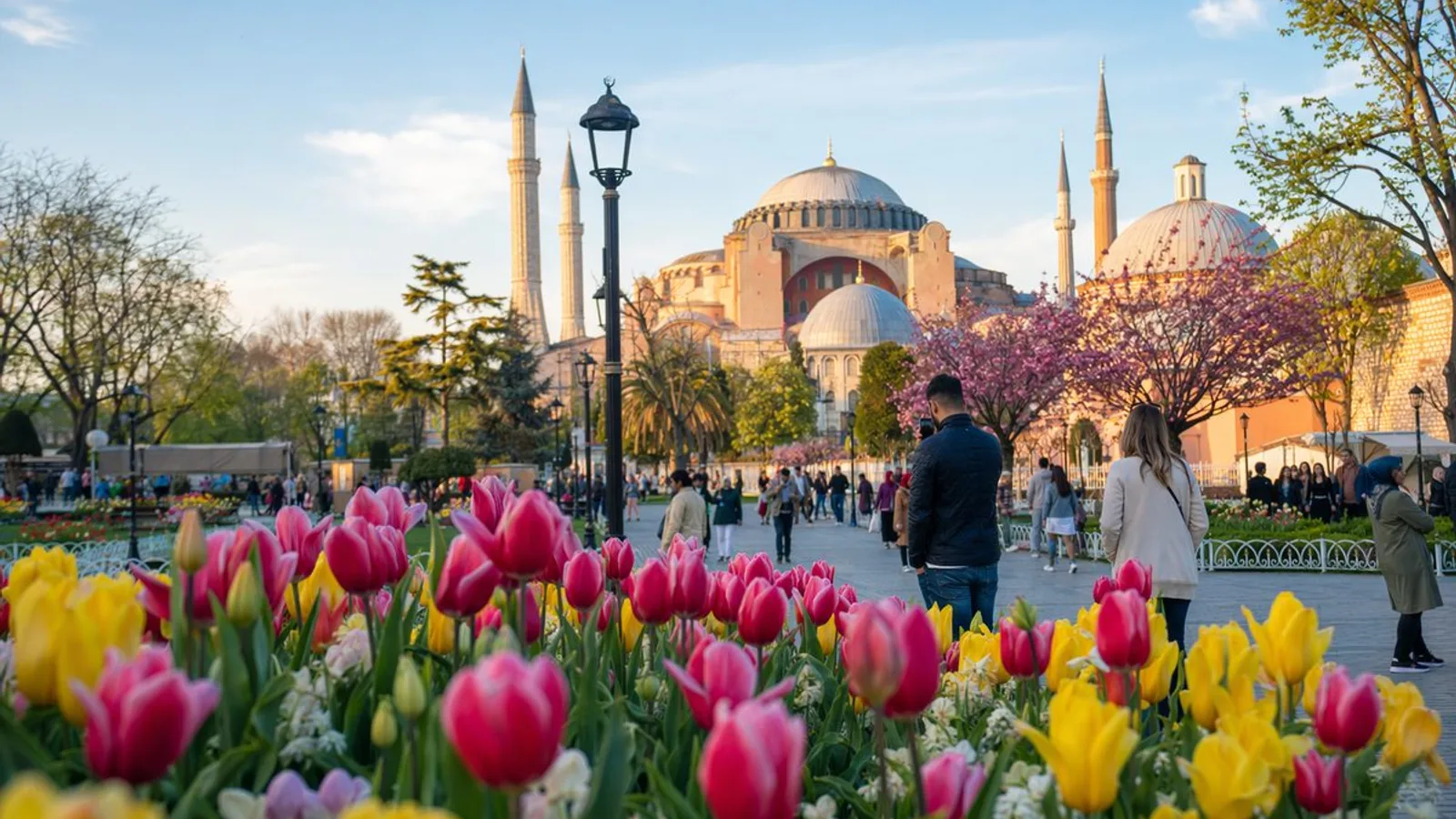
Istanbul in spring suits first-time visitors, walkers, photographers, and travelers who want long sightseeing days without summer heat. March is best if you prefer cooler air and slightly lighter crowds, April is usually the best fit for tulips and classic spring atmosphere, and May often feels the warmest and most comfortable for outdoor time but also busier. Tulips usually peak in mid-April, though a cold or warm March moves them by a week or two either way. Expect variable conditions throughout spring, with sun, wind, and showers changing how the day feels fast. Major sights do not feel empty in spring either: Sultanahmet, Topkapı, ferry hubs, and famous museums can still get crowded, especially on weekends and holidays. The fixed ones are 23 April, 1 May and 19 May; the religious holidays move about eleven days earlier each year, and in 2027 Ramazan Bayramı falls in early March and Kurban Bayramı in mid-May, when much of Türkiye travels too.
Istanbul is Turkey's largest city, spread across Europe and Asia along the Bosphorus. For this guide, spring means March, April, and May.
Istanbul in spring at a glance
If you want one short answer, April is the best all-round spring month for many travelers, March is the better pick for cooler sightseeing days, and May is the better pick for warmer outdoor time.
| Month | Best for | Weather feel | Tulips and flowers | Crowds | What to watch |
|---|---|---|---|---|---|
| March | Travelers who want cooler days and easier walking | Variable, often cool, with wind and possible rain | Early displays may begin in some areas | Lighter than later spring, but major sights still draw lines | Highs around 12°C, lows near 5°C, the wettest spring month |
| April | First-time visitors, tulip seekers, classic spring city breaks | Mild but still changeable; layers help every day | Usually the main tulip window, with peak timing shifting by year | Popular parks and old-city landmarks can get busy | Highs around 16°C; tulips peak mid-month; 23 April holiday |
| May | Longer outdoor days, ferries, neighborhood time, café weather | Milder to warmer, but sea breeze can still feel cool | Late blooms in some areas, less about peak tulips | Often busier, especially in well-known areas and on weekends | Highs around 21°C; 1 and 19 May holidays |
A useful rule: choose March for cooler city walking, April for flowers, and May for the most comfortable all-day outdoor pace.
Istanbul weather in March, April, and May
Istanbul weather in spring is changeable rather than steadily warm. A sunny square can feel pleasant, then a ferry deck or hilltop can feel much colder because of wind off the water.
Spring conditions vary by month: average highs climb from about 12°C in March to 16°C in April and 21°C in May, while rainy days fall from around twelve in March to about seven in May. In practical terms, March is usually the coolest and most variable, April often brings the best balance of fresh air and greenery, and May tends to feel softer and more settled without guaranteeing dry weather.
What most visitors notice is range during the same day. Mornings can feel crisp, midday can feel mild in the sun, and evenings near the Bosphorus can turn cool again. Rain is possible in all three months.
That is why spring works well for sightseeing but rewards flexible planning. Put exposed activities like ferries, viewpoints, and waterfront walks in the brighter part of the day. Keep one indoor option ready in case showers roll in, such as a palace, mosque, or museum.
Shoes matter almost as much as jackets. Istanbul has hills, uneven pavement, tram tracks, and long walking routes. Water-resistant walking shoes are usually a better choice than fashion shoes with little grip.
Where to see tulips and spring flowers
If tulips are part of your trip, do not build the whole visit around one exact flower bed. It is better to combine several parks and central gardens so you still get a good spring day even if one area is early or past peak.
Emirgan Park
Emirgan Park is a large hillside park on the European side, known for broad lawns, ponds, and seasonal flower displays. It is one of the best-known places to look for tulips in Istanbul.
Its advantage is space. You can wander longer, stop at viewpoints, and avoid the compressed feel of the busiest central zones. Weekday mornings are often the calmest time to go, though festival activity can change the atmosphere: the city's Tulip Festival runs through April, centred on Emirgan, with dates announced by the municipality each year.
Emirgan works best as a slow visit. Give yourself time to walk, sit, and combine the park with a Bosphorus stop rather than treating it as a quick photo errand.
Gülhane Park
Gülhane Park is a historic park beside Topkapı Palace on the edge of Sultanahmet. It is one of the easiest flower stops to add to a classic first-time itinerary.
This is the convenient choice. You can visit Topkapi Palace, walk through Gülhane for spring color, then continue toward Hagia Sophia or Basilica Cistern. If your trip is short, that central location matters as much as the flowers.
Because it sits next to major landmarks, the park can fill up by late morning. Early visits are easier for photos and more relaxed walking.
Sultanahmet Square and central gardens
Sultanahmet Square is the historic area between several of Istanbul's best-known imperial monuments. In spring, planted beds and formal gardens add color to one of the city's busiest sightseeing districts.
If you only have a day or two, this is the simplest place to see seasonal flowers without changing your route. Walk between Blue Mosque, Hagia Sophia, and the surrounding gardens early for softer light and more space.
This area is about convenience and iconic backdrops, not quiet. Expect people, cameras, and tour groups.
Best things to do on mild spring days
Spring is one of the best seasons to build your day around walking, ferries, and outdoor breaks. You can spend longer outside without planning your whole route around heat or winter weather.
Walk the Historic Peninsula
The Historic Peninsula is the old core of imperial Istanbul, home to many of the city's most famous monuments. Spring is ideal for exploring it on foot.
Start around Sultanahmet, then move toward the Grand Bazaar side streets or downhill to Eminönü. The route is easier in spring because you can mix major sights with pauses in courtyards, parks, and waterfront areas without feeling rushed by weather.
For attraction ideas and passes, start with Istanbul attractions.
Take a Bosphorus cruise
The Bosphorus is the strait dividing Istanbul's European and Asian sides. A Bosphorus trip is one of the best spring activities because the season suits open-air views and waterfront light.
You do not need a luxury cruise to enjoy it. Public ferries and sightseeing boats both work well in spring. Midday often gives clear views, while later afternoon can give softer light. Wind can make the deck feel colder than the land, so carry a layer even on mild days.
Sightseeing cruises run through spring from Eminönü and Kabataş, and a Bosphorus cruise is included in Istanbul PRIME Pass; the public commuter ferries are the cheaper alternative if you just want to be on the water.
Visit museums before summer lines build
Spring is also a practical museum season. Daylight is longer than winter, and you often avoid the heaviest summer demand. That makes it easier to combine indoor and outdoor stops in one day.
Places like Topkapi Palace, Dolmabahce Palace, and Galata Tower still get busy by late morning, so book timed entry where possible and visit your top priority first.
The closed days are what trip people up: Topkapı is closed Tuesday and Dolmabahçe closed Monday, while Hagia Sophia runs daily, 09:00 - 19:30.
Crowd levels, prices, and what to expect
Spring is quieter than peak summer in relative terms, but not quiet. The city's most famous places stay popular all season.
You should still expect crowding around Sultanahmet, Topkapı, Eminönü, Karaköy, Ortaköy, and major ferry hubs, especially on weekends, public holidays, and bright-weather afternoons. Parks with tulip displays can also feel busy during the main bloom window.
This is the real spring trade-off:
- March can feel easier for major sights, but weather is cooler and less predictable.
- April often gives the strongest spring atmosphere and the best tulip odds, but flower areas attract more visitors.
- May can feel best for long outdoor days, but it is often less of a hidden season than travelers expect.
Prices depend on exact dates rather than the season label alone, and holiday weekends push them up fastest. If your travel dates are flexible, compare multiple weeks instead of assuming all spring dates are similar.
For top attractions, the first hour after opening is when lines are shortest, and guided entries need booking ahead. A good spring strategy is simple: start flagship sights early, leave late morning for parks or ferry rides, and keep one backup indoor stop nearby.
What to wear in Istanbul in spring
Pack for layers, not for one fixed forecast. The weather can shift quickly between sun, wind, and rain, and exposed areas near the water almost always feel cooler than sheltered streets.
Bring these basics:
- A light jacket
- One warmer mid-layer
- Comfortable walking shoes
- A scarf for wind or mosque visits
- Sunglasses for bright days
- A compact umbrella or light rain shell
- A small day bag for layers and water
Mosque dress code is the clothing standard required for entering active mosques. In practice: shoulders and knees covered, hair covered for women, shoes off at the door; the busiest mosques lend wraps free.
Women may want a scarf ready for mosque visits. Men and women should both avoid planning a full sightseeing day around shoes that are hard to walk in. If you are taking ferries, sitting on terraces, or staying out after sunset, one extra warm layer is worth carrying.
A simple 3-day spring itinerary
This itinerary keeps outdoor time high while leaving room to adapt to weather, bloom timing, and energy levels.
Day 1: Sultanahmet and Gülhane
Start early with Hagia Sophia and Blue Mosque. Continue to Basilica Cistern, then slow down in Gülhane Park for trees, flower beds, and a break from monument-hopping. If you still have energy, add Topkapi Palace.
This is the best first day because it groups classic sights in one walkable zone.
Day 2: Bosphorus and neighborhoods
Take a morning Bosphorus cruise or use a public ferry route for the same scenic payoff at a slower pace. Then explore Beşiktaş, Ortaköy, Karaköy, or another waterfront neighborhood that matches your style.
If conditions stay bright, keep the day outdoors with waterside walks and café stops. If the weather turns, switch to Dolmabahce Palace or a museum-focused afternoon.
Day 3: Emirgan or a flexible flower day
Use your third day for Emirgan Park if tulips are in bloom — mid-April is the safest bet, and the park is worth the trip up the Bosphorus even after the peak. Pair it with a nearby Bosphorus stop or another ferry ride.
If flowers are past peak or the weather is poor, make this a flexible city day instead. Good alternatives include Galata Tower, a neighborhood walk, indoor attractions, and shorter crossings by ferry.
The key to this third day is not forcing one perfect spring scene. Keep it open enough to match actual bloom conditions and the forecast you have that morning.
Final tips for a smooth spring trip
Start headline sights early, especially in Sultanahmet. Keep one half-day flexible for rain or wind. Do not overbook every hour just because spring temperatures are comfortable.
A few practical habits make spring trips easier:
- Book your highest-priority museum or palace first on any busy day.
- Put parks, ferry rides, and viewpoints between indoor attractions.
- Carry one extra layer even if the morning looks sunny.
- Check bloom updates close to departure if tulips matter to your trip.
- Use transit and ferries to break up long uphill walking days.
If you are choosing between March, April, and May, the simplest answer is this: March is best for cooler sightseeing, April is best for tulips and all-round spring atmosphere, and May is best for warmer outdoor days. For many travelers, April is the safest overall choice.
For attraction planning, route ideas, and ticket options, start with /attractions. You can also link onward to transport guides, Bosphorus ferry options, museum ticketing pages, and neighborhood guides to build a trip that matches your pace.