
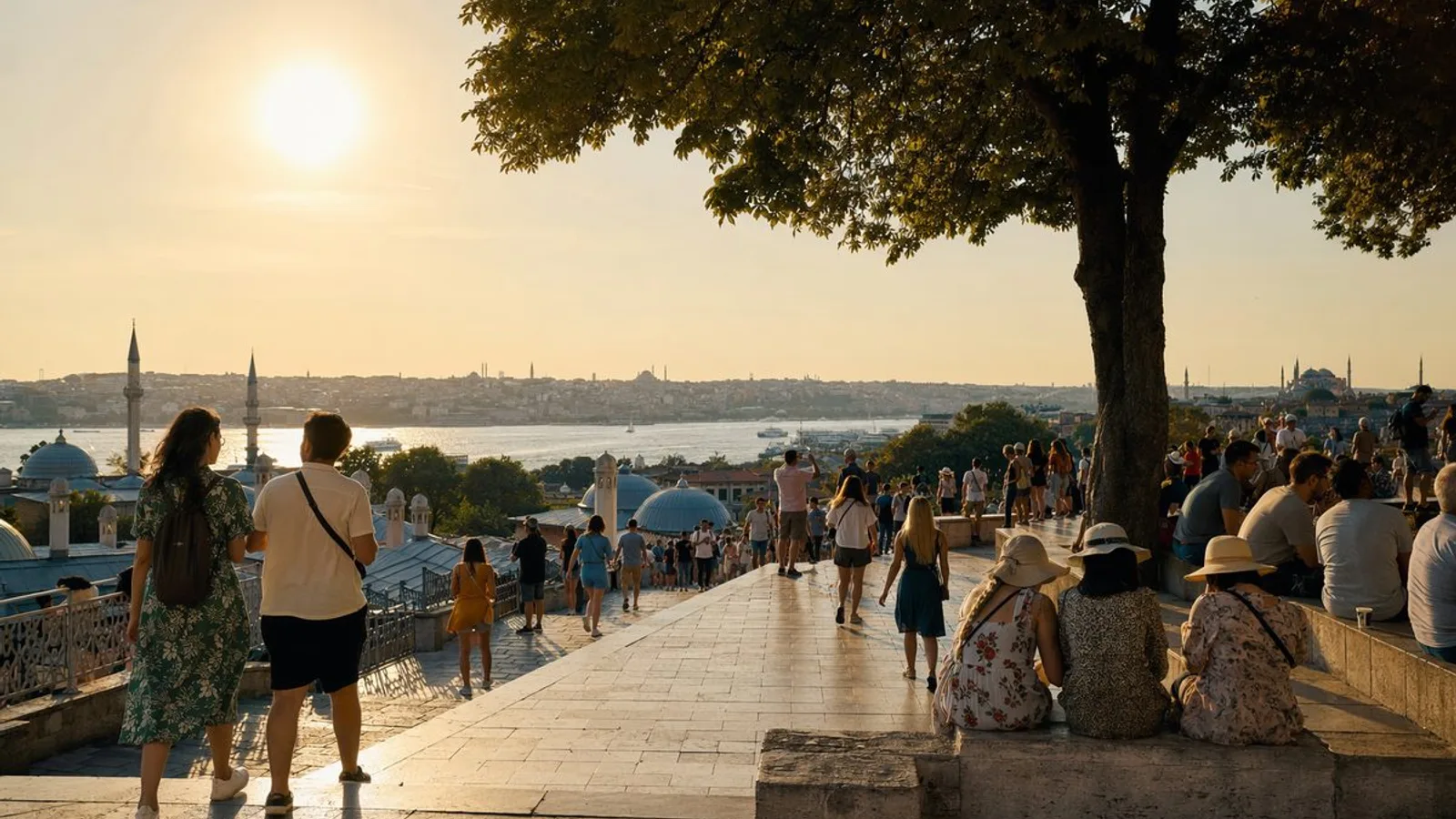
Istanbul in summer is worth it for travelers who want long evenings, ferry time, and big landmarks, but it suits people who can plan around heat and crowd peaks. The main caveat is timing: if you start early, hide from the worst midday stretch, and keep evenings open, summer can work very well. If you try to sightsee hard at noon, it can feel draining fast.
If you want the short version, yes, summer is a good time to visit Istanbul. June usually feels easier to manage, July is often the most intense for heat and visitor volume, and August can still be hot and busy, though your exact experience depends on neighborhood, breeze, and day-to-day conditions.
Is summer a good time to visit Istanbul?
Yes, if you want classic sights plus lively evenings and you do not mind planning your day around the weather. Summer works best for travelers who are happy to do outdoor sights early, take real midday breaks, and save ferries, viewpoints, and food neighborhoods for later.
It is less ideal for travelers who want cool, all-day walking conditions or very low crowd levels. School holidays, cruise traffic, and warm-weather travel put extra pressure on Sultanahmet, the Bosphorus, and popular sunset areas.
A good summer day in Istanbul is usually built in three parts:
- one priority sightseeing block early
- one cooler indoor or shaded block at midday
- one flexible evening by the water or in a neighborhood with food and ferry access
A simple sample summer day plan:
- Early morning: Hagia Sophia or Topkapi Palace in Sultanahmet
- Late morning: Basilica Cistern or a shaded museum stop
- Midday: long lunch, hotel break, or hammam
- Late afternoon: Bosphorus ferry ride
- Evening: dinner in Karakoy, Besiktas, or Kadikoy
For landmark-specific planning, see the guides to Hagia Sophia, Topkapi Palace, Blue Mosque, and Basilica Cistern.
What does summer weather feel like in Istanbul?
Istanbul summer weather is not just about the forecast. Sun on stone, uphill walking, queueing in open squares, and heavy air can make a moderate-looking day feel harder. On average, daytime highs sit around 26°C in June and 29°C in July and August, with humidity typically between 65 and 75 per cent — which is why 29°C here feels hotter than it sounds, and why nights around 20°C bring less relief than you expect.
June often feels like the easiest summer month for many visitors because days are long but conditions may be less intense than later in the season. July is usually the month when heat, brightness, and crowd pressure feel most obvious. August can still be very hot, and sea-breeze areas may feel much better than dense inland streets.
Heat, humidity, and sun exposure
Morning often feels manageable. By late morning, exposed plazas and open courtyards can feel much hotter than shaded back streets. Waterfront areas may feel easier because of the breeze, but not every dock or queue has shade.
Humidity can make walking feel heavier than expected. If you are arriving from a cooler climate, the first full day may feel harder than the forecast suggests. Adjust pace early instead of forcing a packed schedule.
The strongest sun often hits while many visitors are still trying to cover major sights. That is a bad time for long outdoor lines. A hat, water, sunscreen, and shoes with grip matter more than many travelers expect.
What to wear and carry each day
Light, breathable clothes work best. Modest dress is clothing that covers shoulders and knees when visiting active mosques or conservative religious spaces. If mosques are on your plan, carry a scarf or light layer so you do not have to improvise at the entrance.
Choose fabrics that dry quickly. Bring sunglasses, a refillable water bottle, and a small bag instead of a heavy day pack. One light layer also helps in strongly air-conditioned interiors.
Good shoes matter because summer routes often include more walking than expected. Tram stops, ferry ramps, polished stone, and sloped streets add up quickly.
Where do crowds build up fastest?
The busiest areas are usually the classic first-time stops, major transport hubs, and waterfront zones around sunset. If you know where pressure builds, you can time those places better.
Historic peninsula pressure points
The Historic Peninsula is Istanbul's old imperial core, where you find headline sights such as Hagia Sophia, Topkapi Palace, and the Blue Mosque.
These places draw dense crowds because they sit close together and appear on almost every first itinerary. Sultanahmet can feel packed from mid-morning onward. Hagia Sophia runs daily, 09:00 - 19:30, with visitors on a separate route to the upper galleries; Topkapı runs daily except Tuesday, 09:00 - 21:00; the Blue Mosque pauses for every prayer and its guided tours are closed Friday.
If these sites are your priority, go early and keep the sequence tight. Pair one major landmark with one indoor stop, not four exposed stops back to back. You can compare routes and attraction planning in this guide to Istanbul attractions.
Bosphorus, islands, and evening hotspots
Princes' Islands are car-light islands in the Sea of Marmara that attract summer day trippers from Istanbul.
These areas can feel easier than Sultanahmet, but they also fill up fast on warm weekends and popular evenings. Ferry docks, island queues, and sunset waterfront strips can get congested.
If you want a Bosphorus ride, choose an earlier or later departure than the midday one. The public ferries from Eminönü and Kabataş are the cheapest way onto the water, and a Bosphorus sightseeing cruise is included in Istanbul PRIME Pass. For route ideas and cruise options, use the Bosphorus cruise guide.
If you want the islands, summer is when boats run most often and are also fullest; go on a weekday and early, and treat the return trip on a weekend evening as the queue to avoid. Büyükada and Heybeliada round-trip boat tickets are included in Istanbul PRIME Pass.
A useful rule is to think in waves, not all-day crowd levels. The same square can feel manageable at opening time and much harder a few hours later.
How should you plan your day around the heat?
Plan around energy, not around the longest possible checklist. In summer, a shorter route with better timing usually beats an ambitious route with bad timing.
The early start strategy
Start outside early. Choose one headline sight, one nearby second stop, and one clear breakfast or coffee plan. For example, you might start in Sultanahmet, then shift to a cooler interior before the hottest stretch.
If possible, pre-book entry where available. Guided tours need booking ahead, and a few venues with daily limits need pre-booking; open-entry venues you can simply walk into. You can compare pass options in the guide to Istanbul tourist pass vs museum pass.
Midday breaks that actually help
A real midday break means more than sitting down briefly. Look for a museum, hammam, hotel rest, shaded lunch, or ferry segment with seating and airflow. A hammam is a traditional Turkish bath with heated rooms, washing, and relaxation spaces.
This is also the best time to avoid steep uphill walking. A single cool indoor stop can do more for your day than trying to squeeze in several exposed locations.
If you want a slower reset, a hammam can work well in summer. Book ahead for a specific time, and expect historic hammams to separate men and women by section or by hours. Hammams are add-ons to Istanbul PRIME Pass at member prices.
Evenings that stay enjoyable
Evenings are often the best part of summer in Istanbul. The light softens, the waterfront gets lively, and neighborhoods feel social instead of punishing.
The Bosphorus, Karakoy, Besiktas, Kadikoy, and parts of Galata often feel better later in the day. A short ferry ride before dinner can reset your energy. Rooftop views also make more sense at sunset than at noon.
For next-step planning, see the guides to Galata Tower and Bosphorus cruises.
What are the best things to do in summer without burning out?
The goal is not to avoid famous places. It is to mix them with lower-stress experiences that suit the season.
Cool interiors and shaded stops
Choose museums, cisterns, palace interiors, and mosques during the hotter stretch. The Basilica Cistern is an underground Byzantine water reservoir with a cool interior atmosphere and dramatic lighting.
Large palace complexes can also work well if you pace them and rest between sections. The Basilica Cistern runs daily, 09:00 - 18:30 and is included in Istanbul PRIME Pass. Read more in the Basilica Cistern guide.
Ferry rides and breezy viewpoints
Summer is one of the best seasons for being on the water, as long as you avoid the busiest peaks. Public ferries are practical, scenic, and often easier than road transfers. They run on the İstanbulkart, and a crossing costs a fraction of any organised cruise.
Viewpoints are usually best later in the day. If a tower or rooftop has little shade, save it for evening and pair it with dinner nearby.
Neighborhoods that work well after sunset
Karakoy works well for a waterfront stroll and dinner. Kadikoy works well for food, local energy, and a relaxed evening on the Asian side. Besiktas can be lively and practical if you want ferries, food, and movement without committing to a late-night plan.
If you want something central, Galata can work for a walk, a view, and dinner, but uphill sections still matter in hot weather. If you want a calmer rhythm, crossing by ferry to Kadikoy often feels like a real break from the tourist core.
The key is to choose one evening base instead of trying to hop between too many neighborhoods. In summer, one good district with dinner, a walk, and easy transport back is usually better than chasing multiple stops after dark. For more detailed area planning, link out to your neighborhood guides where relevant.
What should you book ahead and what should stay flexible?
Book ahead:
- major attractions with timed entry or long security lines
- airport transfers if you arrive at a busy hour
- popular hammams
- organized Bosphorus cruises in preferred time slots
- any pass that still requires reservations after purchase
Read the cancellation terms when you book: late arrivals for guided tours are usually not refunded. If you are comparing passes, start with the guide to Istanbul city passes.
Keep flexible:
- neighborhood wandering
- casual meals
- some ferry rides
- viewpoints that depend on haze, energy, or sunset timing
- Princes' Islands plans if conditions or queues look poor
A simple rule helps: pre-book your priorities, but leave your second half of the day lighter. That gives you room to respond to heat, delays, and changing energy.
Family, solo, and first-time visitor tips
Families
- Keep transfer counts low.
- Plan one main area in the morning and one easier area in the evening.
- Prioritize toilets, shade, snacks, and sit-down breaks.
- Ferry rides can be a useful reset, but avoid the busiest queue periods if possible.
Solo travelers
- Early starts work especially well because you can move quickly.
- Keep backup water, a power bank, and an offline map.
- Flexible evenings are a strength, but do not underestimate heat fatigue after a long walking day.
First-time visitors
- Do not try to cover all the big landmarks in one day.
- Focus first on Sultanahmet priorities, then add one Bosphorus or neighborhood experience.
- Read landmark guides in advance so you know what needs timed planning: Hagia Sophia, Topkapi Palace, and Blue Mosque.
Final summer planning checklist
Before you go:
- confirm opening hours for major sights
- check prayer-time visitor access for active mosques
- review ferry schedules and route changes
- verify reservation rules for attractions and passes
- look up any holiday or festival disruptions
The closed days to remember are Topkapı closed Tuesday and Dolmabahçe closed Monday. The fixed summer holidays are 15 July and 30 August; the religious holidays currently fall in spring rather than summer.
Pack:
- light, breathable clothes
- a modest layer or scarf for mosque visits
- sun protection
- stable walking shoes
- a refillable water bottle
Plan each day like this:
- start early
- protect midday
- use ferries and indoor sights to break up the heat
- keep evenings lighter and more flexible
If you do that, Istanbul in summer is not just manageable. It can be one of the most enjoyable times to visit, especially if you care about long evenings, water views, and a city that comes back to life after sunset.