
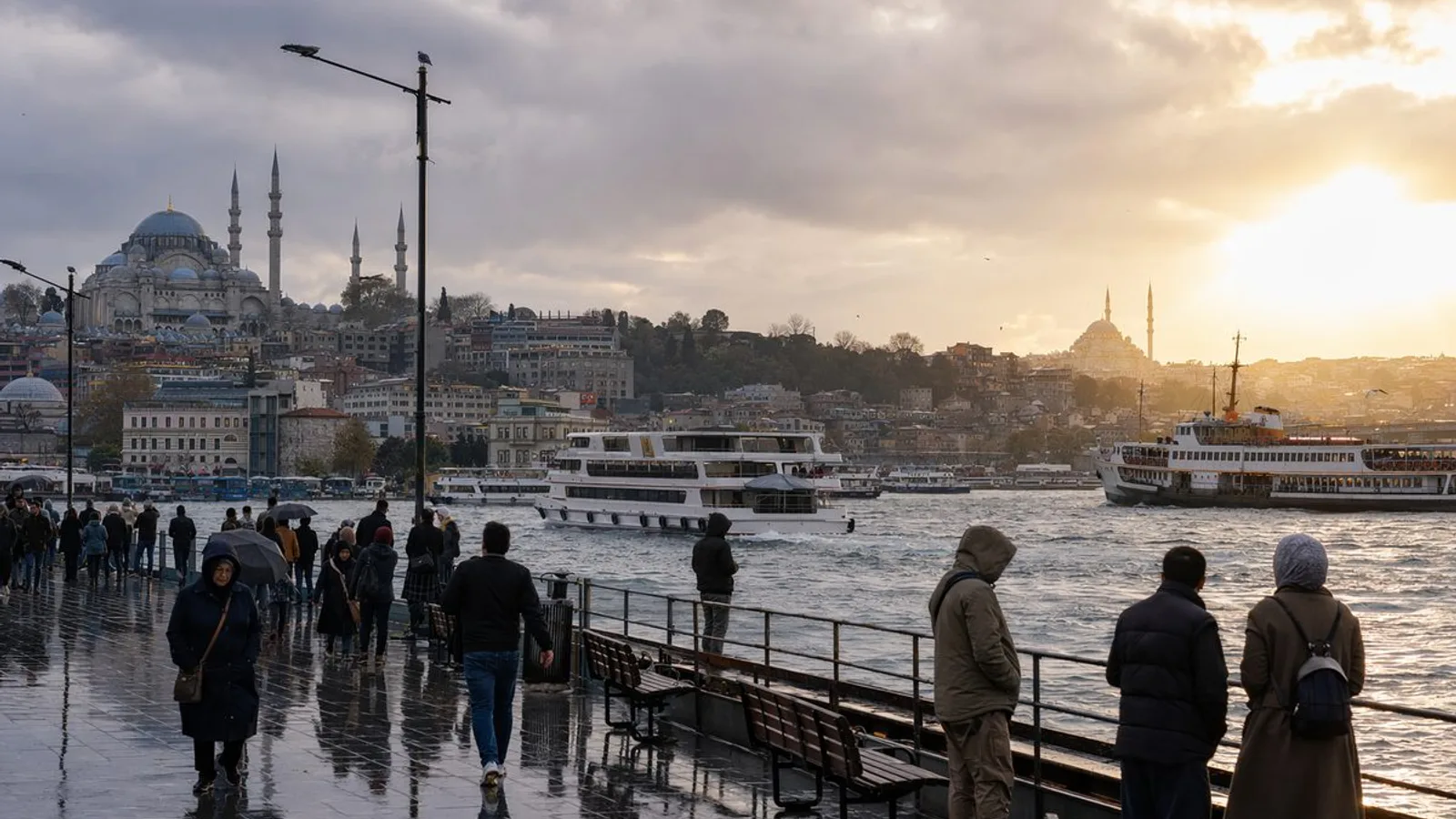
For most visitors, April, May, September, and October are the easiest months to enjoy Istanbul. July and August are usually the toughest for heat, while January and February are the toughest for cold, damp air, and wind. If you want the simplest planning rule, choose shoulder season if you can; if your dates are fixed, build each day around one outdoor highlight and one indoor backup.
Istanbul is a city split between Europe and Asia. Sea of Marmara is the inland sea south of the city that helps shape its milder but damp conditions. Bosphorus is the strait dividing the European and Asian sides, and it often adds strong breeze and sharper wind chill. Black Sea is the larger sea to the north, which can also influence colder air, cloud, and wind patterns.
Istanbul Weather by Month
Use this table as a planning shortcut, not a promise. Istanbul weather changes quickly, and wind near the water can make the day feel very different from the forecast.
| Month | Typical feel | Temperature guide | Rain chance | Best for | Packing note |
|---|---|---|---|---|---|
| January | Cold, damp, windy at times | ~9°C by day, ~4°C at night | ~13 rainy days | Museums, hammams, quieter streets | Warm layers, waterproof coat, shoes with grip |
| February | Cold, unsettled, sometimes sharp wind | ~10°C by day, ~4°C at night | ~11 rainy days | Indoor culture, winter city breaks | Scarf, knit layer, rain protection |
| March | Cool, mixed, early spring starts slowly | ~12°C by day, ~5°C at night | ~12 rainy days | Flexible sightseeing, neighborhood walks | Light sweater, jacket, umbrella |
| April | Mild, fresh, greener streets | ~16°C by day, ~8°C at night | ~9 rainy days | Parks, historic areas, ferry rides | Layered outfits, light rain shell |
| May | Pleasant, often one of the easiest months | ~21°C by day, ~13°C at night | ~7 rainy days | Full-day sightseeing, terraces, cruises | Light layers, sunglasses, comfortable shoes |
| June | Warm, brighter, longer days | ~26°C by day, ~18°C at night | ~5 rainy days | Bosphorus cruises, evening walks | Breathable clothes, hat, light overshirt |
| July | Hot, busy, often humid | ~29°C by day, ~21°C at night | ~3 rainy days | Night outings, island trips, sea views | Sun protection, water bottle, light fabrics |
| August | Hot, heavy air on some days | ~29°C by day, ~21°C at night | ~3 rainy days | Sunset plans, summer breaks | Very light clothes, sunscreen, shade plan |
| September | Warm but easier than peak summer | ~25°C by day, ~18°C at night | ~6 rainy days | Balanced sightseeing, dining outdoors | Light layers for day and evening |
| October | Mild to cool, often comfortable | ~20°C by day, ~14°C at night | ~9 rainy days | Walking routes, views, museums | Jacket, light knit, compact umbrella |
| November | Cooler, grayer, wetter feel returns | ~15°C by day, ~10°C at night | ~11 rainy days | Shorter city breaks, indoor-heavy plans | Waterproof shoes, medium coat |
| December | Cold, often damp, festive atmosphere in some areas | ~11°C by day, ~6°C at night | ~13 rainy days | Winter travel, classic sites with fewer breaks in the heat | Warm layers, rain shell, scarf |
Climate reference table for visitors
The table above is the main climate reference you need. The useful part is knowing how to apply it on the ground.
- Check wind as well as temperature. Istanbul often feels colder on ferry decks and waterfront promenades than the temperature suggests.
- Expect quick shifts. A day can start sunny, turn gray, and end wet.
- Plan in blocks. Pair an open-air site with an indoor stop such as Hagia Sophia, Basilica Cistern, or Topkapi Palace.
- Use mornings well. Exposed squares and uphill walks are easier before summer heat or winter wind builds.
- Keep transit in mind. Ferries, trams, and short uphill walks all change how the weather feels.
A simple way to read the forecast is to check three things each day: temperature, wind, and rain chance. That is usually more useful than looking at the temperature alone.
If you are still deciding on dates, our guide to the best time to visit Istanbul gives a broader trip-planning view.
What each season feels like in Istanbul
Winter: December to February
Winter is the coolest part of the year in Istanbul. Damp air, gray spells, and waterfront wind can make the city feel colder than visitors expect. Snow is possible in some winters, but you should not plan a trip around it: most winters bring a few snowy days between late December and February, and it rarely lasts long in the centre.
Winter works best for travelers who want museums, mosques, food stops, and a slower pace. It can be a good season for Hagia Sophia, Basilica Cistern, and other indoor-heavy days.
What matters most in winter:
- Water-resistant shoes for slick pavement
- A medium warm coat rather than bulky extreme-cold gear
- A scarf for ferry rides and exposed viewpoints
- Flexible plans in case wind changes comfort on the water
If you want a cruise, check conditions before booking a Bosphorus cruise.
Spring: March to May
Spring is the shift from cool, mixed weather to milder sightseeing conditions. For many visitors, this is the easiest season for long walks, ferry rides, and full sightseeing days.
March can still feel cool and changeable. April is fresher and greener, but showers remain possible. May is often the simplest balance of mild weather, longer days, and manageable walking conditions.
Spring usually works well for:
- Historic areas and palace grounds
- Ferry crossings and short cruises
- Neighborhood walks with café stops
- Long days that mix indoor and outdoor sights
A good spring day might pair Topkapi Palace with a ferry and an indoor backup. If your trip lines up with spring displays, the Tulip Festival runs through April with Emirgan Park at its centre; the municipality announces the exact dates each year, and the bloom usually peaks mid-month.
Summer: June to August
Summer is hot, bright, busy, and often tiring at midday. It is also excellent for late dinners, long daylight, and time on the water if you respect the heat.
June is warm but usually easier than peak summer. July and August are the hardest months for exposed sightseeing, especially in open squares and on steep streets.
Summer works best if you:
- Start early
- Break in the hottest hours
- Return outside in late afternoon or evening
- Carry water and sun protection every day
This is the season for waterfront views, ferries, and sunset plans, but crowds can be heavier during school holidays and peak travel periods — July and August above all, plus the religious holidays, which move about eleven days earlier every year. Our ferry guide can help you plan cooler, scenic breaks during hot days.
Autumn: September to November
Autumn moves from warm early-season days to cooler, wetter weeks. September often feels like a gentler version of summer. October is one of the most comfortable months for walking. November starts to lean more toward indoor-friendly itineraries.
Autumn suits travelers who want flexibility. You can still enjoy outdoor meals and Bosphorus views in early autumn, then shift toward museums, markets, and shorter walks later in the season.
What usually helps in autumn:
- Light layers in September
- A jacket and compact umbrella in October
- Waterproof shoes by November
- Itineraries that can pivot indoors if rain arrives
What to pack for each month
Packing strategy is the simplest way to make Istanbul comfortable in any season. Layers matter more than packing for a single weather label.
- January: Waterproof coat, warm mid-layer, scarf, water-resistant shoes, optional gloves for ferry days.
- February: Similar to January, with an extra wind-blocking layer if you plan lots of waterfront time.
- March: Light sweater, jacket, compact umbrella, closed walking shoes.
- April: Layered tops, light rain shell, comfortable shoes, small umbrella.
- May: Light layers, sunglasses, comfortable walking shoes, a thin jacket for evening.
- June: Breathable clothes, hat, sunglasses, sunscreen, light overshirt for breezy evenings.
- July: Very light fabrics, sun hat, sunscreen, reusable water bottle, comfortable shoes that handle heat and distance.
- August: Same as July, plus a stronger shade plan for midday and a change of shirt if you walk a lot.
- September: Light daytime clothing, thin extra layer for evenings, comfortable shoes.
- October: Medium jacket, light knit, compact umbrella, shoes with grip for slick streets.
- November: Medium coat, waterproof shoes, umbrella, layers for cooler mornings and evenings.
- December: Warm layers, rain shell, scarf, shoes with grip, compact day bag for extra layers.
If you are building a full suitcase, see our packing list for Istanbul and what to wear in Istanbul guides.
Best months for sightseeing, cruises, and museums
For most travelers, the best months depend on what you want to do most.
Best months for sightseeing
- April, May, September, October are usually the easiest for long walking days.
- These months are the safest choice if you want to combine major landmarks, neighborhood walks, and ferry rides.
Best months for Bosphorus cruises
- May, June, September, October are often the easiest balance of comfort and scenery.
- Bosphorus is the strait that divides the city, and its wind can change comfort fast even on mild days.
- If you want route ideas, see our Bosphorus cruise guide.
Best months for museums and indoor landmarks
- November to March can work very well if you prefer a more indoor-focused trip.
- Pair major sights such as Hagia Sophia, Basilica Cistern, and Topkapi Palace with a flexible weather plan.
- If you expect to visit several major sites, compare options in our Istanbul museum pass guide.
Best months for first-time visitors
- May and October are often the easiest single-month picks for balanced conditions.
- If you only have summer dates, favor early starts and water-based breaks.
Areas of the city that feel different in each season
Different parts of Istanbul can feel noticeably different on the same day.
Sultanahmet is the historic center where many first-time visitors spend their time. It has broad, exposed spaces around major monuments, so it feels hotter in summer sun and colder in winter wind.
Beyoglu is the central district north of the historic core, known for hills, shopping streets, and side lanes. Walking effort matters here almost as much as weather, especially after rain.
Eminonu is the busy waterfront transit and market area near the Golden Horn and ferry piers. It often feels windier, busier, and more exposed than inland streets.
Galata is the hill area around Galata Tower and surrounding streets. It can feel steeper, breezier, and slicker underfoot in wet weather.
Sea of Marmara influences the southern side of the city with damp air and sea breeze. Waterfront areas can feel cooler than expected. The Bosphorus can feel pleasant in summer but sharp in spring, autumn, and winter wind.
This matters for planning:
- Choose early hours for exposed areas in summer.
- Keep indoor stops close by in winter and on rainy days.
- Expect ferries and waterfront promenades to feel cooler than sheltered streets.
- For area-by-area ideas, see our guide to Istanbul neighborhoods.
Common mistakes visitors make with Istanbul weather
1. Trusting temperature alone
Wind often matters more than the number, especially near the Bosphorus and on ferries.
2. Underestimating hills and distance
Istanbul is not flat. Even mild weather feels harder with stairs, slopes, and long days on foot.
3. Planning all-outdoor days
A better approach is one outdoor anchor plus one indoor backup, especially in summer heat or rainy months.
4. Packing too narrowly
One heavy coat or one very light outfit is less useful than layers you can add or remove.
5. Ignoring footwear
Shoes with grip help in winter rain, on polished stone, and on steep neighborhood streets.
6. Assuming every district feels the same
Sultanahmet, waterfront ferry areas, and hilly districts like Beyoglu and Galata can feel very different in the same forecast.
Final planning tips
If you can choose your dates freely, start with late spring or early autumn. For most visitors, that is the easiest answer.
If your dates are fixed:
- Summer: start early, rest at midday, use ferries and indoor stops.
- Winter: dress for damp wind, not just cold, and keep museums in the plan.
- Spring and autumn: carry layers and a compact umbrella.
Before you go, check the short-range forecast for temperature, wind, and rain. During the trip, check again each evening and adjust the next day around the weather.
Helpful next reads:
- Best time to visit Istanbul
- Istanbul neighborhoods
- Istanbul ferry guide
- Istanbul museum pass guide
- Packing list for Istanbul
- Istanbul itinerary
Every month in Istanbul can work well. The difference is not finding perfect weather. It is matching the month to the kind of days you want to have.